Posted on — Leave a comment

Odds and Ends of Autumn

After slower rhythms in summer, autumn is a rush. The sort of rush where eventually you look up and the leaves have all fallen and you wonder when that happened.

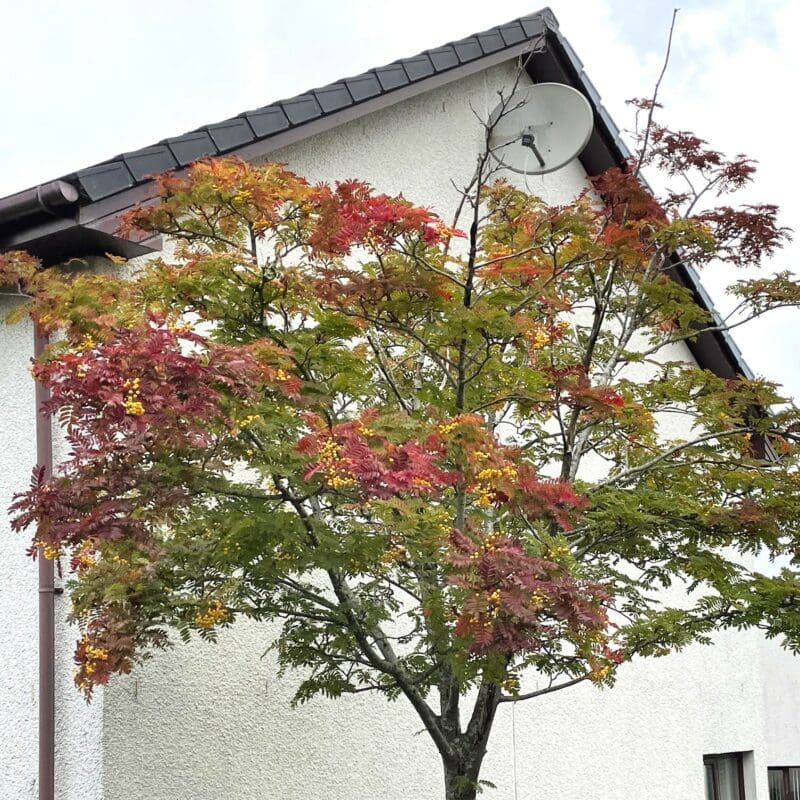
But every year has its variations and it’s been warmer for longer this year. Instead of scurrying through wet and windy days, there have been brighter days too, with warm sun and piles of earth-scented leaves. I enjoyed rediscovering the forgotten musky-sweet smell of an oak tree and scattered acorns. And I particularly enjoyed the riot of autumn colours collected together on one rowan tree.
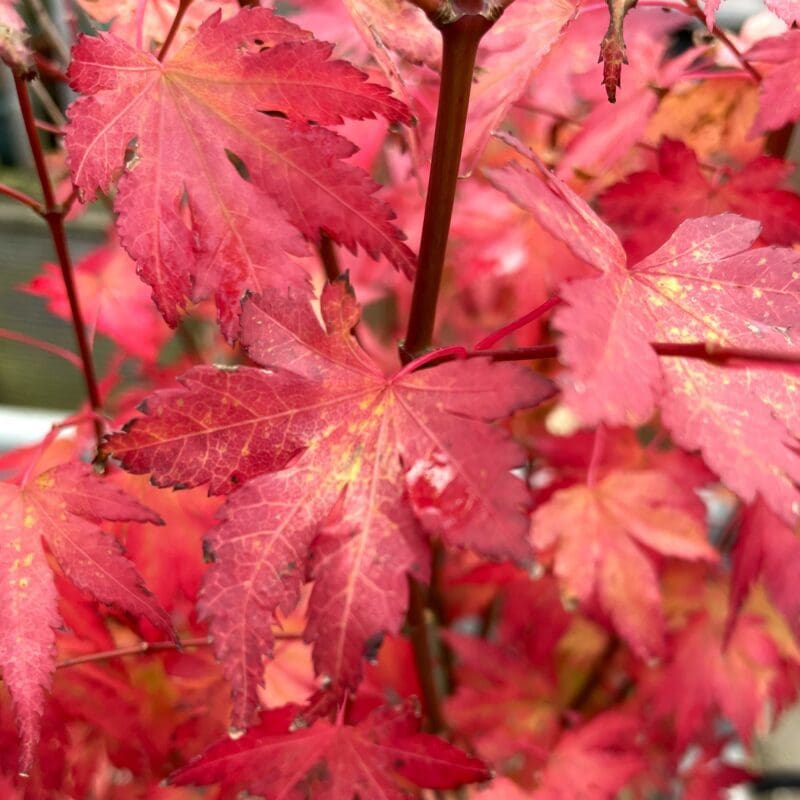
Close up orange red acer leaves

I have been trying to appreciate something of the goldenness of autumn. I feel like I haven’t got outside enough to do this, but the late afternoon light has often been lovely to watch from the kitchen.

Some of our flowers came out in the September sun rather than in July, so autumn brown and winter grey haven’t taken over the garden yet. I love seeing the lavender in flower. Purple buds and dried lavender are so familiar, but the fresh flowers are such a lovely colour. This year I’ve been catching at lavender whenever I remember, getting a brief moment of scent on my fingers.
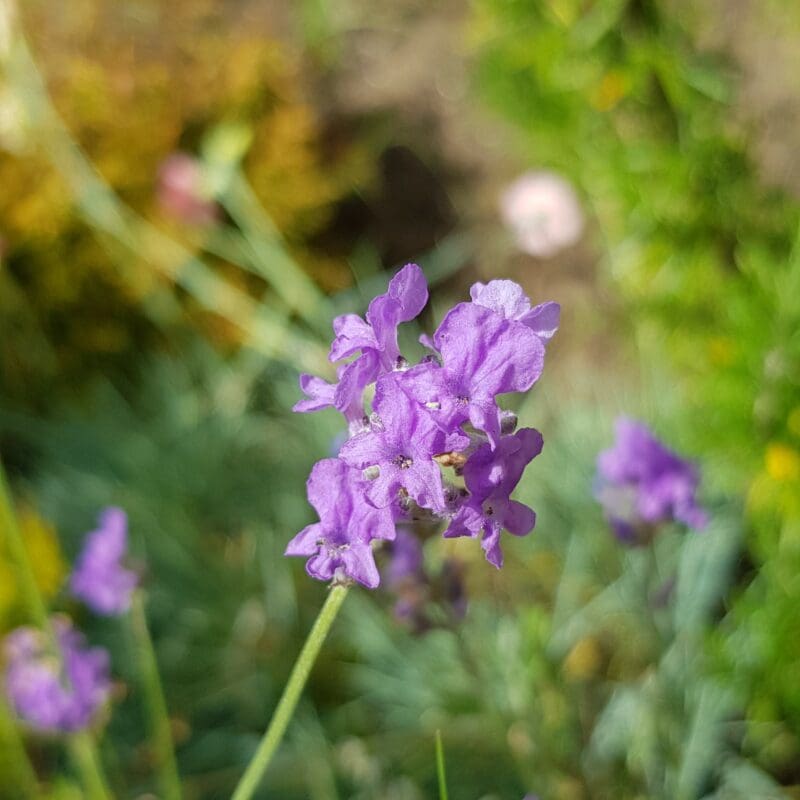
close up lavender stem in flower

I love flowers with scent. One of the most rewarding ones is buddleia – I have a dried sprig in a vase which I picked in August. It still has a sweet honey-buddleia scent (up close), which is lovely to enjoy months after the flowers have faded.

These are just little things that I am trying to pick up as life and work continue at pace. Every holiday is a deadline – a challenge to meet goals before routines and priorities change again. Holidays allow for a lot more noticing – and I often feel that I’m trying to catch up with all the noticing I couldn’t do in the rush of everyday life. I’m not getting outside quite as much right now, but I appreciate how this blog helps me to reflect on what I have seen, and also gives me a nudge about what else I could do to take time and stop on occasion. I still wander out into the garden for a short while now and then. There were late butterflies to enjoy last month, and the birds are always singing. Mostly it’s sparrows, but we have a melodic blackbird as well.
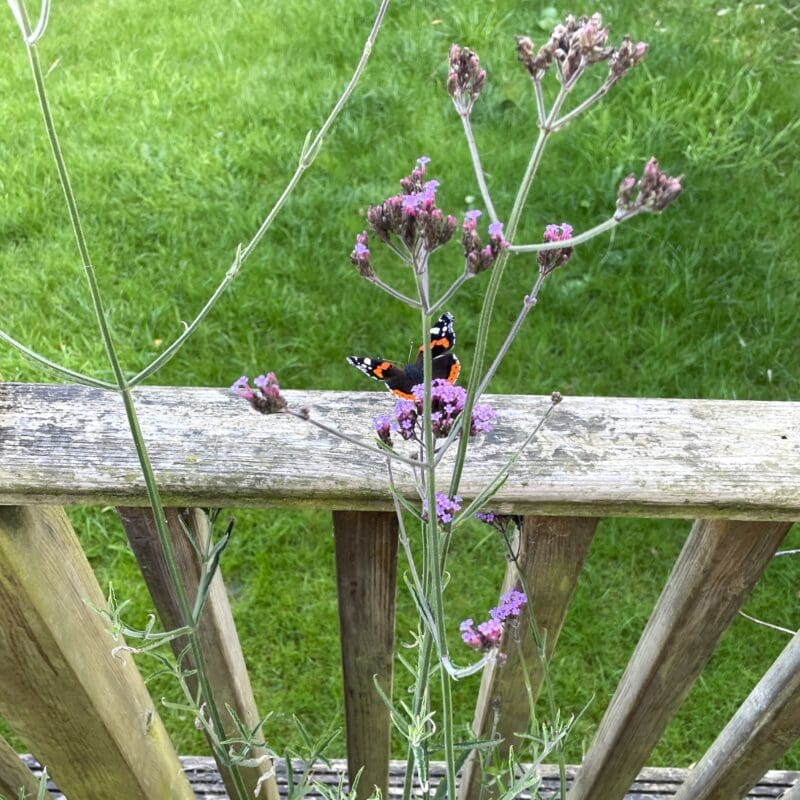
Red Admiral butterfly near purple verbena

My next post will probably be at the start of December, which is the sort of month where Christmas tasks can take three weeks to be whittled away, and where I start setting a timer to get through small chunks of different tasks every evening. I think of November as the eye of the storm, so I will enjoy the relative calm.

Posted on — Leave a comment

Summer Walk

At the earliest opportunity, I branch off the main path and take the narrow lane which cuts through the woods. I find I am walking briskly through places where I would normally linger. In the heat of the mid-afternoon it is easier to move than to stay in one place. I can feel the burn of the sun whenever I stop and so I walk as if I can escape it. Birds call and chirp. I can’t identify them with confidence until the wood pigeons coo.


I have developed a new habit of grasping the leaves of trees, just for that tactile connection. Another way to remember the differences between them all, and an extra dimension of the whole experience to recall in the relentless activity between holiday spaces. The beech leaves are past their spring softness and have turned a dark and shiny green. They have a thick, almost leathery feel. Some are already brown, crisp and crinkled. Conifers release a green, musky fragrance with their rough feathers. I touch the tips of my fingers to wicked holly spikes, but the larches have soft, comfortable needles. Lime leaves are among the most familiar to me – I try and breathe in the sweet, sticky scent that I remember, but can’t quite catch it today.


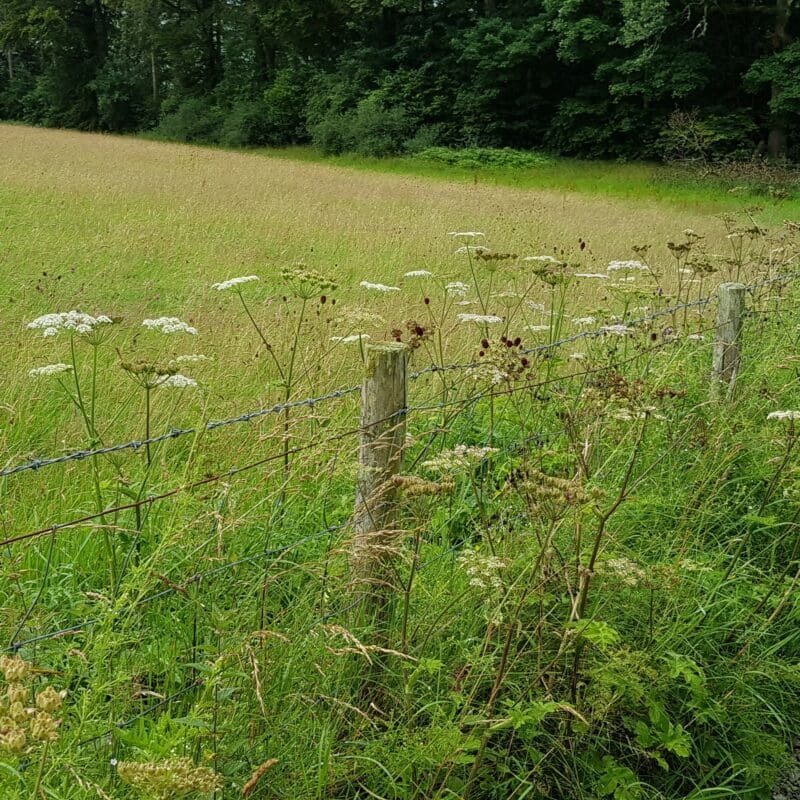
Five minutes through the woods and the lane continues between fields. The hedgerows are full of blackberries. I pick a few ripe ones, and then a red one to eat more slowly. The sour tang is similar to rhubarb and lasts a good long time. Near shoulder level, the border of lacy white cow parsley is dotted with deep burgundy dots of great burnet. In a tangle to my right, lesser stitchwort is scrambling along the length of the hedgerow at ankle level. Thin green stems weave messily through the grasses like a long scribble. On cooler days, I have bent to examine the slender white petals of these small, starry flowers. They travel along the edge of the field, dotted among the green like constellations.


Other people are in the lane, so it’s not a spot to linger long, even if the heat allowed. I follow the path round the field, now parallel with the road. Birdsong gives way to the swoosh and rumble of traffic. Eventually I know there will be a turning that goes towards the lake, although I don’t know how far along it is. The path is much more narrow now. Brambles, shrubs and grasses press from all sides. I watch out for nettles and thorns, avoiding stinging swipes or jagged catches. The late afternoon heat keeps me moving. This path is quite busy with people too. We cram ourselves into grassy passing places to make way, trampling bracken and keeping an eye on the thornier bushes.


After a while, a broader path leads down towards the lake. The air freshens a bit nearer to the water. The hedgerows give way to open grassland and neat gravel paths. There are boarded walkways through marshy areas, green and reedy, with pink accents of invasive Himalayan balsam. Soon the boards open out to fields near the water, where there are people and sheep. I stand in the heat listening to the tearing rip of grass being eaten; a sound of concentration occasionally punctuated by bleats, as if a slow conversation is taking place over the long afternoon.

Posted on — Leave a comment

Taking Notes

Hi, I’m Rachel from Sweet Thorn. My plan with this blog – which I think I will call Taking Notes – is to continue developing a habit of noticing details in nature.

Some years ago, when I was thinking over ideas about embroidery and what I found inspiring, I realised I had lost the time to notice details we see every day. Nettles and dandelions, or the flowers we see in
hedgerows and brownfield sites, get taken for granted. But, given the time, I like looking more closely at plants and flowers, to see the detail of petals and leaves and notice distinctions. I also like to know what I’m looking at. I realised how easy it was to glance at a hedgerow and label the lacy flowers as umbellifers, without knowing which ones were cow parsley and which were Queen Anne’s Lace. Or hemlock for that matter.

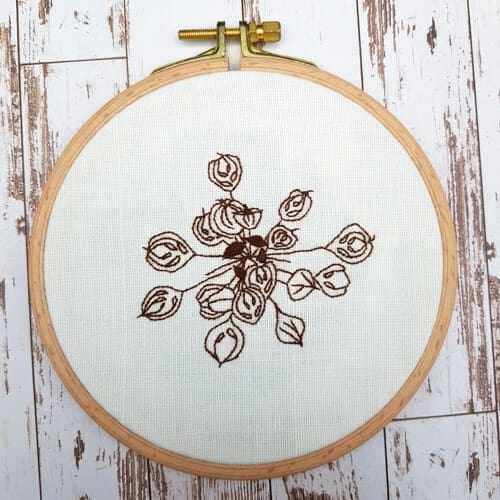
Embroidered cow parsley seed heads

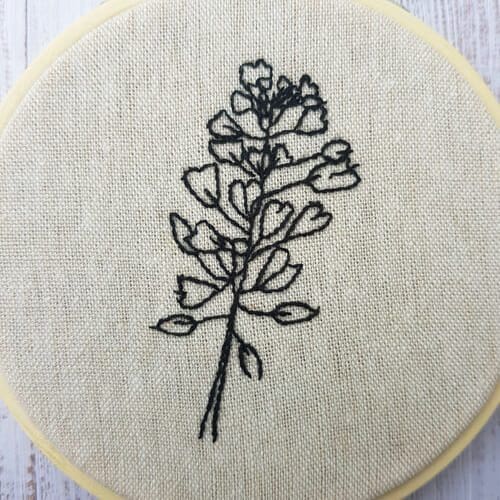
My embroidery art is influenced by these small details, many of which I have learned only in the last few years, through taking photos and looking up what I’ve seen. There are a lot more white and lacy umbellifers than I knew, and their flowers are so varied! The seed heads can be just as intriguing – cow parsley seed heads have exquisite little curling details like filigree. Other plants are a bit more familiar – I particularly enjoyed stitching the distinctive heart-shaped seeds pods which make shepherd’s purse so easy to identify.

Close up of shepherd's purse seed heads, outlined in embroidery.

Hand stitching is an excellent way to highlight details and draw the eye but of course it develops much more slowly. I choose my subjects carefully – I want to be able to recreate my sketches in thread and communicate
what I find most captivating. But even simple designs take time. The advantage of this is that hand embroidery creates a lovely, careful rhythm of work. But writing will add to the scope of embroidery, as I can describe a wider variety of plants more easily. I can also communicate more than the appearance of different wildflowers – I can talk about the fragrance of honeysuckle, juicy blackberries and the feel of leaves in different seasons. I am hoping that taking the time to reflect will allow me to notice more details each time I go out, and that the busyness of life can be balanced against things like noticing the shape of hawthorn leaves or the gleam of rowan berries.

I’ll be back next month – thanks for reading! All best,
Rachel