Posted on — Leave a comment

5 Things I’ve Learnt From Teaching Creative Workshops

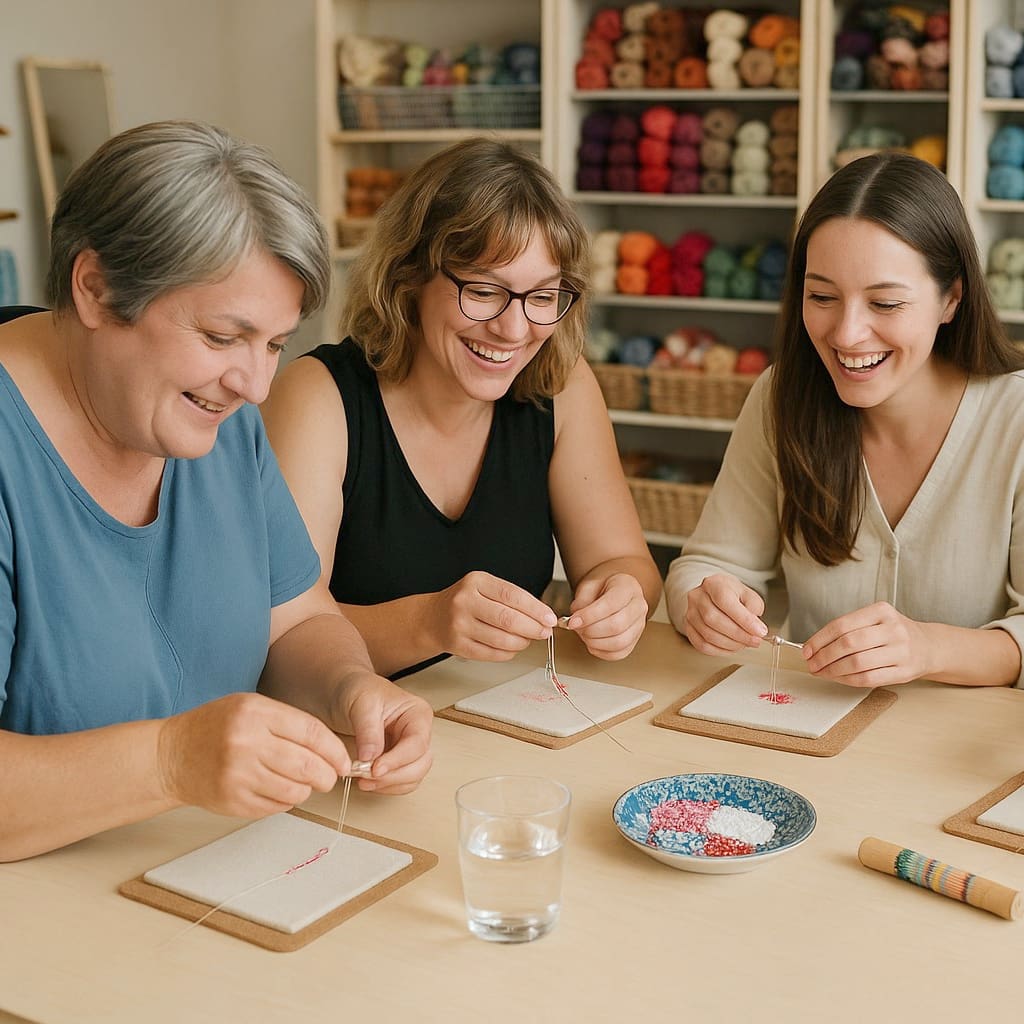
Three women sit together at a craft venue enjoying a bead weaving workshop

When I first began teaching bead weaving workshops, I expected it to be mostly about sharing a skill that I love.  But they’re so much more than that….they’re about slowing down and connecting with others.

Learning a new skill can be challenging at times, and some people arrive a little unsure about what they’ll manage to achieve during the workshop – Will they master it enough to be able to take something home with them? Will they enjoy the making process? Will the other people attending the workshop have more experience than they have?

So … what have I learnt??

1. Many people don’t see themselves as ‘creative’, but they are.  Creativity isn’t about perfection.  It’s about the joy of making something with your own hands.

2. My workshops offer rare time to slow down.  No screens, no rush, just quiet concentration.  It’s not just about the jewellery making.  The repetitive rhythm of bead weaving calms a busy mind – a reminder that slowing down and doing something for ourselves isn’t indulgent, it’s essential for our wellbeing.

3. I love watching people create something personal, choosing colours that remind them of something, or designs that hold meaning.  Every handmade piece made in my workshops carries a story, and it’s great to hear it!

4. There’s a special kind of ease that comes with creating side by side.  Even the groups may that seem quieter to begin with, end up chatting, laughing and encouraging each other.  Connection and community are so important, and what better way to meet and make new friends 🙂

5. I wanted to give back, so I chose to donate a percentage of proceeds from every workshop to the NSPCC, supporting the amazing work that they do in supporting vulnerable children and their families, a charity close to my heart.

If you’re in, or close to East Sussex, and think you’d like to try bead weaving, I’d love to hear from you – no experience necessary, just bring a pair of glasses if you need them (the beads are tiny!) and refreshments will be provided!

Tassia x
Posted on

About Jewellery handcrafted by Pauline

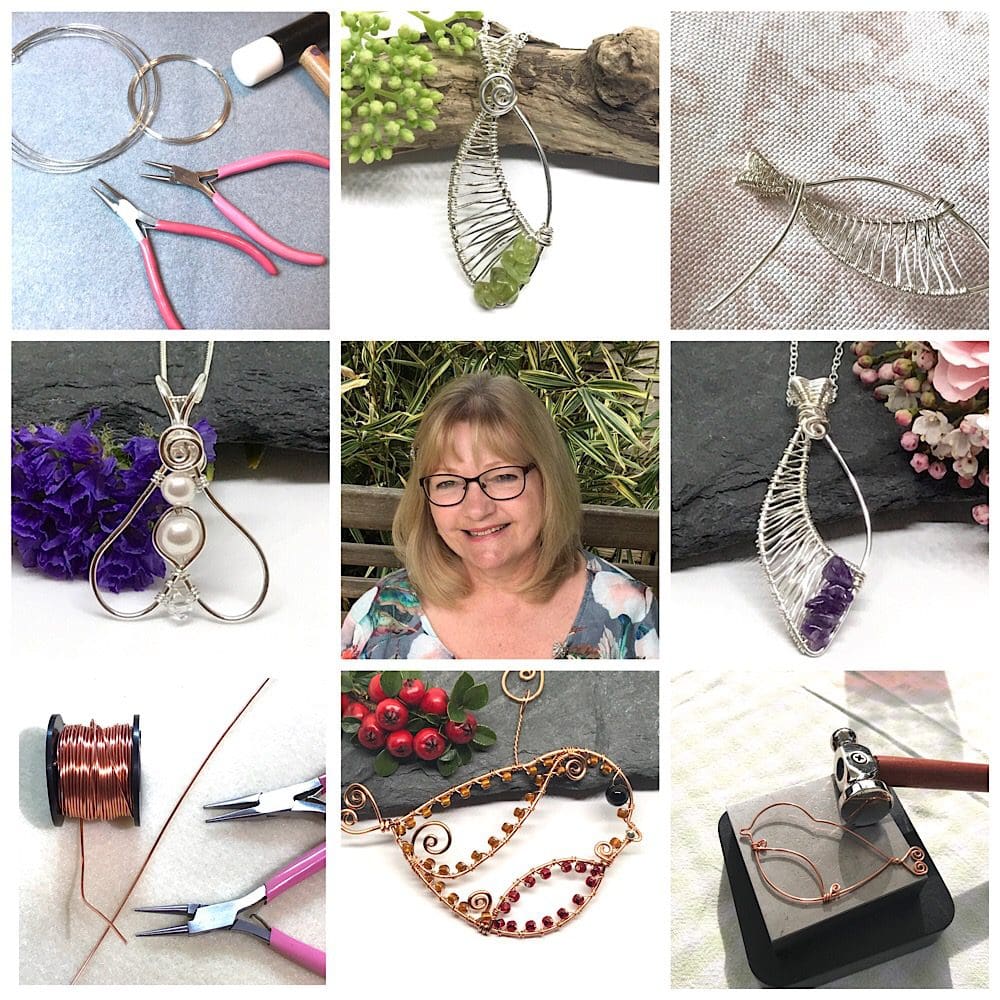
Hi, I’m Pauline, I love to make jewellery and creating new designs. All my jewellery is designed and handcrafted by me from my home in Cheltenham using intricate wire-wrapping and weaving techniques. 

Wire wrapping is one of the oldest techniques for making jewellery.

I have always loved jewellery and a few years ago I attended wire jewellery making courses at my local college. I absolutely loved the courses and became totally hooked.

I was amazed how beautiful and intricate jewellery could be made using wire and beads and a few jewellery making tools. There is no soldering or heating of  metal in this method of jewellery making.

My jewellery and decorations are individually created  using wire wrapping and wire weaving techniques. I use a variety of materials including sterling silver wire, silver filled wire,  copper wire, silver plated fixings and a variety of beautiful beads. 

My designs are often inspired by nature, I find the shapes in nature amazing. Among my pieces you will find leaf shapes, flowers, dragonflies, bees, and birds. I also love to make hearts.

When I have a design in mind I will sometimes but not always make a very rough sketch. I take a length of wire either .8mm or 1mm wire and begin to shape the wire using jewellery making tools and mandrels. Once I am happy with shape I will gently hammer with a chasing hammer on a steel block to harden and strengthen the wire shape. I use .4mm wire to create wire weaving designs or to add beads.  The wire is finished with a burr tool to smooth and a wrapped loop to secure. The completed piece is gently polished with a polishing cloth.

I hope you enjoy browsing in my shop and if you have any questions please contact me.


Posted on — Leave a comment

Silver Jewellery Descriptions

Silver and sterling silver are terms that are often used interchangeably, but they do not always mean the same thing. A product may be described as silver when in fact it is just silver-coloured.

I think this can be confusing for many people so thought I would publish a quick guide to some of the main types of ‘silver’ I frequently see marketed.

Fine Silver – .999

Fine silver, has actual silver content of 99.9%. Because of its high purity, fine silver is considered too soft to use in a lot of jewellery making applications and is often mixed with other metals to make it harder.

Items made of fine silver may wear faster than sterling pieces as a result of its inherent softness.

Sterling Silver -.925

Sterling silver is an alloy (92.5% silver) created when another metal, commonly copper, is added to pure silver in order to make the resulting compound more durable and less soft for a wide range of jewellery uses.

Sterling silver will generally be marked as such with a 925 stamped in it. In the UK if an item weighs more than 7.78g and is to be sold as Sterling, it must be assayed (tested) and hallmarked as such by one of the official assay offices.

Sterling Silver may tarnish but can be cleaned with a special cloth designed to remove the tarnish.

Silver Plated

Silver plating is a very thin layer of silver deposited on to a base metal such as copper, brass, or nickel. Most fashion jewellery is silver plated. Unless it is specifically marked otherwise you should assume that your piece is plated. If you wear the jewellery frequently, expose it to body lotions and perfumes or wear it in water, the plating will eventually rub off.

Silver Filled

Silver filled is similar to silver plated but a much thicker layer of silver is applied to the base metal at its core. The result is a much more durable piece.

Silver Tone

An item described as silver-tone may not have any silver at all in it. It may simply be silver in colour.