Posted on — Leave a comment

Waste not ~ to ~ want it – Week 4

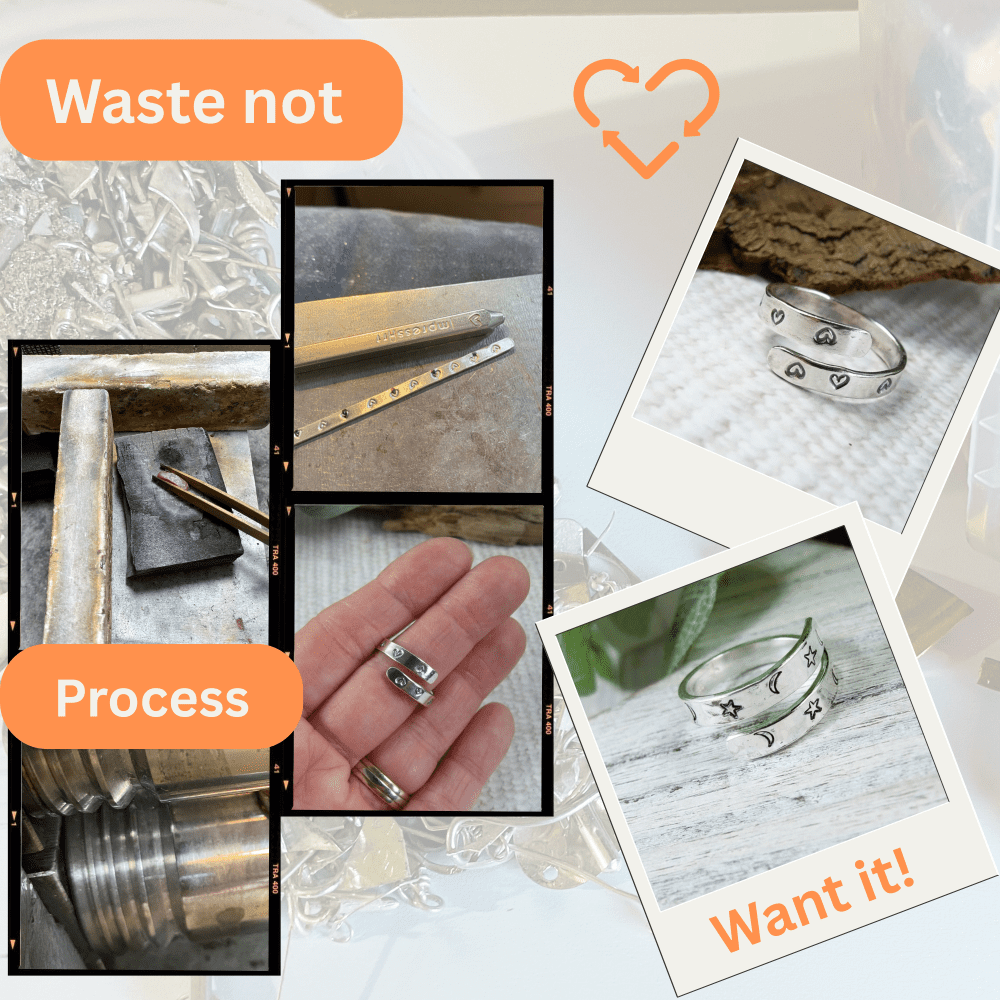
ring making process

Week 4 and last in this series. This week it’s forging turning the recycled silver into wire.

Lots of heavy tools and machinery this week. Using my rolling mill and hammers and a lot of elbow grease to forge and shape the silver into wire to make rings.

I began with the usual melting of the silver, but just before I quench I use my wide brass tweezers to flatten the sides creating more of an oblong shape to the nugget.  Once quenched and pickled I start rolling it through the mill.  I begin with the largest wire grove and then work it through to the next size with lots of heating to anneal in between until it gets down to about 2.5mm.  Quick heat, quench and clean then onto the next stage.

Once I have nice clean square wire I begin to forge, essentially hitting it with a heavy hammer to flatten, this also widens the wire.  I finish off this part of the process in the rolling mill to get a nice even depth to the wire, usually around 1mm. 

Once this stage is complete it’s a final heat, quench and clean then I have a usable piece of wire.  For the rings I have rounded the ends and stamped along the entire length. Finally shaped around a ring mandrel, polished and a little enamel added to the stamped shapes.

I hope you have enjoyed my month of recycling silver and seeing the process.
 

Posted on

Waste not ~ to ~ want it!

One of the things I really love about working with silver and copper is the endless opportunities they is to be creative.  You can use every single bit of the silver and copper not wasting a single speck.

I use various techniques to make the most of these versatile metals. My favourite, without a doubt is using a small blow torch to melt down my off cuts. Even the dust created by filing and tiniest off cuts from cutting and shaping can be used as long as it’s clean and doesn’t include any contaminants.  To make sure this is the case, I clean down my bench between each project, or use of different metals so that I don’t mix silver and copper shavings together.  I keep little pots on my bench for each different metal to pop in my off cuts and sweep in the dust after filing to reuse.

Over time you can accumulate lots of metal from making and I have set myself a challenge for this month to use up my collection in as many creative ways as I can.

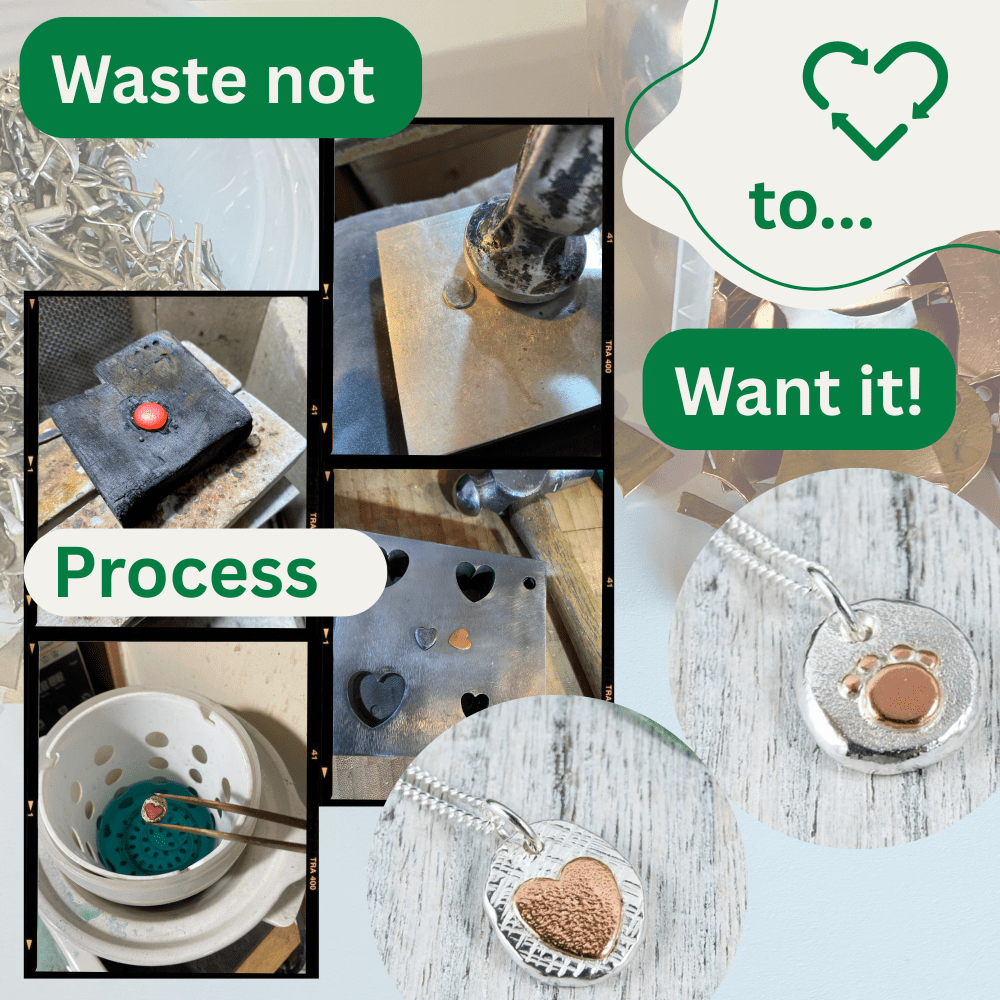
I have started with the easiest of all, making silver pebbles or nuggets.  To do this you simply pile a bit of  silver together and use the torch to melt it.  This causes the silver to ball up into a natural pebble shape. Once cooled you can turn this into anything from a charm to pendant or process to make sheet or wire. 

These two projects both began the same way, by making pebbles. For the heart I hammered it almost flat then used a sharp edged hammer to create a crosshatch effect.  I cut a little copper heart from a small scrap of sheet and soldered to the pebble then textured this with a diamond tipped hand tool to create that pretty frosted sparkly effect.

For the paw print I melted a tiny amount of copper in the same way and flattened with a hammer for the pad and used tiny off cuts from punching holes in copper for the toes.

Next week I’ll be using different techniques so watch this space for more waste not to want it projects.

Posted on — Leave a comment

Silver Jewellery Descriptions

Silver and sterling silver are terms that are often used interchangeably, but they do not always mean the same thing. A product may be described as silver when in fact it is just silver-coloured.

I think this can be confusing for many people so thought I would publish a quick guide to some of the main types of ‘silver’ I frequently see marketed.

Fine Silver – .999

Fine silver, has actual silver content of 99.9%. Because of its high purity, fine silver is considered too soft to use in a lot of jewellery making applications and is often mixed with other metals to make it harder.

Items made of fine silver may wear faster than sterling pieces as a result of its inherent softness.

Sterling Silver -.925

Sterling silver is an alloy (92.5% silver) created when another metal, commonly copper, is added to pure silver in order to make the resulting compound more durable and less soft for a wide range of jewellery uses.

Sterling silver will generally be marked as such with a 925 stamped in it. In the UK if an item weighs more than 7.78g and is to be sold as Sterling, it must be assayed (tested) and hallmarked as such by one of the official assay offices.

Sterling Silver may tarnish but can be cleaned with a special cloth designed to remove the tarnish.

Silver Plated

Silver plating is a very thin layer of silver deposited on to a base metal such as copper, brass, or nickel. Most fashion jewellery is silver plated. Unless it is specifically marked otherwise you should assume that your piece is plated. If you wear the jewellery frequently, expose it to body lotions and perfumes or wear it in water, the plating will eventually rub off.

Silver Filled

Silver filled is similar to silver plated but a much thicker layer of silver is applied to the base metal at its core. The result is a much more durable piece.

Silver Tone

An item described as silver-tone may not have any silver at all in it. It may simply be silver in colour.