Posted on — Leave a comment

Waste not ~ to ~ want it – Week 4

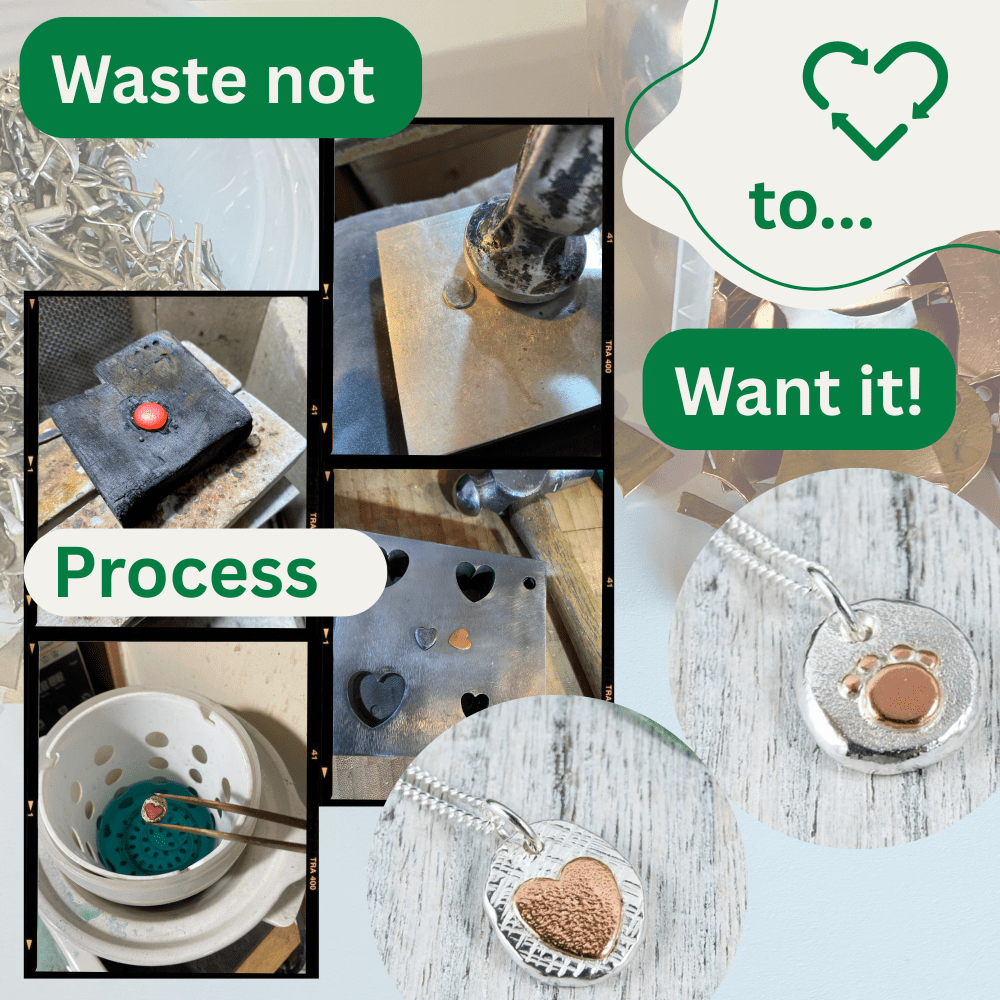
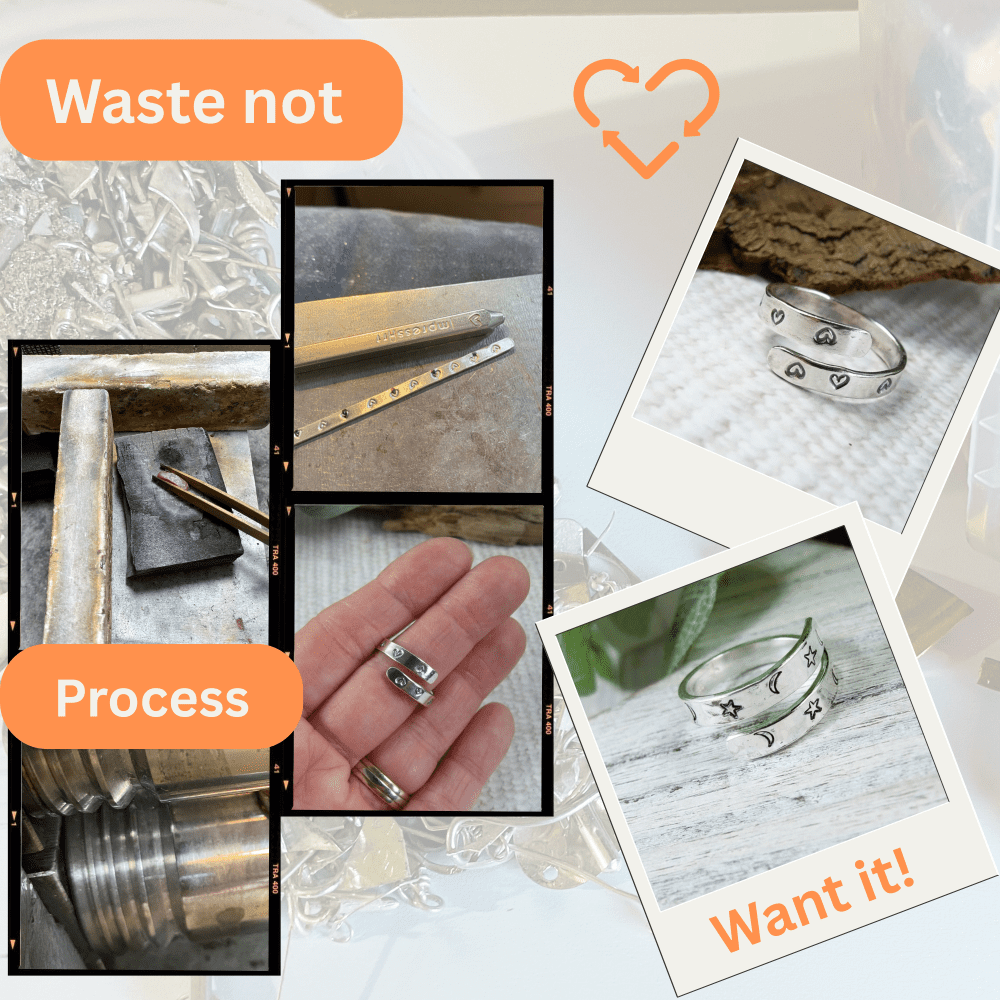
ring making process

Week 4 and last in this series. This week it’s forging turning the recycled silver into wire.

Lots of heavy tools and machinery this week. Using my rolling mill and hammers and a lot of elbow grease to forge and shape the silver into wire to make rings.

I began with the usual melting of the silver, but just before I quench I use my wide brass tweezers to flatten the sides creating more of an oblong shape to the nugget.  Once quenched and pickled I start rolling it through the mill.  I begin with the largest wire grove and then work it through to the next size with lots of heating to anneal in between until it gets down to about 2.5mm.  Quick heat, quench and clean then onto the next stage.

Once I have nice clean square wire I begin to forge, essentially hitting it with a heavy hammer to flatten, this also widens the wire.  I finish off this part of the process in the rolling mill to get a nice even depth to the wire, usually around 1mm. 

Once this stage is complete it’s a final heat, quench and clean then I have a usable piece of wire.  For the rings I have rounded the ends and stamped along the entire length. Finally shaped around a ring mandrel, polished and a little enamel added to the stamped shapes.

I hope you have enjoyed my month of recycling silver and seeing the process.


Posted on

Waste not ~ to ~ want it!

One of the things I really love about working with silver and copper is the endless opportunities they is to be creative.  You can use every single bit of the silver and copper not wasting a single speck.

I use various techniques to make the most of these versatile metals. My favourite, without a doubt is using a small blow torch to melt down my off cuts. Even the dust created by filing and tiniest off cuts from cutting and shaping can be used as long as it’s clean and doesn’t include any contaminants.  To make sure this is the case, I clean down my bench between each project, or use of different metals so that I don’t mix silver and copper shavings together.  I keep little pots on my bench for each different metal to pop in my off cuts and sweep in the dust after filing to reuse.

Over time you can accumulate lots of metal from making and I have set myself a challenge for this month to use up my collection in as many creative ways as I can.

I have started with the easiest of all, making silver pebbles or nuggets.  To do this you simply pile a bit of  silver together and use the torch to melt it.  This causes the silver to ball up into a natural pebble shape. Once cooled you can turn this into anything from a charm to pendant or process to make sheet or wire. 

These two projects both began the same way, by making pebbles. For the heart I hammered it almost flat then used a sharp edged hammer to create a crosshatch effect.  I cut a little copper heart from a small scrap of sheet and soldered to the pebble then textured this with a diamond tipped hand tool to create that pretty frosted sparkly effect.

For the paw print I melted a tiny amount of copper in the same way and flattened with a hammer for the pad and used tiny off cuts from punching holes in copper for the toes.

Next week I’ll be using different techniques so watch this space for more waste not to want it projects.

Posted on — Leave a comment

Confessions of a fabric hoarder

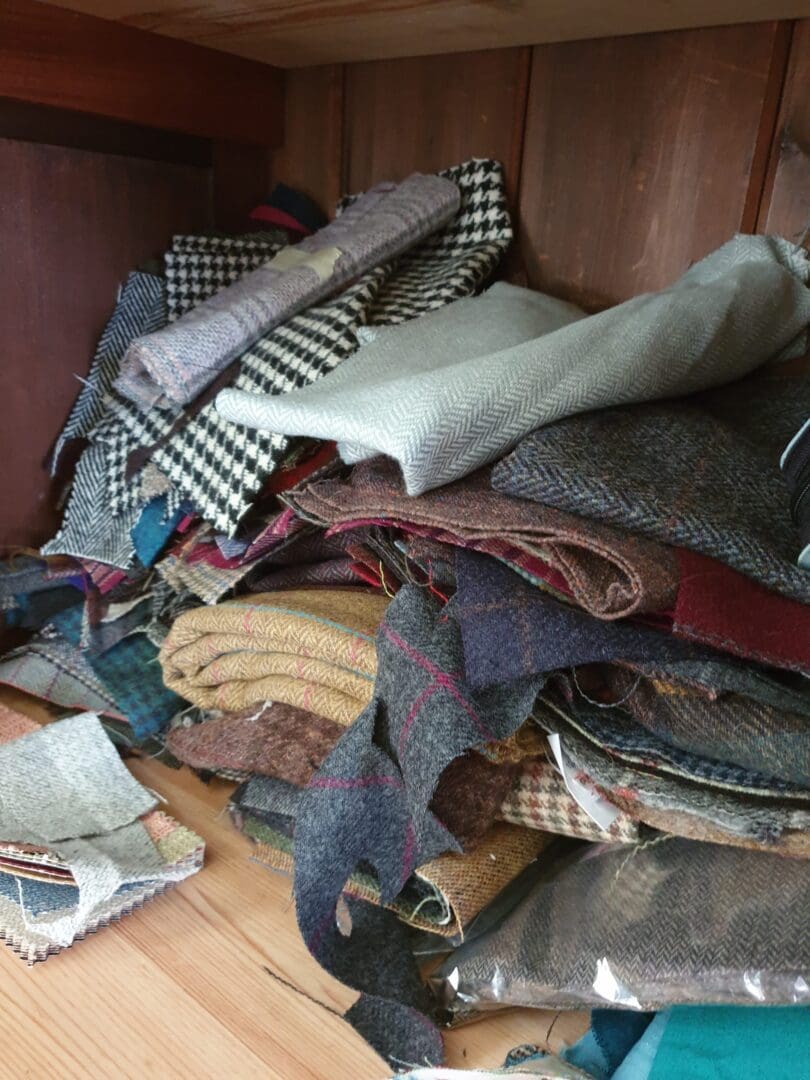
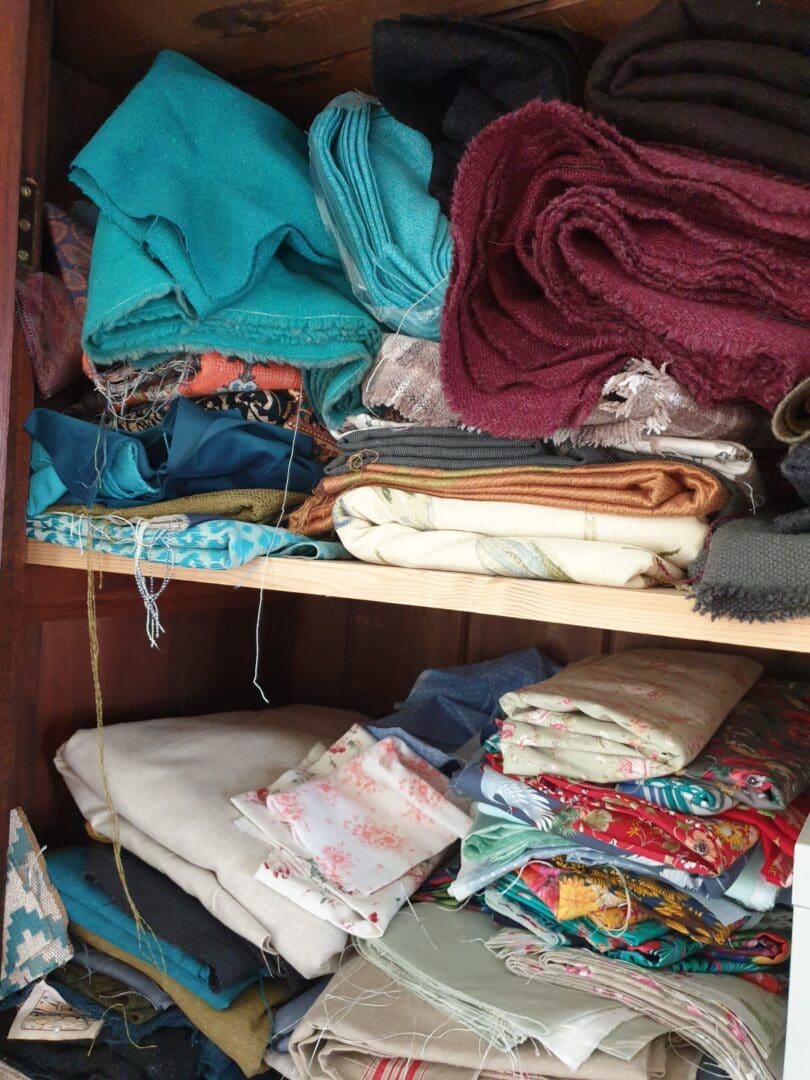
Fabric piles 

Fabric literally surrounds us but, on a daily basis, most of us give it very little thought: unless you are a fabric hoarder of course!

It all started out fairly innocuously. I began sewing with a real passion as a teenager and for years made my own clothes. This continued throughout uni and I even made my own wedding dress.

Throwing any clothes away has always been a challenge: one of my biggest ‘binning’ regrets is the brown velvet coat from Whistles that I foolishly got rid of and the older I get the more reluctant I am to throw away fabrics, particularly those that are made from natural fibres such as wools and linens.

It’s interesting how fabric permeates our lives but most of the time we give it little or no thought or to the amount of resource required to produce it.  For me fabric also provides a context to the story of my life – whether it is cutting out the pieces for my wedding dress on the kitchen floor (don’t ask!), replicating a jacket worn by one of my favourite pop stars, the dressing up chest that we would raid as children or the old blankets and bedspreads that my grandma had. They are all anchors to moments in my life and are full of memories. I still have old, crocheted blankets that belonged to my husband’s grandma. I have old linens from a great-aunt and I still have my wedding dress, although I have yet to think of a way to repurpose that. I keep curtains that no longer fit the windows of house we now live in. I have a half embroidered (not by me) tea cosy someone never finished.
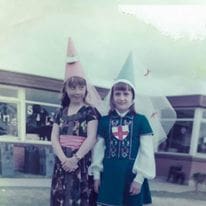

I can’t explain the joy of wandering round a fabric shop and being able to see and, more importantly, touch all the fabrics. Lock down has made this impossible and buying fabric online is not the same.

I have made curtains, done an upholstery course and then re-upholstered furniture and find myself going back to making clothes again, but my passion has become applique. I love the creative process and the fact that it feeds my need for fabric: I now have an excuse to have piles of different textiles options!

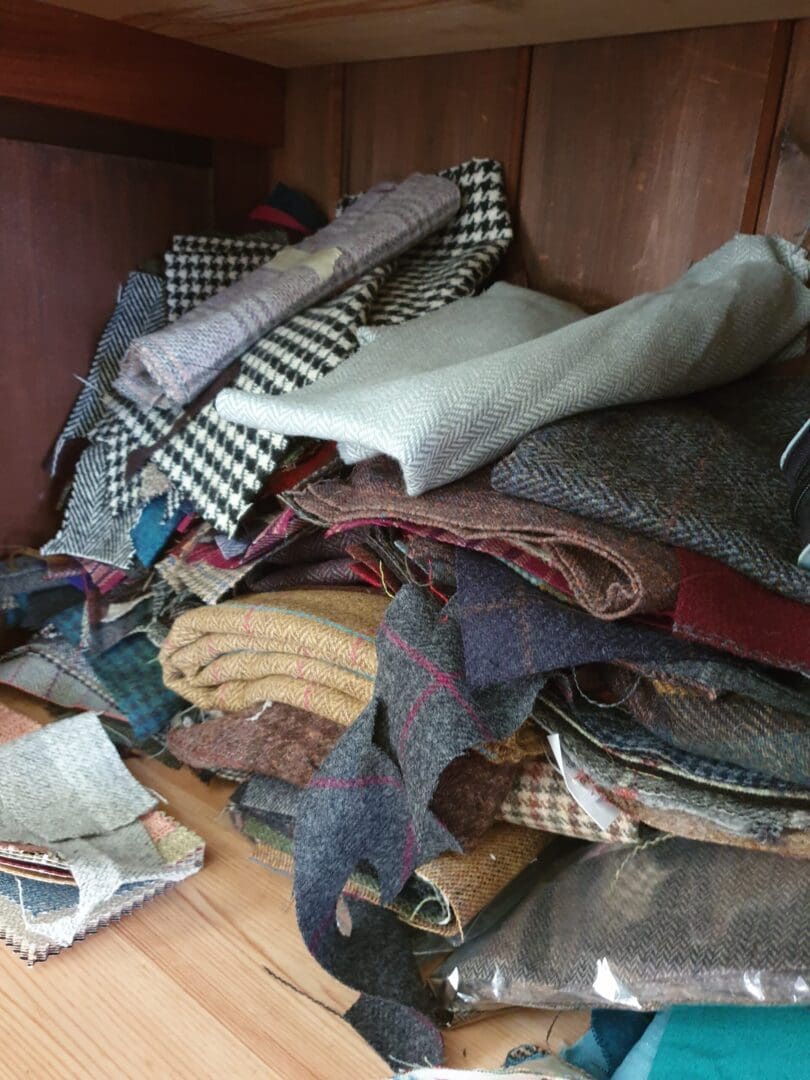
I find myself reluctant to bin even the smallest remnant of fabric and my applique is increasingly resembling micro-surgery as I incorporate even smaller bits of fabric

Now I have cupboards full of fabrics and my friends know never to throw anything away without checking with me first and even actively hunt items out for me!  I doubt I will ever get round to using it all and recently I did part with some to someone in the village who is making items to sell for charity. So, whilst I can feel slightly smug that I have managed to part with some it does, of course, mean I have room to acquire more!


Becky Morgan –
The Tulip House Nov 2020

https://staging.thebritishcrafthouse.co.uk/shop/the-tulip-house/
 

Posted on — Leave a comment

Summer is coming ….maybe

Unprecedented times, furlough, words about 8 weeks ago we had never considered to be part of our everyday life, supermarket queues, the world taking up baking leading to an unnormally high demand for flour of all varieties.

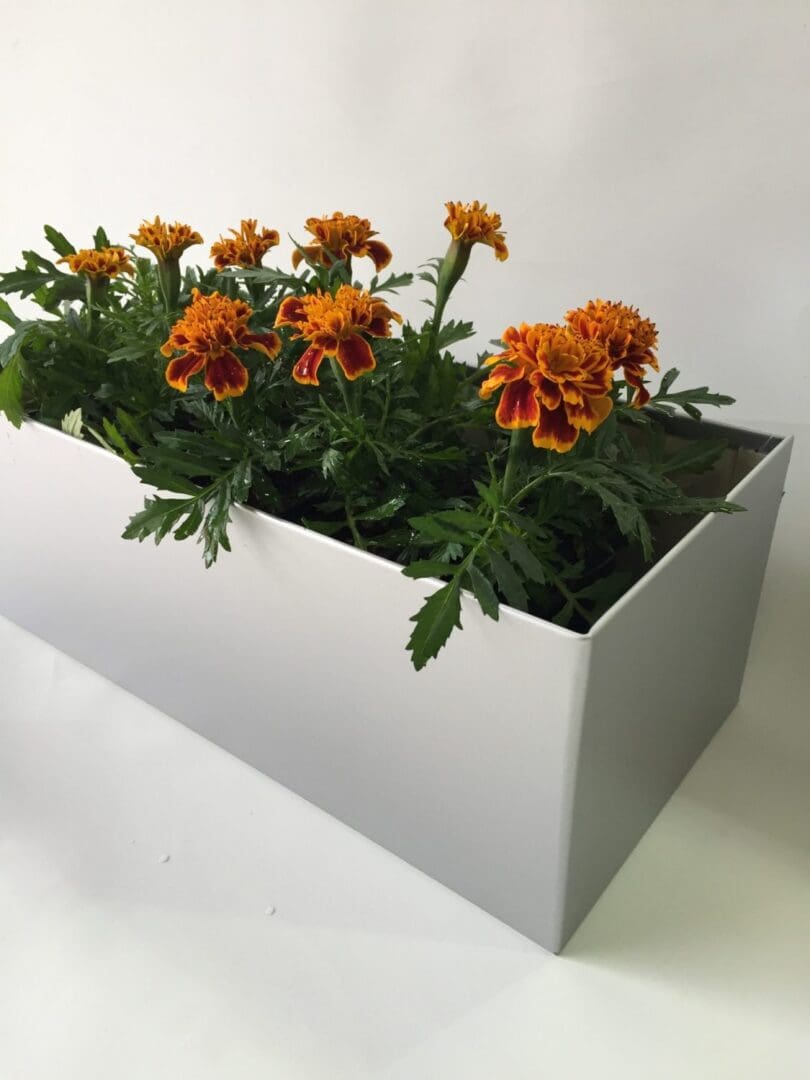
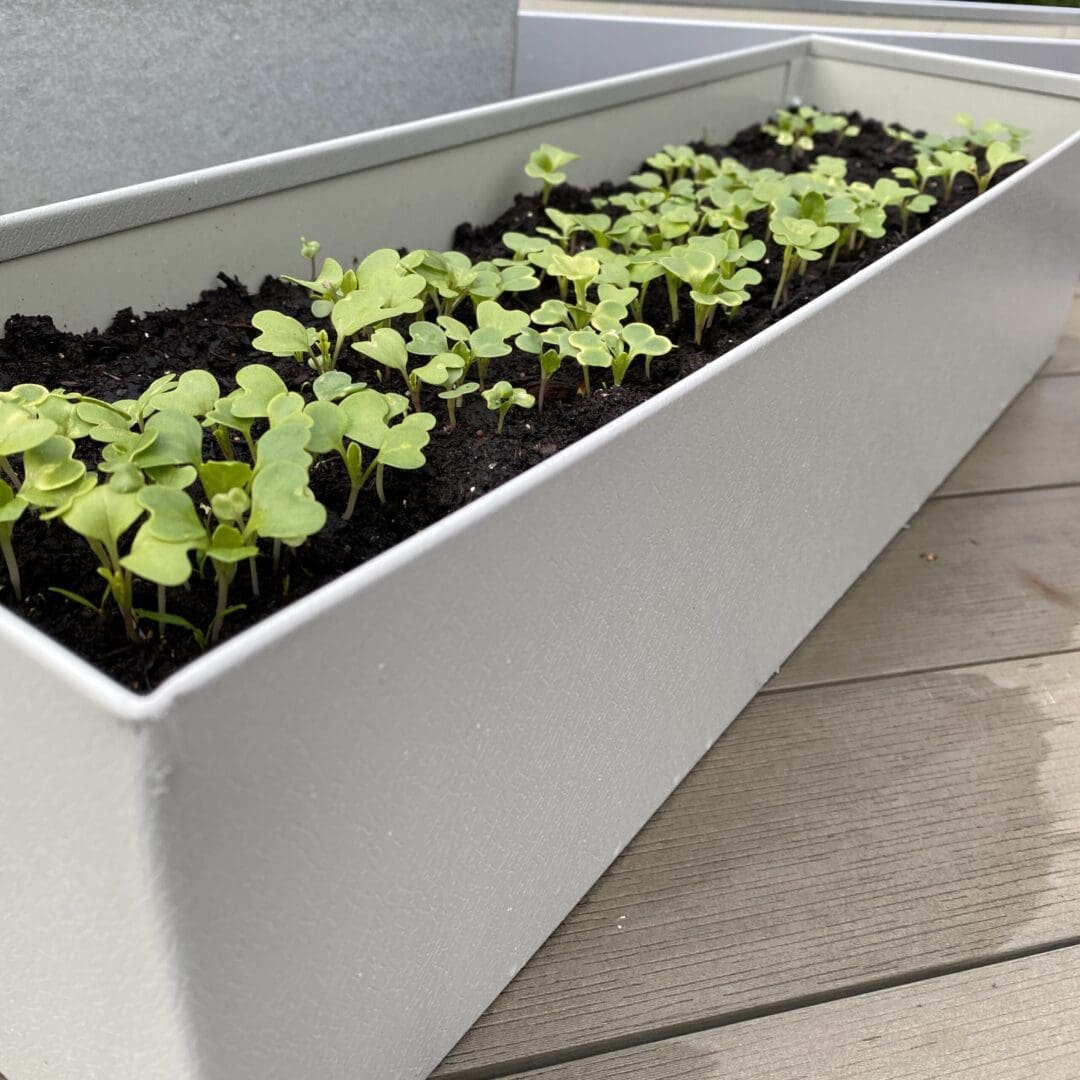
It has amazed me the number of people who have decided to take up gardening, me included! I currently have various ? salad leaves, radish, basil, peppers, mustard, plus some forget-me-nots and pansies popping up … it is also great for home schooling (I am not good at being a teacher, I get too ratty far too quickly, but I think that is because my little darlings know how to annoy me in the hopes I give up and they can drift back to the various game machines they have) but at least one them has been very involved in preparing, planting, and watering so I will take that as a small win 🙂

Grey Metal Planted Planter
Posted on — Leave a comment

How is Crofts Crafts going green?

For many small businesses, finding ways to be eco-friendly and more sustainable has definitely become more of a priority over recent years.  Not only do we want to make sure we’re being considerate to our environment, but we realise it has become even more important to our customers too, who are becoming increasingly conscious of the environmental footprint of the products they purchase.  However, it can be hard for small businesses to find solutions that can be financially viable when working on such a small scale, so in honour of Global Recycling Day, I thought I’d share some tips on some of the steps I’ve taken so far in trying to make Crofts Crafts more eco-friendly!

As a card maker who traditionally used cello bags to package my cards before posting out, I was super happy when I came across the Naked Cards campaign, which encourages online card sellers to “ditch the plastic cellos in favour of either ‘naked’ or paper packaging”.  It may sound daunting at first as you worry about your products getting damaged in the post, but think about it – how often does that happen when you send a card yourself just in an envelope in the post?  So it should really be fine packaged up without a cello on the way to its new home?! Naked Cards has a great list of benefits and FAQ’s you can check out for more info.  The fabulous Emily at Skull and Cross Buns has also created a stamp that you can use on the back of your cards or packaging to help explain why your card has arrived naked!

Naked Cards logo

I try to use materials that are either recycled or recyclable, both in my cards and in my packaging.  Hands up, it isn’t always possible to make a completely eco card but I try to do what I can!  I use recycled and recyclable card stock for the cards, and many of my embellishments are either made from card that can also be recycled, or some could even be taken off and reused for other crafting projects!  My packaging is an area I’ve really worked hard on to try and make more environmentally friendly and I’ve found an array of small packaging companies that offer some great products for
this:

  • Eco-Craft for their selection of recycled and recyclable envelope mailers, labels, paper packing tape, natural and biodegradable twine and tissue paper that is 100% recycled, acid free, recyclable, biodegradable & compostable….phew!
  • Kite, Tiny Box Company and Lil Packaging also all offer eco-friendly
    packaging alternatives worth checking out.
  • Washi tape is also a great addition to packaging – it’s made out of natural fibres like hemp and bamboo, so is a highly renewable resource, biodegradable and can be recycled – and let’s face it, it looks really pretty!

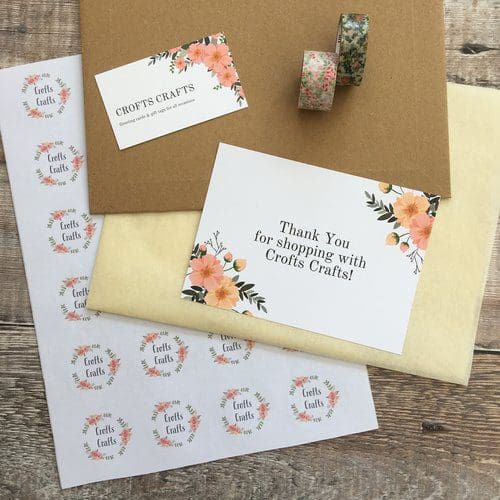
Crofts Crafts packaging

I also try to reduce waste wherever I can.  My box of card scraps is ever growing, I encourage people to keep hold of their cards as some of them are ideal for framing and I’ve recently started making confetti bags with stamped out card that isn’t needed (and I found some great glassine bags for packaging these!).  There is still more I hope to do and it’s an ongoing learning curve.  Naked cards at craft fairs and for stockists where items get continually handled are still one I need to figure out – just having display cards out and using plastic free card clasps, are all options to consider. 

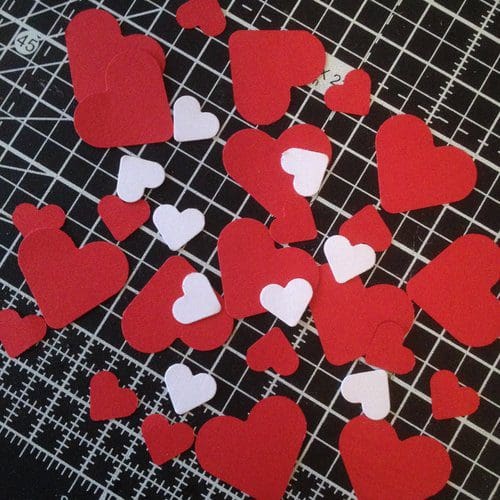
Crofts Crafts confetti

It can take a while to figure things out, but I think it’s just about trying to do what you can and finding the best products and materials that work for you and your business – every little bit really does make a difference.  I’d love to hear any other tips and ideas you might have so please do comment below!