Posted on

Hello

Michelle Leaver Jewellery has an introductory offer of 12% off your basket by using the code HELLO at Checkout.
Hi, I’m Michelle from Michelle Leaver Jewellery and I wanted to just say hello and introduce myself. 🦋 I’ve been lucky enough to have been designing and making jewellery for over 35 years! I can’t quite believe it’s been that long and it has been so, so rewarding. The first part of my career was before the internet so I sold directly to the public. Today even though I sell online I still value the good relationships and connections with my customers so if ever you have any questions about my work, please don’t hesitate to reach out.🦋 My jewellery is inspired by the beauty in this world, nature, particularly the ocean. 🐟 I fell in love with enamel particularly the blues and turquoise colours, when I was studying at university and as a result, 50% of my work is enamelled. The rest of my work includes silver and gold and I also use stones. I hope you enjoy looking at the jewellery and just to say that I make all the rings in any size you need and I also do Commissions so please reach out if you have any ideas. 

Michelle 🦋

Posted on

A Wild Lunch by the Shore

Welcome to the second part of my recent foraging experience. Last week’s post is called ‘Wild Food on Arran’ if you haven’t had the chance to read it yet:

https://staging.thebritishcrafthouse.co.uk/tag/sweet-thorn/

This is an account of a wild food workshop on Arran, led by Zoë from Wild Food Arran.

If you haven’t read my previous post I will just reiterate that this isn’t intended as an identifying blog, as I’ve only been foraging once. 100% certainty is what’s needed when snacking on wild foods. I am confident with a very few edible plants, such as blackberries and nettles. This post is more about the experience my friends and I had of a foraging workshop, where we were shown what we could eat and gathered small amounts for lunch. There are links to Zoë’s website and blog below if you want to know more about identifying edible plants.


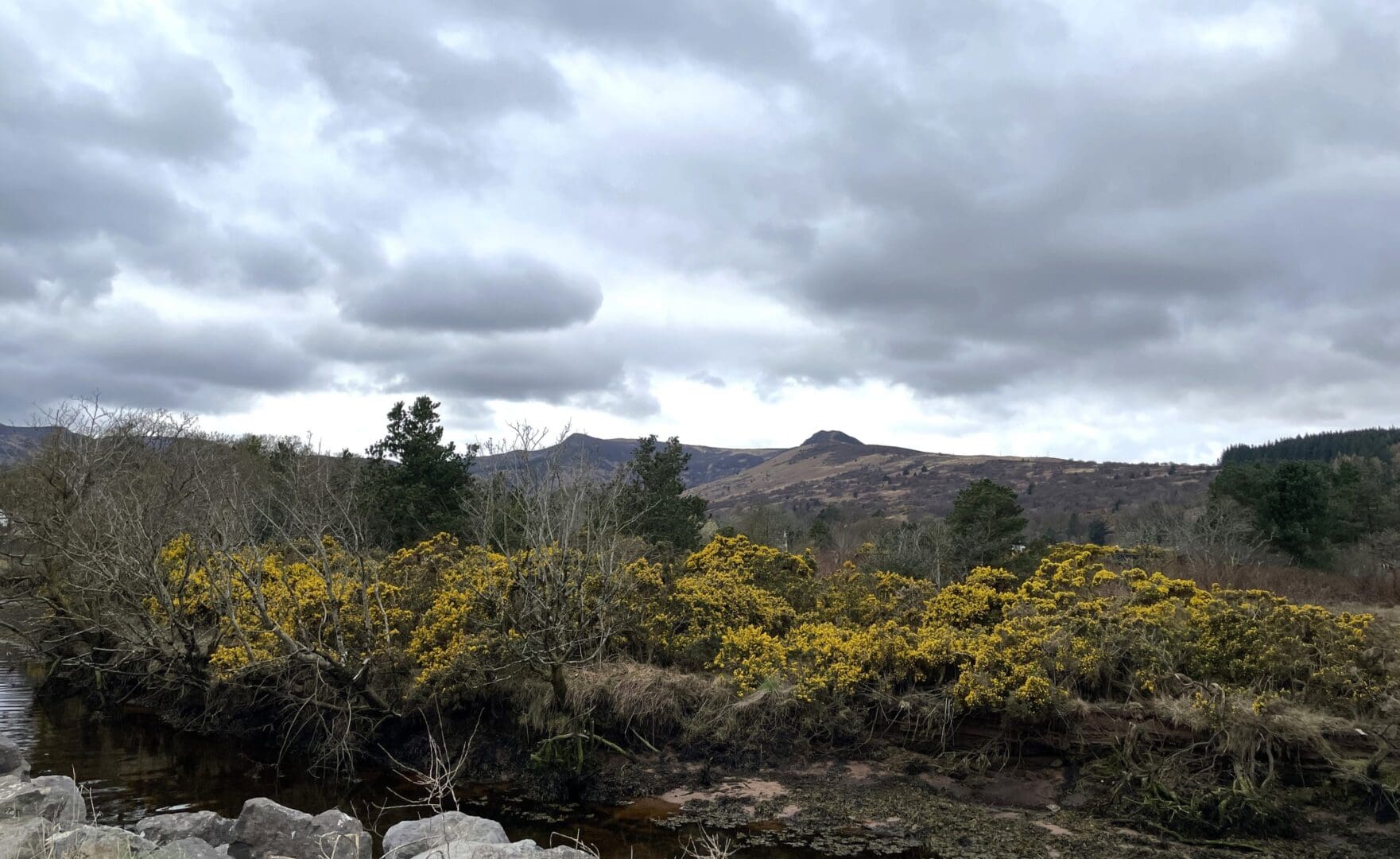
pussy willow and gorse


After picking sorrel and nibbling at gorse flowers and blackberry leaf shoots, most of our foraging was done. We did see wild garlic leaves, but there were only a few plants growing, which would make harvesting the leaves unsustainable.


Another plant we tasted but didn’t harvest was scurvy grass. I’d never heard of it before but it was quite unusual. It took a minute for the taste to kick in and then there was a sort of mustardy/wasabi hit, which we hadn’t expected. As a decent source of Vitamin C, and so a preventative for scurvy, this would have been eaten more often in the past than it is now – and it’s one of the plants that suggests how our palates have changed. The food we eat these days is more likely to be sweet than bitter or wholly savoury, and this became clearer when we ate lunch.


nettles


Our final harvesting stop was nettles – a very useful plant for foraging as there are usually an abundance of them all over the place. And an excellent plant for beginner foragers as they are so familiar. Many of us can quickly recognise nettles, if only because we prefer to keep our distance.


Despite the effective defence system, nettles can be neutralised and eaten safely. The young leaves are best for eating before the flowers and seed heads appear. Cooking the leaves very thoroughly takes away the sting. We also tried the slightly more adventurous tactic of rolling the leaves up with sorrel to crush the stings so that we could eat them raw. We pinched and flattened our leafy parcels very firmly indeed, just to be sure! The nettles had a savoury green leaf sort of taste which the lemony sorrel made a bit more lively.


By the end of the first hour we had a good collection of leaves and shoots, as well as a full bag of litter. We set up lunch camp at a picnic table and Zoë set out some tasty foraged extras while the soup simmered away. I have to say, if I can come across crab apples at any point they make a very tasty whisky. We sampled two of Zoë’s recipes – crab apple and also a blackberry whisky. They were both really excellent ways to flavour whisky. The bramble one was rich and fruity, while the tang of crab apple complemented the warmth of the alcohol very well.


hedgerow whiskies and sea kelp salt


The photo shows the two whiskies, and a dried kelp seasoning (kelp, sea salt and a mix of seeds) which we used on our soup.


While the nettles slowly lost their sting (Zoë doing intrepid taste tests every now and again), we enjoyed sourdough bread with wild garlic butter. It was as delicious as it sounds, and so nice to have fresh herbs in the butter. It was interesting to think that the colour and taste both came from just the leaves. I’m used to making garlic butter from crushed up cloves and herbs, but wild garlic butter is an excellent reason to experiment with growing ramsons at home.


collage photo: wild food soup with bladderwrack pods. Wild garlic butter on sourdough bread. 

You have all waited patiently to get to this point! In time the soup was ready and you can see from the photo how fresh and appetising it looked. I’ve always been curious about what bladderwrack tastes like, so the first thing I did was crunch on a juicy pod. I had always thought that the little bladders were full of air, but they actually have a sort of gel inside them, which gives them a lot more substance. They were very satisfying to eat, as were the little spears of knotweed, which had a more lemony zest once they were cooked. 


The fascinating thing about the soup was how unfamiliar the tastes and textures were. The nettles, sea radish and sorrel wilted down like kale or spinach, while the seaweeds stayed robust with a bit of crunch. The savoury flavours were delicious and also very rich and filling. Eating foraged foods gives you some idea of how our palates have changed over time – we’ve become far less familiar with native vegetation as we rely on it so rarely now. The bitter and savoury tastes emphasised how our diet is a lot sweeter these days – it’s not often that we eat foods which are totally unsweetened.


It turns out that there are a lot of things to consider when eating unfamiliar foods. Soup is a very useful introduction to wild foods because it can combine a variety of plants and only needs a small amount of each. Zoë had previously made careful checks about allergies for our group, but she also pointed out that unknown allergies can occasionally surface. As a result, it is best only to eat a small amount of anything new to mitigate the possibility of severe reactions.


collage photo: a sliced sponge cake decorated with small pink flowers. A single slice of a gluten free version of the cake.                     


Look how splendid this cake is – and thank you to Zoë for allowing me to use the photo from your Instagram feed. The slice on its own was a gluten and dairy free version, as Zoë makes this experience as accessible as possible by catering for a variety of diets. She also provided a dairy free alternative to the garlic butter.


This fabulous cake was the final touch to our meal. The gorgeous little pink flowers are from flowering currant and apparently have more flavour than the currants themselves. The sponge was soaked in a rich syrup flavoured with fir needles – it tasted like the scent from the forest floor in autumn. Again, the more unusual tastes made us think how sweet and similar so many of our cakes and puddings can be. This cake would definitely add a new dynamic to any tea shop or bakery.


Thank you for following my foraging walk. I really enjoy learning more about my surroundings, so that I can gradually put more names to wildflowers and plants. This was a really interesting step towards recognising plants that I see all the time and have heard about, but couldn’t identify reliably. I am not yet planning to forage much beyond the plants I am already very familiar with, but I have been practising identifying plants so that I can become more confident about what I’m looking at. I would definitely attend more workshops like this one, to reinforce my knowledge and find out more.


For anyone who plans to visit Arran, or who lives near enough to consider it, Zoë’s foraging trips are well worth attending – lots of interesting knowledge, without being overwhelming, with delicious results and wonderful scenery as well.

If you’d like to know more, here are Zoë’s web pages again, and Wild Food Arran can be found
on Facebook and Instagram.

https://www.wildfoodarran.com/

https://www.wildfoodarran.com/blog

Posted on

Snippety Moments

December is here and it’s brought its to do list. For all that I love having lists any month of the year, December is the one that gets most strictly tamed with tasks and blocks of time. With Christmas prep added to all the everyday routines, I need to chip away systematically at writing cards, buying and wrapping presents and organising food. This doesn’t mean everything is happening in a smooth and clockwork sort of way (it gets to a running around with hair on fire stage eventually), but I usually know what’s done and what still needs to be done.

In one of my social media posts for this blog I mentioned that these posts give me a nudge to remember to notice details around me. And it gives me a place to write down what I’ve observed, so that I can collect a little parcel of moments together and then take a look at what I’ve got. A bit like filling your pockets on a walk, then taking all the contents out and seeing what you’ve got at the end of it.


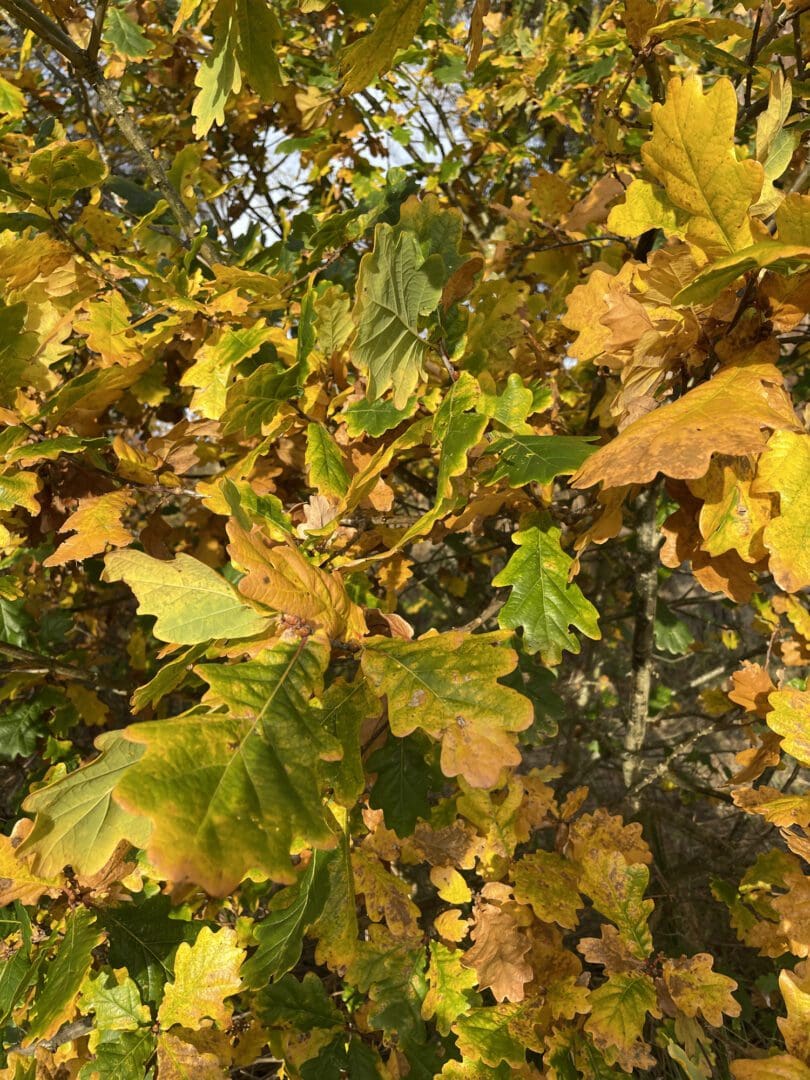
Yellow and green oak leaves 


Throughout the week this is definitely a more snippety kind of exercise. Heading to the shops or the post I notice the golden light and the colour of the trees in the early morning, and the extra nip in the air. There’s a vivid mix of colours around still – evergreens contrast with golden yellow and orange leaves – while other
trees are wintry and bare.


On the way down the hill, I can see the jewelled red berries of woody nightshade. A few weeks ago most of them were still unripe, green and firm. Now there is a scarlet glow of juicy clusters – enticing for the birds if poisonous for almost anyone else.


At home there are often birds in the garden – the sparrows have been using a shallow plant saucer for a bird bath all summer. We’ve been stopping every now and then to watch them splashing and fussing. The sparrows have been chattering all year, but there’s a blackbird as well. I caught sight of him the other day, looking well-fed and ready for winter.


On damp and milder days, the garden still smells warm and earthy. More autumn than winter still. I
am reminded of the very summery February we had some years back, when I could go out without a coat and there were dozens of ladybirds in the hedgerows. It’s both pleasant and unsettling because the seasons are definitely a bit off.


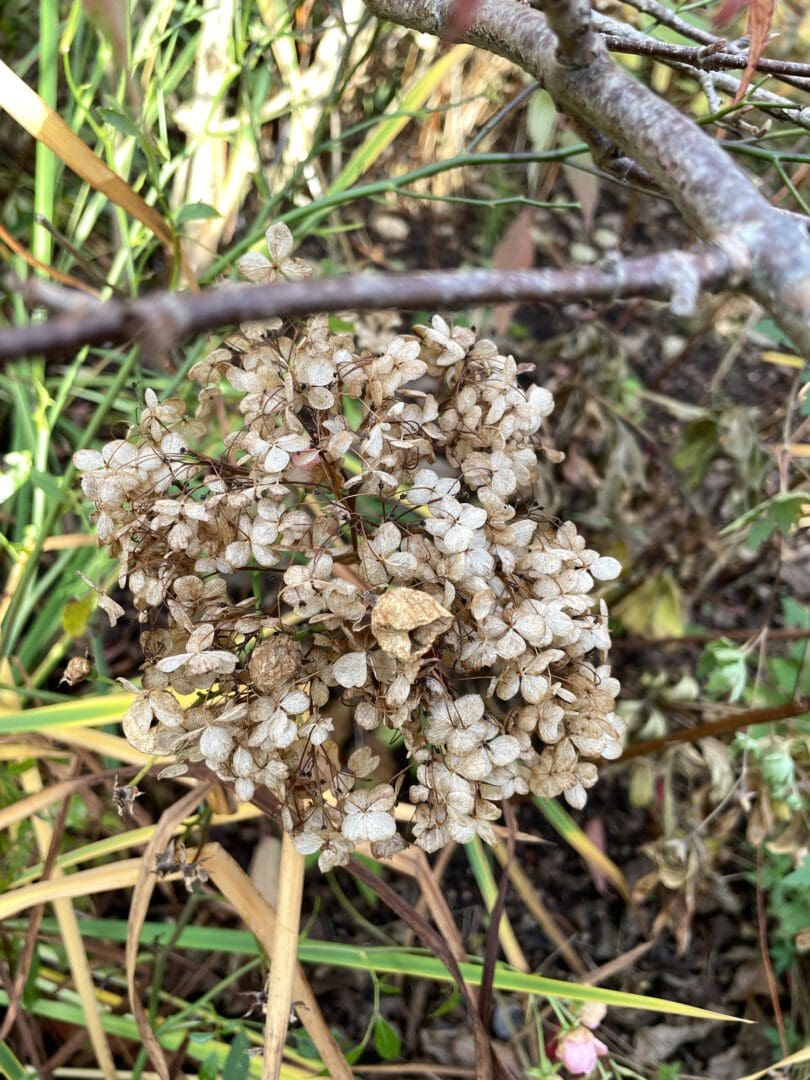
Dried hydrangea flower head


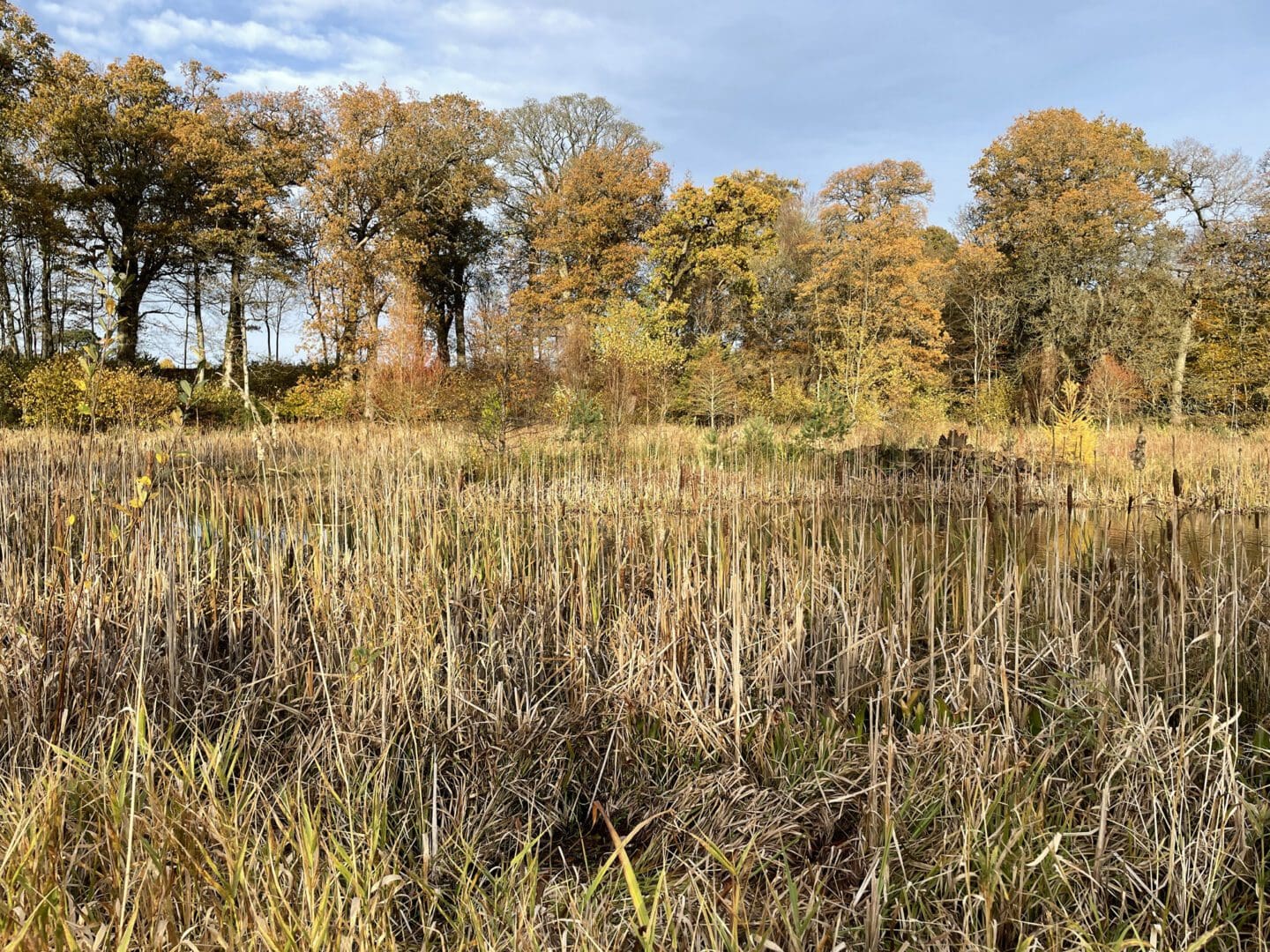
Snippety moments through the week help to lift the days above the to do lists, if briefly. Weekends are best of course for having more time to get out and look around. The photos in today’s post were all taken at Dumfries House, which has beautiful grounds and a really splendid walled garden. It is interesting at any time of year and the autumn colours were looking delightful in November.


Wherever we go, I try to get photos of flowers and trees. Looking through the pictures afterwards is another way of emptying my pockets out to see what I have – I’m always sifting through to see what might spark an idea for a project.


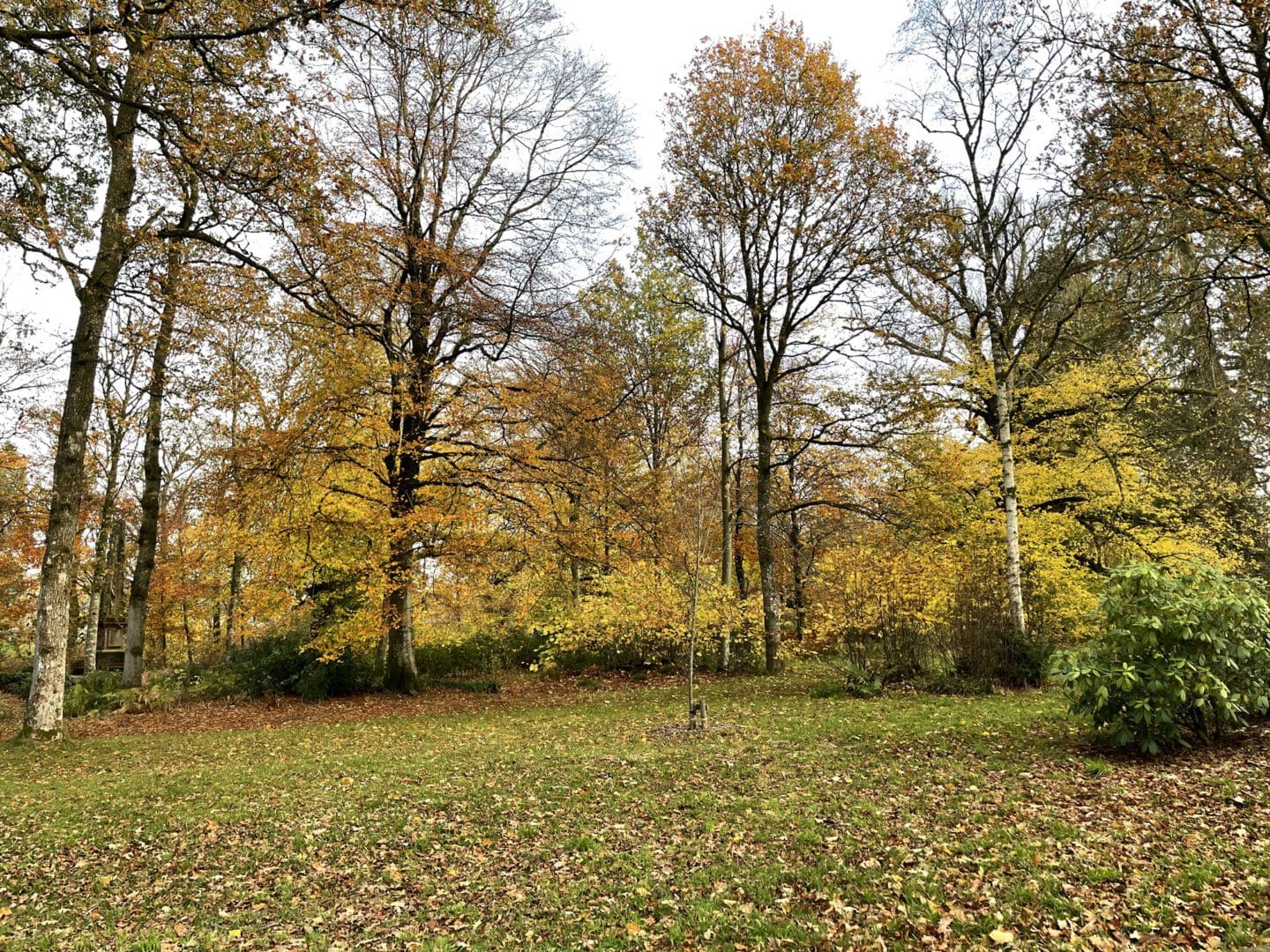
Golden trees in late autumn


At this time of year, my thoughts are already leapfrogging Christmas to think of spring designs. I’m thinking of the details I love most in the early spring, when everything has been dormant for so long, and then there are flowers again. This year that’s a little topsy turvy, as our primroses are still in flower! The spring bulbs are already making an appearance too, so we will see what January brings…

Posted on

A Concert of Birdsong

I have another woodland walk to share with you. This time I’m going to try something a bit different as I take you along. Rather than describing this walk, I can give you an idea of what it sounded like. There was a constant soundtrack of birdsong throughout the walk, giving me plenty of opportunities to stop and video snippets of melodies as I went. 


I have to apologise straight off, as I can’t identify most of the birds I heard, but this really didn’t prevent me from enjoying the continual chorus through the day. It was fun to recognise the odd call here and there. I was particularly pleased to hear the occasional pheasant, as I’ve only just learned what they sound like.


If anyone knows which birds they can hear, do please leave a comment as it would be so interesting to find out.   


bare trees in green woodland

https://www.youtube.com/shorts/MSIU2oAf_CA


The first songs were recorded as I walked through cultivated marshland. There were paths and boardwalks tracing their way through a wooded area, past reedy beds. The area felt more enclosed among the trees, so the sound of the birds was very distinct.


tree with curving trunks against blue sky

https://www.youtube.com/shorts/1LiLmhyTPT4


After the marsh area, the path opened out to fields and hills, with more people walking around. The birds were continually singing but, as the trees were further away, the birdsong merged with people chatting, dogs barking and lakeside splashing.


When the path started winding through woodland again, I could stop beneath trees, or go and sit in one for a while, and listen to the birds directly above.


pine tree and bare trees

https://www.youtube.com/shorts/URgQD4MyUPc


I hadn’t expected to take so many videos when I started out. I had originally planned to find quiet and peopleless spots in the woods where I could record two or three videos. As I was intentionally listening out for the birds, however, the constant singing stood out through the whole afternoon. I just kept my camera handy and took videos every five minutes or so. In places where the bird calls were loud and distinct, or really varied, I videoed the songs for about a minute, in case I didn’t get such a good chance further along.


greenery on the woodland floor

https://www.youtube.com/shorts/qDqd5Z49kn8


This was the pattern of the afternoon and I ended up with 15 videos of birdsong, and also a handful of water videos as well.


ivy covered trees in woodland

https://www.youtube.com/shorts/pmk3ZgS2E3g


I was enjoying the bird concert so much, I continued to take videos as I walked home. I chose a different route back and the woods were alive with birdcalls through the late afternoon.


bare trees against blue sky

https://www.youtube.com/shorts/JFC2YR4HMTE


When I got back to the more built up areas I could still hear the birds – now getting into their evensong routine. There were still plenty of trees around and the birds were just as vocal here, above the noise of traffic and people, as they had been in the woods.


ivy covered trees and wild garlic in woodland

https://www.youtube.com/shorts/RHduNOEyvV8


Thank you for joining me on my musical wander. As well as these shorts, I am adding longer videos on TikTok. Some of them are already up and I will be adding more videos over the next week, so do head over and check them out.

https://www.tiktok.com/@sweetthornembroidery


Posted on — Leave a comment

Waiting for Spring

Spring flowers are the most beautiful overture to the garden reawakening and welcoming the sun with a rush of blooms and greenery. There are other flowers that I love to see arriving later in the year such as cherry and apple blossoms, poppies and irises. But there is always a thrill at seeing the first flowers of the year breaking through gloomy winter and making the cold days less bleak.


Year by year a little more gets added to our garden and I’m gradually building up a display of early spring flowers. A friend of mine, whose back garden will be a riot of crocuses now, mentioned that she planted bulbs every year and this seems like the best plan to me. Some flowers appear regularly, like the snowdrops in the back garden, and others are more intermittent, like our daffodils. Sometimes flowers die off of course – we used to have a lovely primrose, and I’m not sure that the cowslip will come back this year. So there are always gaps to fill here and there.

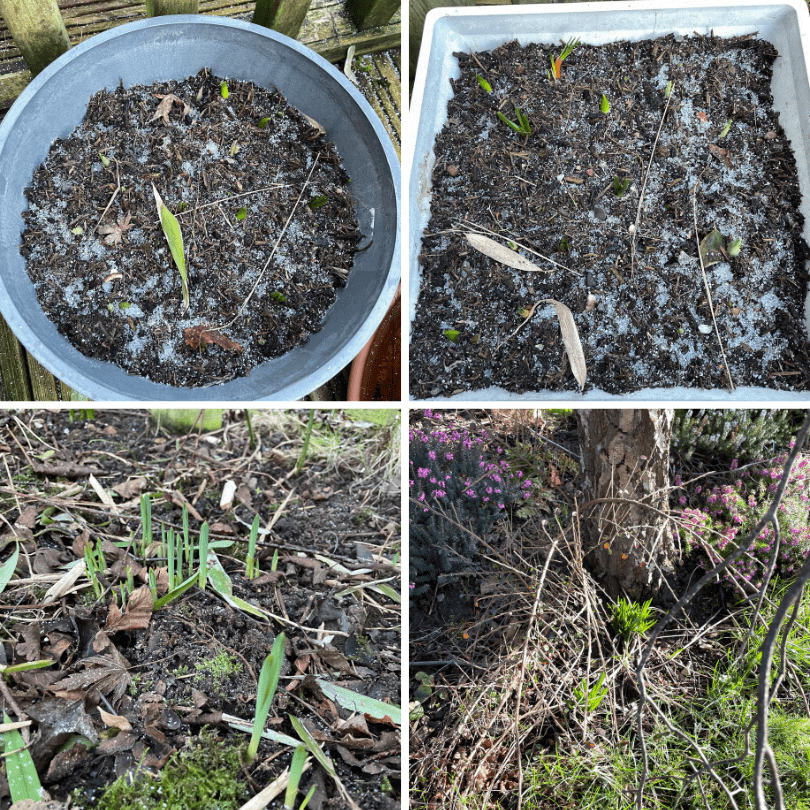
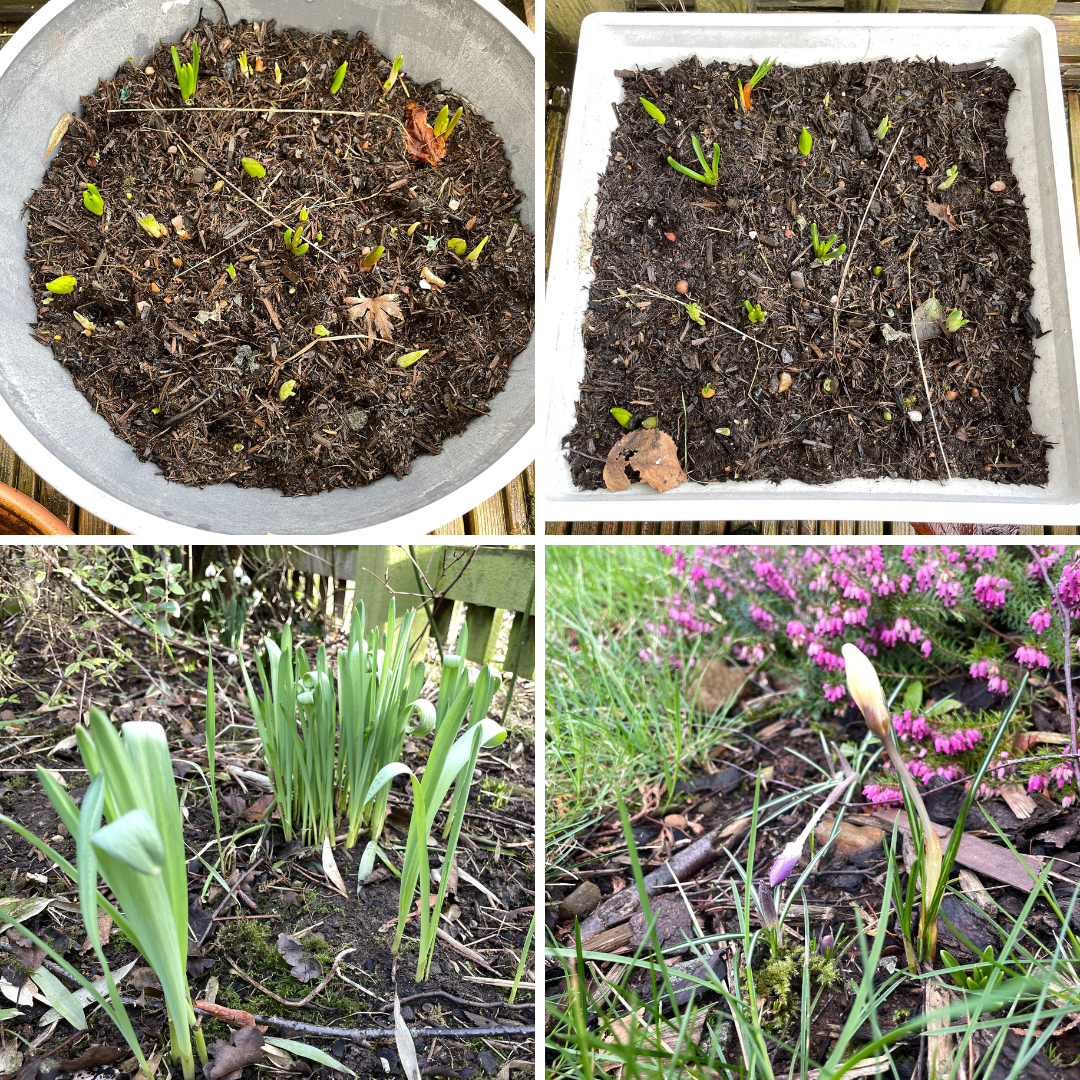
Collage photo of early crocuses amd bulb shoots

Sometimes I only have one or two packets to plant, last year I had quite a few. I added more crocuses because they will look so wonderful when I’ve finally created little carpets of them. I also bought flowers I’ve not had before – muscari, chionodoxa luciliae, scilla siberica and (swoon) dwarf irises. I’ve dotted them around the flower beds in the front and back gardens. I only have daffodils in the lawn, but crocuses look spectacular growing out of the grass so I’ll have to give that a go sometime. It’s easiest with early flowers as the grass won’t be getting cut for a while yet.

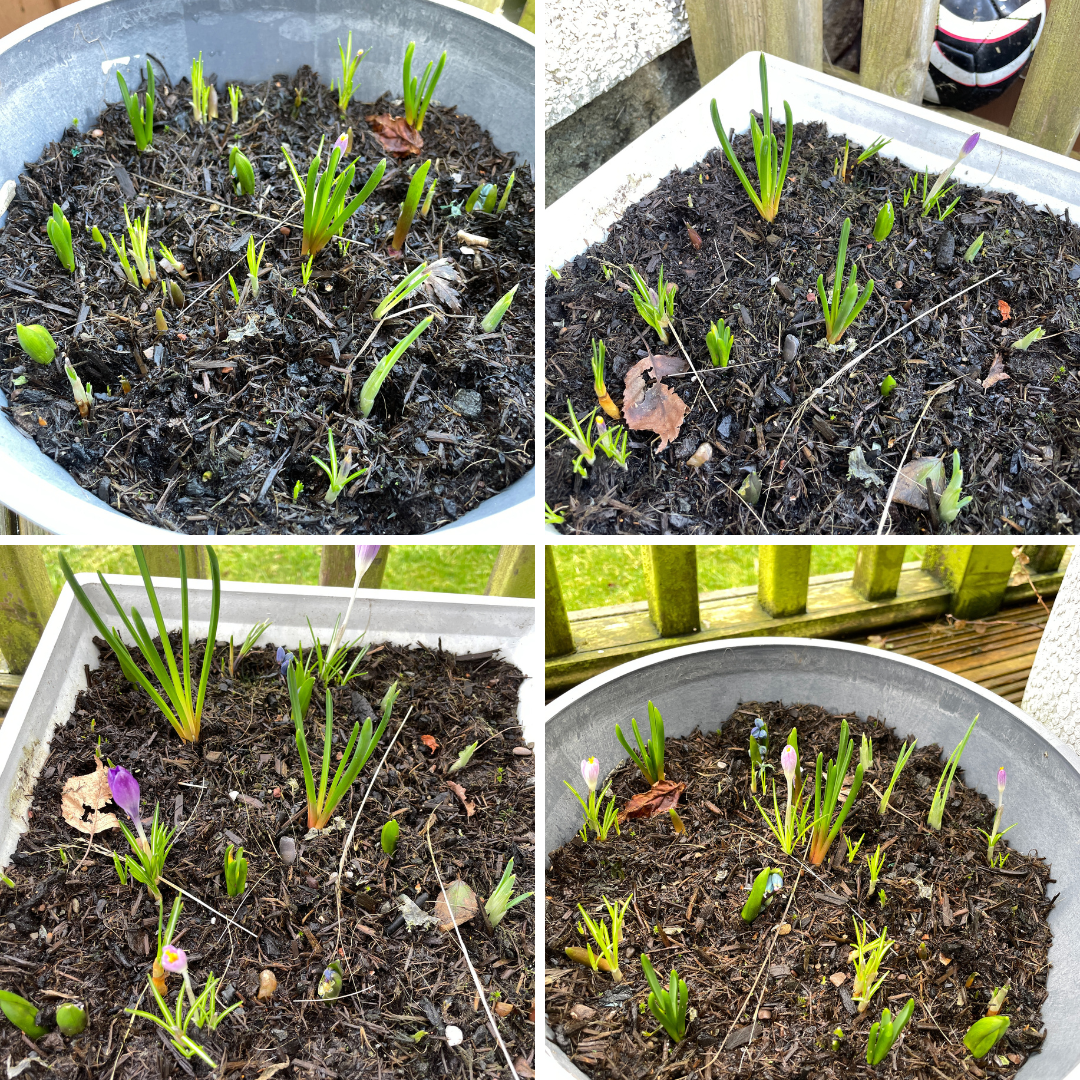
Collage photo of containers with new bulb shoots

This is the first year I’ve had bulbs planted up in containers. It’s lovely having a colourful display in the front garden, but we have a better view on the back garden. The containers sit just outside the back door, where I can enjoy them every day. The dwarf irises have come up best in the front garden though – it’s a sunnier spot, so they look all stately and glorious. They’re the first irises I’ve been able to encourage to grow and it’s a treat to finally have some in the garden.

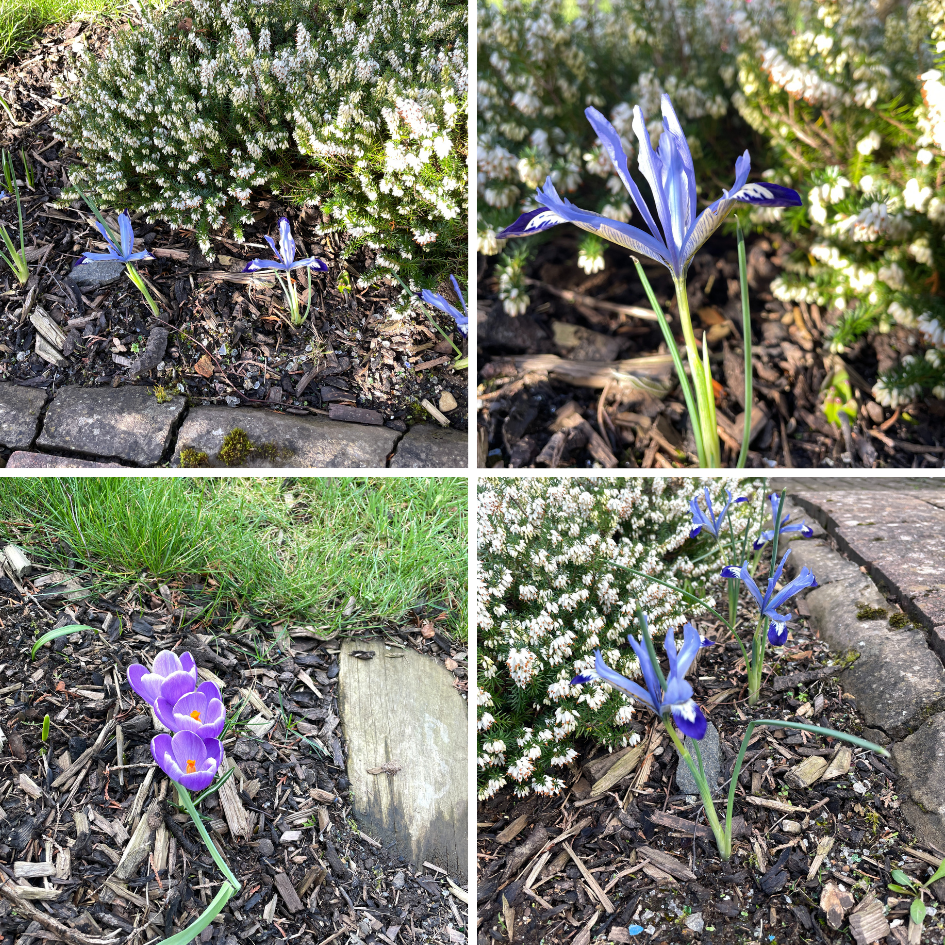
Collage photo of dark blue dwarf irises and purple crocuses

I think Monty Don from Gardeners’ World plants out container bulbs to his lawns and meadows a year or two after the first flowering. This definitely sounds like an interesting rotation plan to try out. It’s been useful learning from other people so that I can have a plan of what I’m doing. Addressing different garden tasks through the year has been a learning curve since we had a garden. We’re busiest in spring and autumn when weeding, planting, pruning and frost coverings are the main activities. The momentum often falls away in summer due to holidays and different routines. If it’s not too British a summer, we make a point of watering the garden and taking a look round every so often. The biggest task for me is maintenance – making sure that the plants are healthy and thriving through the year, and get enough attention.

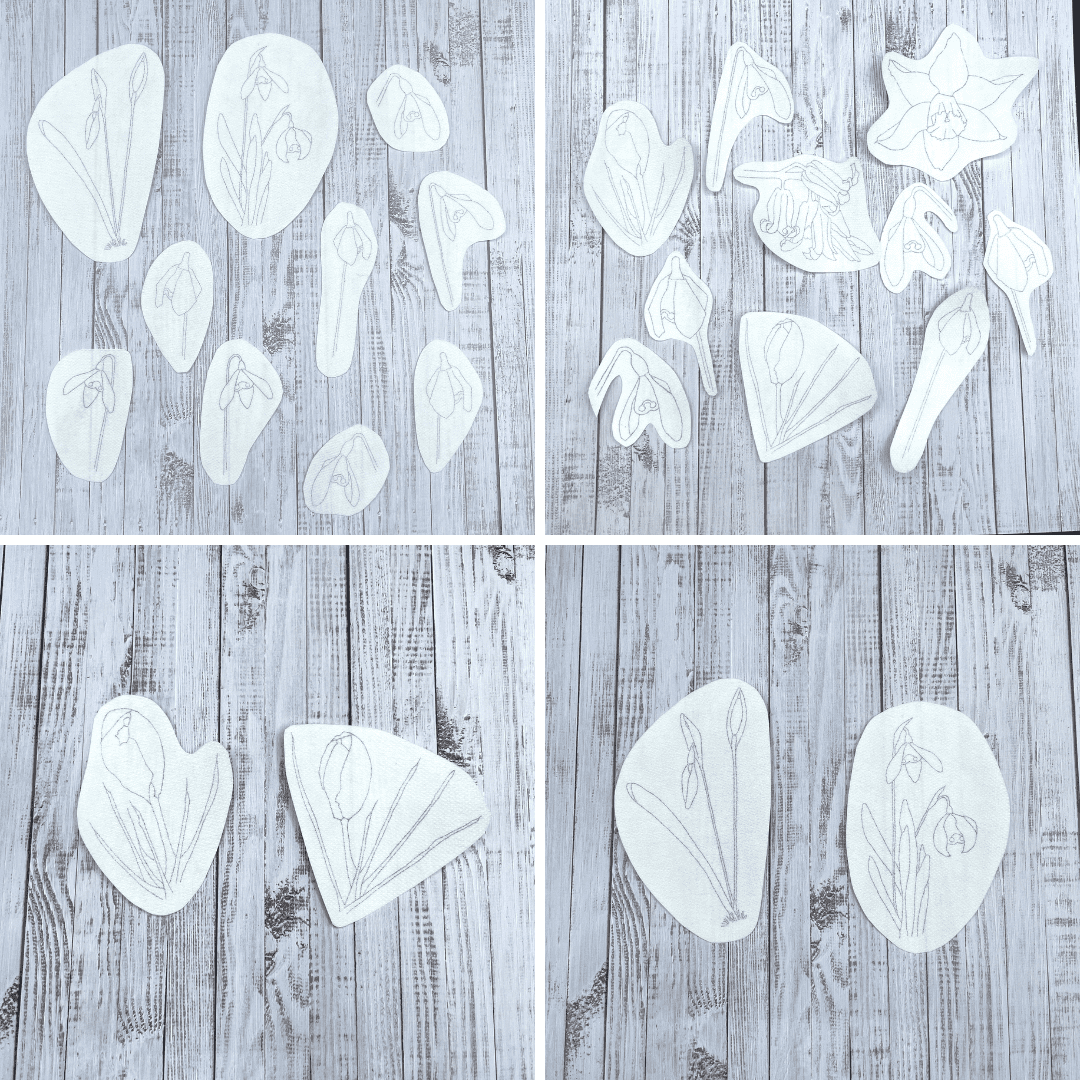
 Collage photo of spring flower embroidery designs

Given the season, early spring flowers were the natural choice for my first stick and stitch embroidery designs. I got particularly carried away with the snowdrops. These sketches are developed from my photos of spring flowers, most of them from my garden in the past few years. Naturally I am already planning designs for next year based on the new additions that are flowering now. I’m also working on more meadowy themes for the summer and I hope to have a kit or two released later in the year – I’ll keep you posted. In the meantime, although you won’t see these designs in my British Craft House shop, you will find them at TBCH’s spinoff site Buy Indie, where I’ve got a Sweet Thorn corner too:


https://buyindie.co.uk/product/stick-and-stitch-spring-flower-embroidery-patterns-2/


Thanks for reading, have a lovely March!


Posted on — Leave a comment

Useful … and beautiful

Have you ever come across the quote “Have nothing in your house that you do not know to be useful, or believe to be beautiful”? It is a quote that I have on the front page of my British Craft House shop because I feel it sums up where I am coming from as a maker.

(I would perhaps include the word ‘garden’ as well as ‘house’ to be true to the range of things I make.)

The quote is from William Morris, the most famous 19th century designer and key figure in the Arts & Crafts movement. He developed an interest in his childhood for wildlife, flowers and the natural world which would have an influence on his work in later life. Contrary to the Victorian ideal of mass production & industrial processes William Morris championed artisan production of handmade items in textiles, wallpaper, carpets, embroidery, tiles & books.

He brought the natural world indoors by using patterns from the countryside, hedgerow plants and old-fashioned garden flowers to create his designs. 

This spirit of unique, handmade design inspired by nature I hope is reflected in my ceramics – nothing mass produced, nothing copied, hopefully beautiful or useful, or both!

Posted on — Leave a comment

Summer is coming ….maybe

Unprecedented times, furlough, words about 8 weeks ago we had never considered to be part of our everyday life, supermarket queues, the world taking up baking leading to an unnormally high demand for flour of all varieties.

It has amazed me the number of people who have decided to take up gardening, me included! I currently have various ? salad leaves, radish, basil, peppers, mustard, plus some forget-me-nots and pansies popping up … it is also great for home schooling (I am not good at being a teacher, I get too ratty far too quickly, but I think that is because my little darlings know how to annoy me in the hopes I give up and they can drift back to the various game machines they have) but at least one them has been very involved in preparing, planting, and watering so I will take that as a small win 🙂

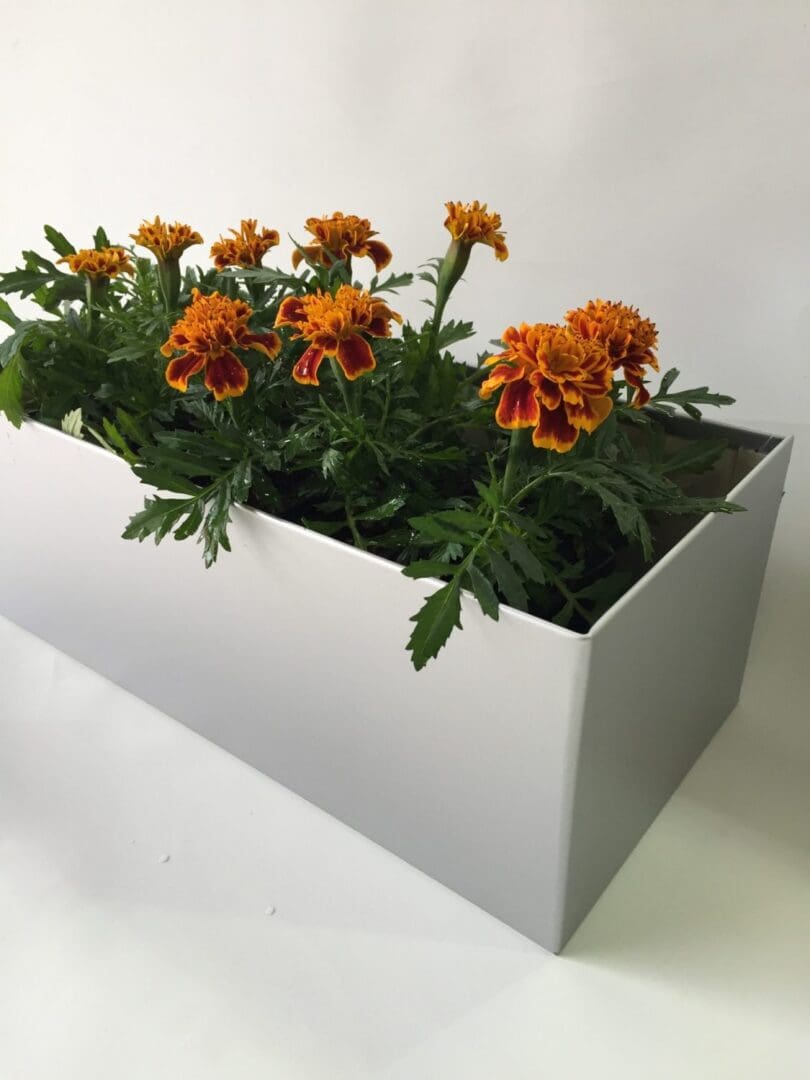
Grey Metal Planted Planter
Posted on — Leave a comment

This here is a Daffodil….

Inspired by my Welsh heritage and the national flower emblem I have
wanted to create a daffodil in metal for a while, but never found the
time. Taking advantage of the lockdown and a few days off from my busy
day job in the NHS I found myself drawn to creating a daffodil so I
rolled up my sleeves, put on my apron, got my sharpie, some metal and tools out and got to
work.

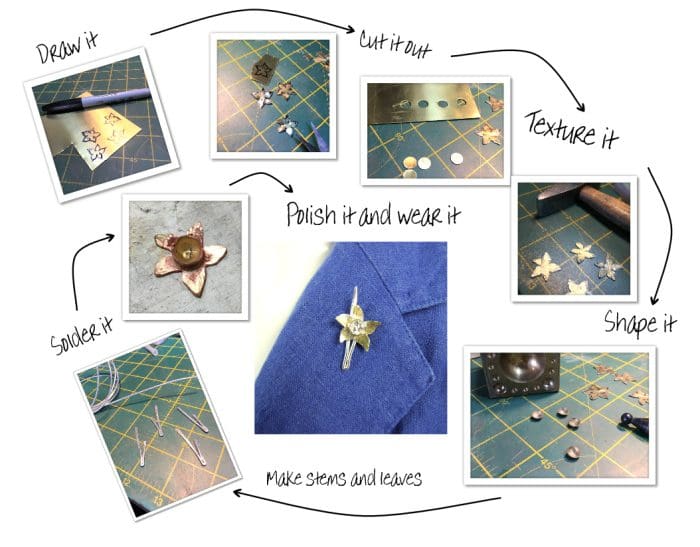
When I started out on this project I had a picture in my head of what I wanted my daffodil to look like, this included working out how to turn a flat piece of metal into a 3D flower.  I began with some 0.5mm brass sheet and drew the outline of the flower using a felt pen, (well I drew several actually just in case I melted the first one or three!).

I cut these shapes out and gave them some texture with a hammer and then shaped the petals.  For the flower trumpet I cut simple circles from the brass sheet then used my doming block and tools to shape the disc into a small cup and then ruffled the edges.  The flower centre was created from tiny sterling silver balls formed from molten silver (this is my favorite pass time when I’m not making, melting tiny bits of silver into balls, it’s very therapeutic!), which I soldered in place to create the stamen.  The final piece for the flower was the stem and a leaf.  I formed these by hand from sterling silver, hammering, filing and shaping, then soldered all of the brass and silver pieces together, adding a silver pin to the back.

The last bit is the most time consuming of all, requiring a lot of elbow grease and polish to make the brass and silver gleam.

I loved making this and have plans now to make more flowers, I definitely want to make a bluebell and a freesia my favourite flowers of all time, then maybe a snowdrop, a crocus oh and a pansy, I could go on and on as there are so many beautiful flowers lol! I hope you enjoyed my little blog about making a daffodil and I would love to hear what your favourite flower is.

Best wishes and thanks for stopping by to read

Max

ps you can find the daffodil pin in my shop, link is below.

Posted on — Leave a comment

Winter is slowing creeping away as Spring gathers pace

I have to confess the weather of  late has been confusing, from a cloud burst of snow one afternoon, clear blue skies followed less than 24 hours later, chasing its tail the howling gales and flash floods across the country, it’s cold enough to be winter, but the bright blue skies suggest a different story. 
So what plants, bulbs, or seedlings can you realistically look at panting whilst the weather is so up and down? 

To answer this question it does also depend on a many other factors, including but not limited too the PH levels of your soil, whether you live in a sheltered area or are fully exposed on a cliff top , availability of a greenhouse or somewhere light warm and airy, essentially draught free to give a few answers. 
February gardening is all about getting the seeds planted, so get out your old planters and scrape off the top layer of compost and replace with fresh. Seed wise you can sow lettuces in readiness for fresh leaves in May June time, but do ensure they are protected, varieties such as Winter Gem, and Valdor are good winter hardy types but do make sure you plant under cloches

As a general rule, bulbs can be planted out as well, but do remember they tend to prefer light well draining soil, if they are left in wet, heavy soil they are unlikely to thrive. So you can consider broad beans, carrots, parsnips, beetroot, cabbages. 
If you are lucky enough to have a greenhouse herb seeds, tomatoes, cucumber can get a good start. 

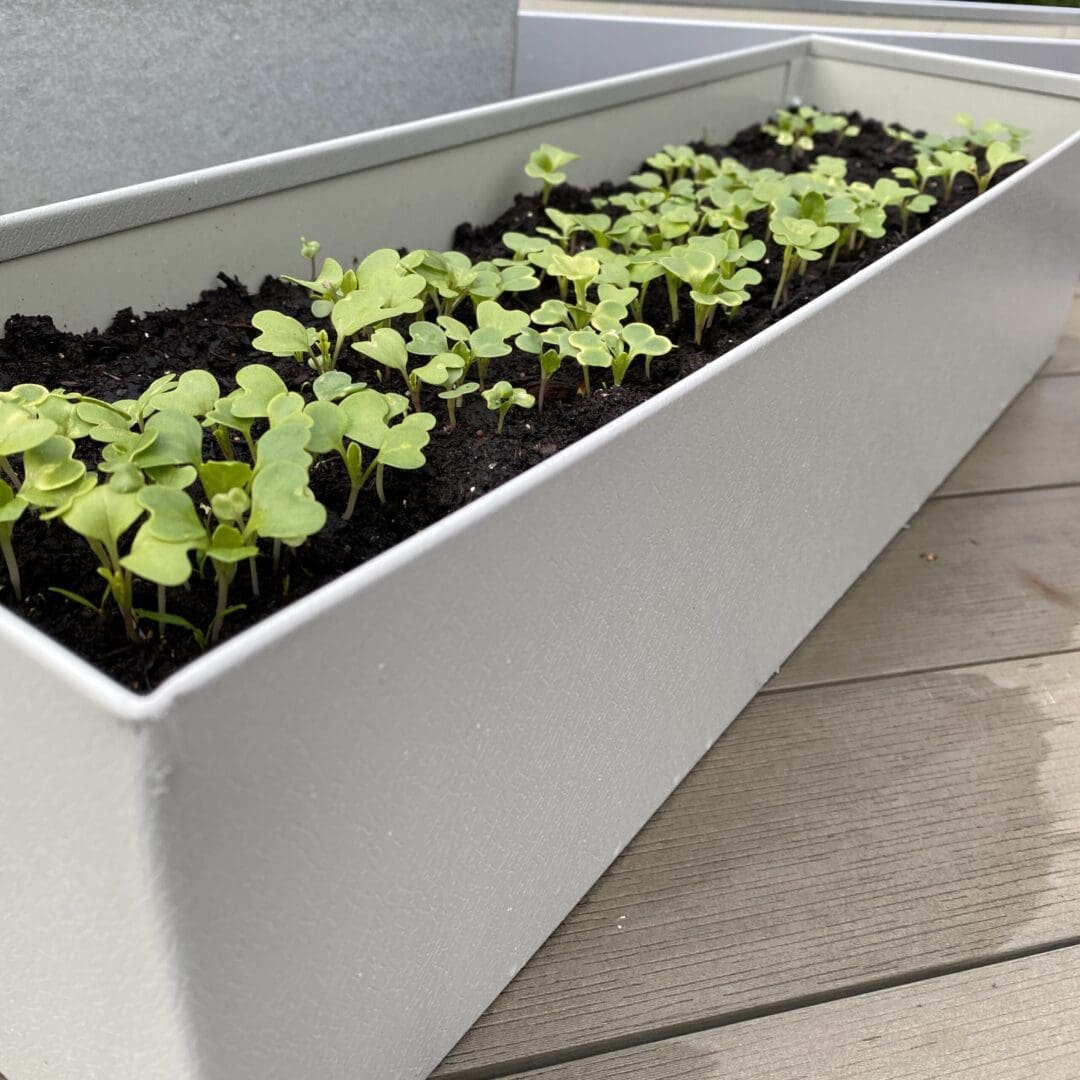
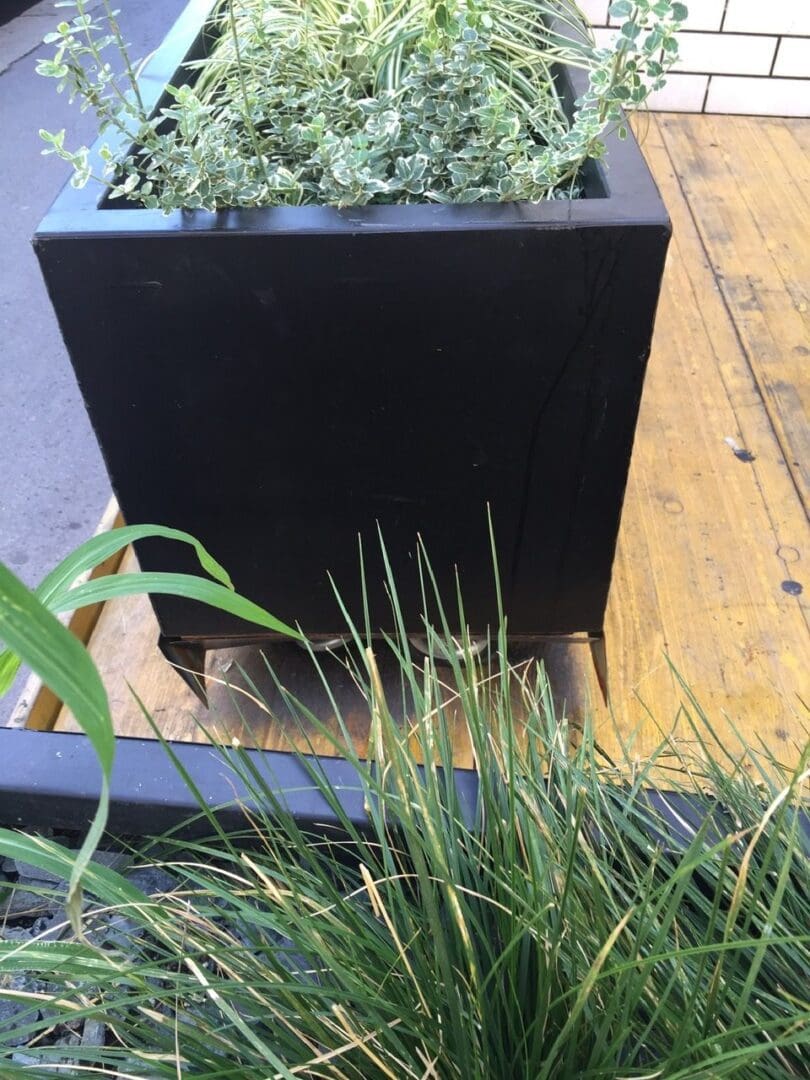
I have started to list a few deeper, larger metal garden planters, these were specifically designed to enable the rooftop or patio gardener to have access to deeper soil thus enabling root vegetables to be sown. grown and eaten from the single metal garden planter. So if you fancy one do let me know! 
Fi

Posted on — Leave a comment

Traditional V Digital Sculpture techniques?

I’ve been a traditional sculptor for more than 30 years. I enjoy the relationship I have with the medium I use, and also the close interaction with the reference materials I choose, both of which combine to help me create the sculptures I produce.

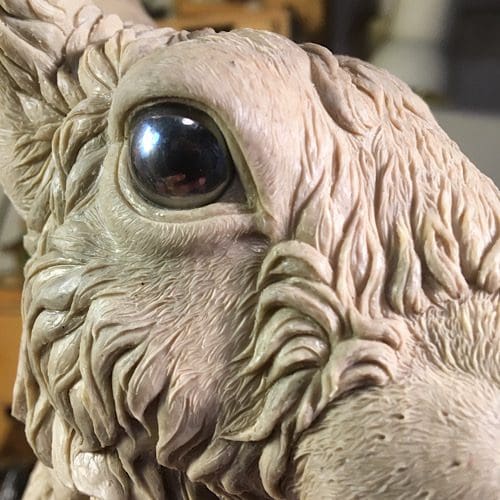
Close up of a Hare sculpture created using traditional sculpting techniques
Close up of my Harriet Hare sculpture created using traditional sculpting techniques

I am rather resistant to change, and have tended to view ‘digital’ sculpting as… cheating! Well, to some degree any way! However, a figurine designing company recently contacted me after they began following me on Instagram and they commented that they were impressed by my ‘sensational fur sculpting skills’! (?) They went on to ask me to sculpt a type of Tiger for them, even though they employ several digital sculptors. It seems that perhaps fur can’t easily be replicated using a computer and that the hand and eye of a traditional sculptor might still be useful in this digital age! 

I was thinking about how I was going to approach this project and I had an idea about how to incorporate working ‘with’ digital sculptors which would save the company time and money and still produce the finish on the sculpture which they came to me for.

I admit to feeling slightly apprehensive when I emailed them my idea… I know nothing about digital sculpting or 3D printing and was expecting my idea to be shot down in flames, but… the reply came back almost immediately hailing me as ‘innovative’ and a ‘genius’! (?) They also believe that they might have quite a bit of ‘traditional’ sculpting work for me in the future! 

So, traditional V Digital Sculpture techniques? You’ll have noticed that I haven’t spilled the beans on exactly ‘what’ my brilliant idea is (it isn’t always a good idea to give your best ideas away!), but I’m so pleased that after my resistance to digital sculpting I have found a way to combine it with the way I work to the mutual benefit of both me and the customer in a faster and ultimately a more satisfactory way. 

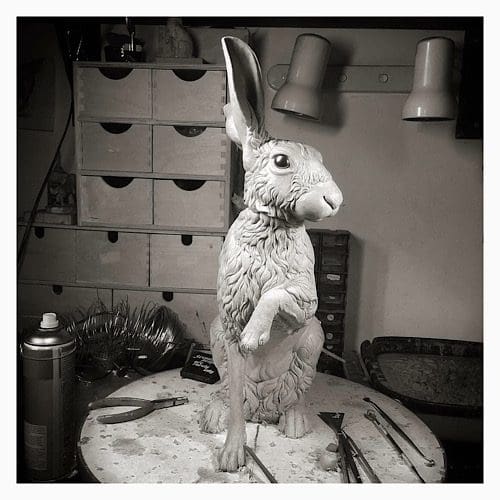
Hare sculpture created using traditional sculpting techniques
My Harriet Hare sculpture created in wax using traditional sculpting techniques