Spring flowers are the most beautiful overture to the garden reawakening and welcoming the sun with a rush of blooms and greenery. There are other flowers that I love to see arriving later in the year such as cherry and apple blossoms, poppies and irises. But there is always a thrill at seeing the first flowers of the year breaking through gloomy winter and making the cold days less bleak.
Year by year a little more gets added to our garden and I’m gradually building up a display of early spring flowers. A friend of mine, whose back garden will be a riot of crocuses now, mentioned that she planted bulbs every year and this seems like the best plan to me. Some flowers appear regularly, like the snowdrops in the back garden, and others are more intermittent, like our daffodils. Sometimes flowers die off of course – we used to have a lovely primrose, and I’m not sure that the cowslip will come back this year. So there are always gaps to fill here and there.
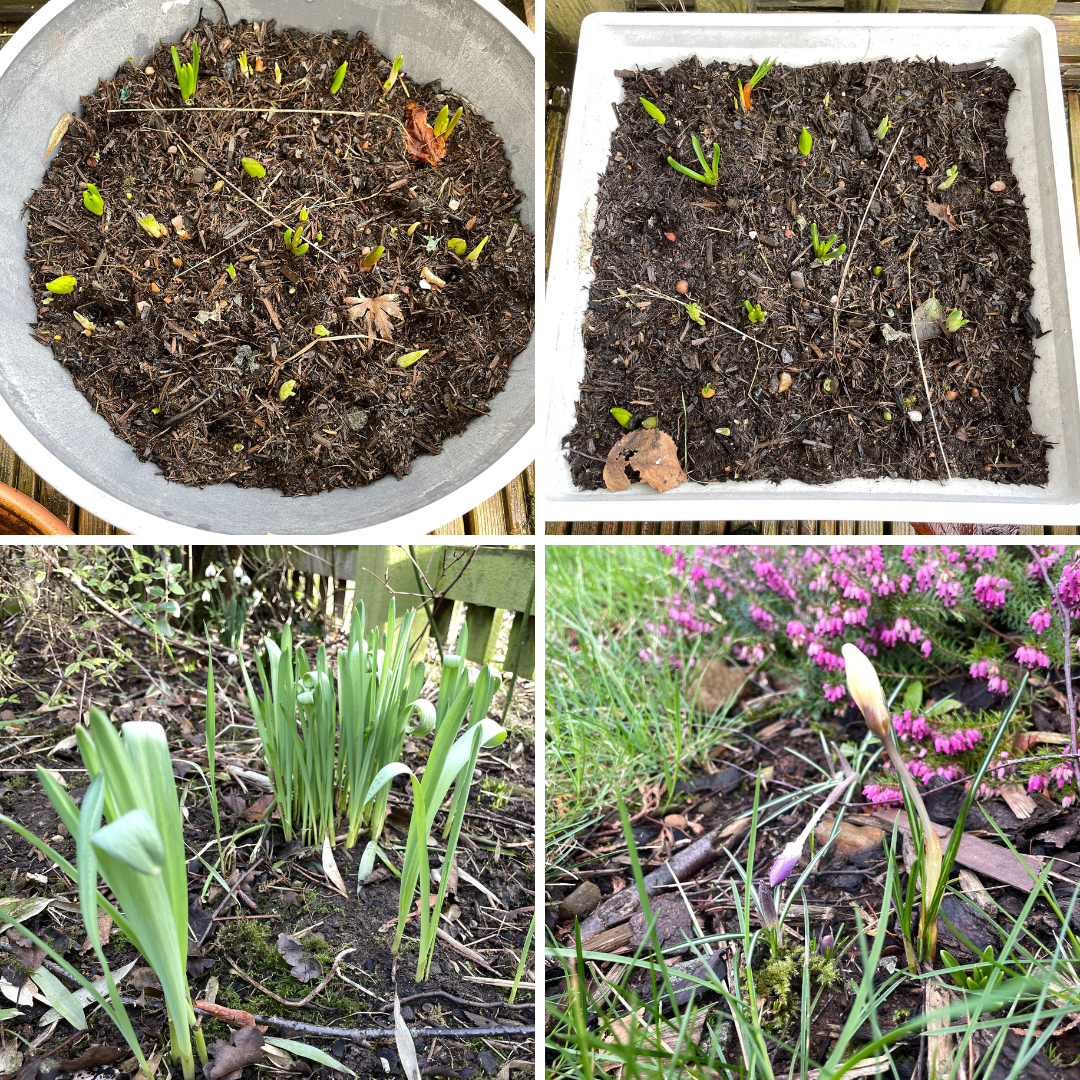
Sometimes I only have one or two packets to plant, last year I had quite a few. I added more crocuses because they will look so wonderful when I’ve finally created little carpets of them. I also bought flowers I’ve not had before – muscari, chionodoxa luciliae, scilla siberica and (swoon) dwarf irises. I’ve dotted them around the flower beds in the front and back gardens. I only have daffodils in the lawn, but crocuses look spectacular growing out of the grass so I’ll have to give that a go sometime. It’s easiest with early flowers as the grass won’t be getting cut for a while yet.
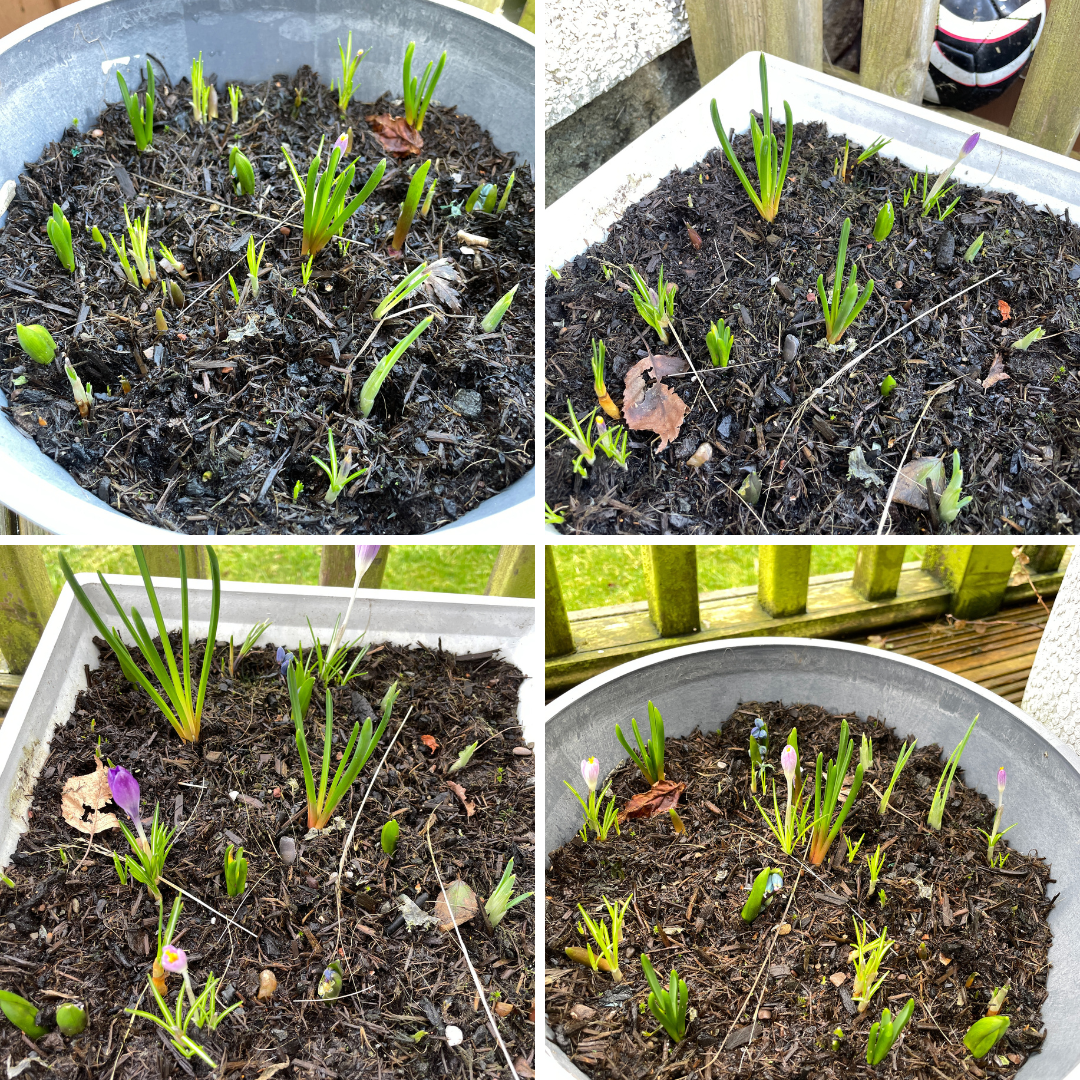
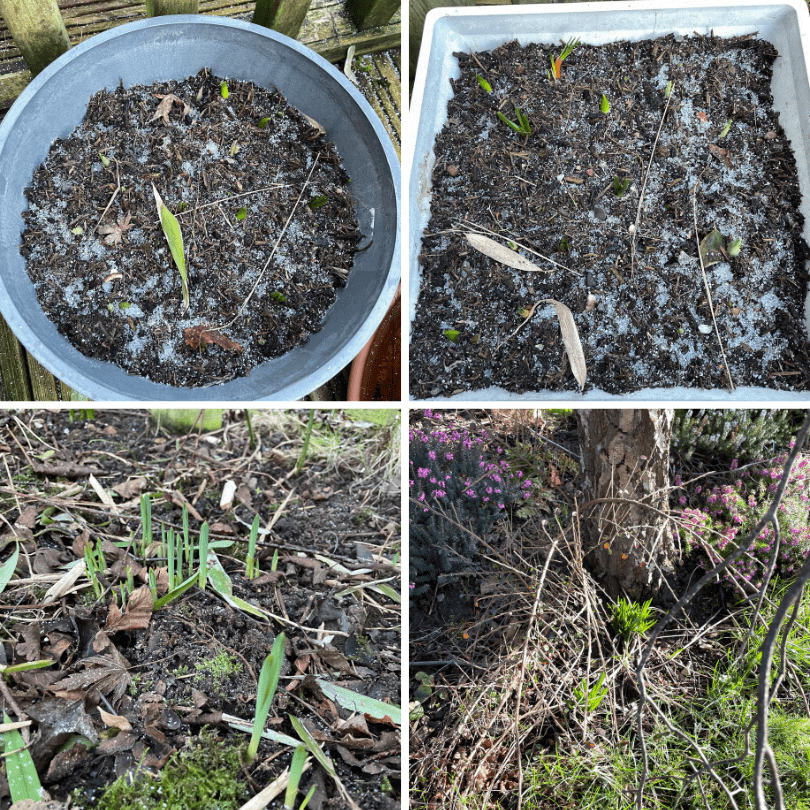
This is the first year I’ve had bulbs planted up in containers. It’s lovely having a colourful display in the front garden, but we have a better view on the back garden. The containers sit just outside the back door, where I can enjoy them every day. The dwarf irises have come up best in the front garden though – it’s a sunnier spot, so they look all stately and glorious. They’re the first irises I’ve been able to encourage to grow and it’s a treat to finally have some in the garden.
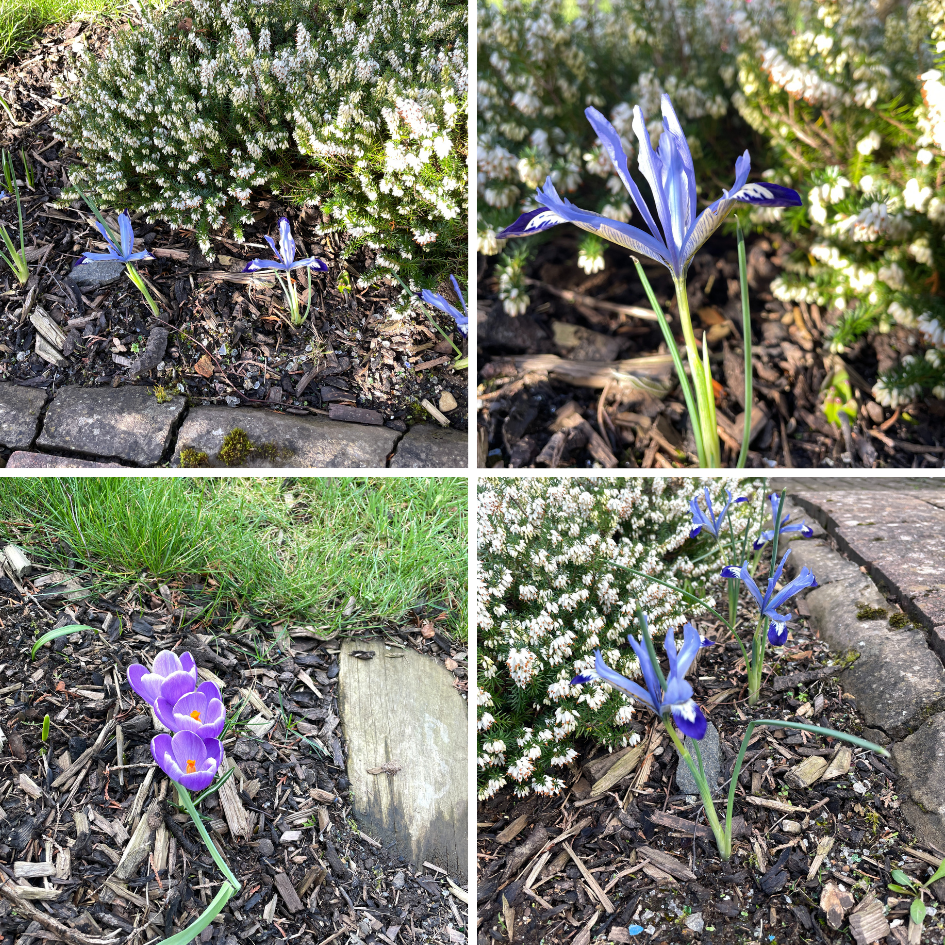
I think Monty Don from Gardeners’ World plants out container bulbs to his lawns and meadows a year or two after the first flowering. This definitely sounds like an interesting rotation plan to try out. It’s been useful learning from other people so that I can have a plan of what I’m doing. Addressing different garden tasks through the year has been a learning curve since we had a garden. We’re busiest in spring and autumn when weeding, planting, pruning and frost coverings are the main activities. The momentum often falls away in summer due to holidays and different routines. If it’s not too British a summer, we make a point of watering the garden and taking a look round every so often. The biggest task for me is maintenance – making sure that the plants are healthy and thriving through the year, and get enough attention.
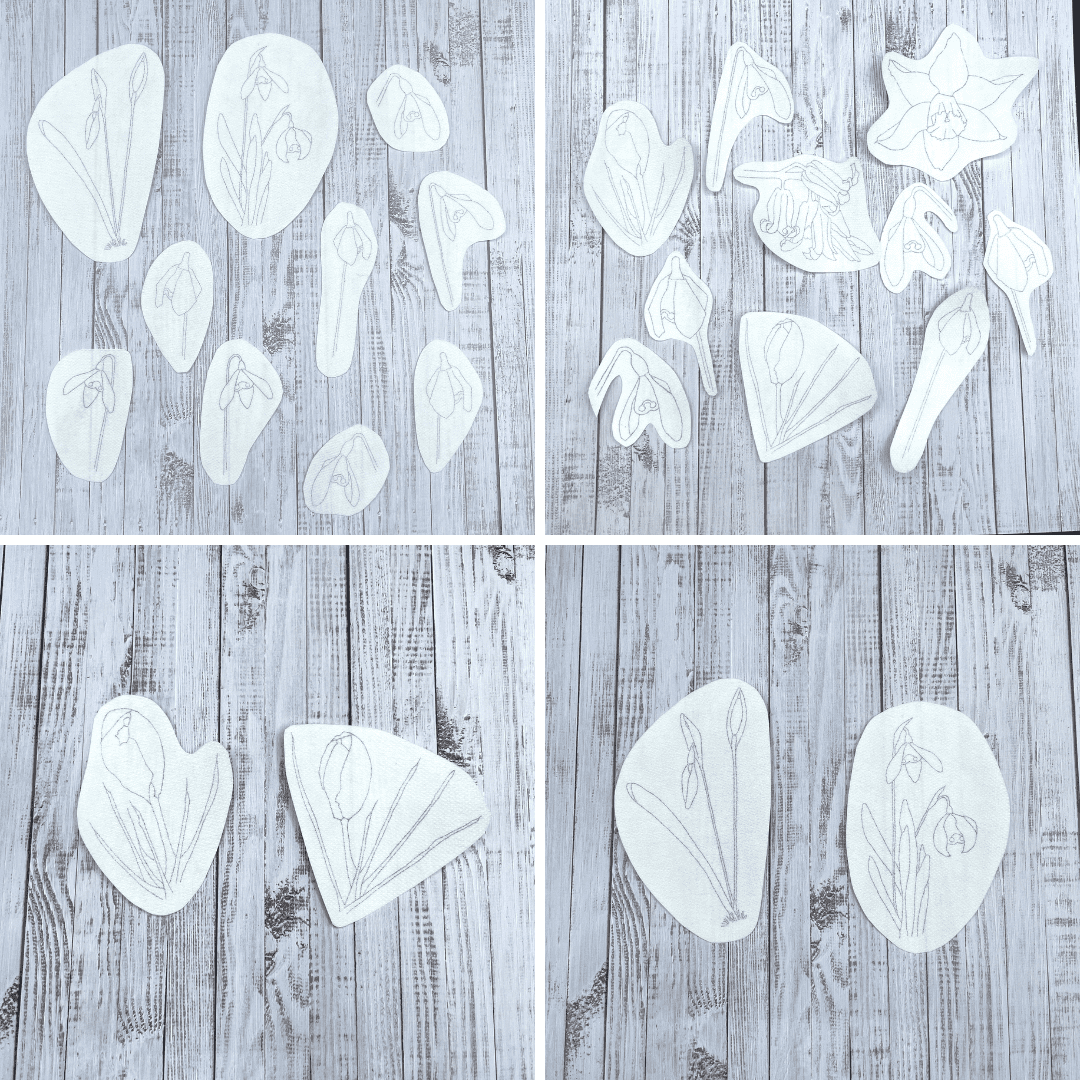
Given the season, early spring flowers were the natural choice for my first stick and stitch embroidery designs. I got particularly carried away with the snowdrops. These sketches are developed from my photos of spring flowers, most of them from my garden in the past few years. Naturally I am already planning designs for next year based on the new additions that are flowering now. I’m also working on more meadowy themes for the summer and I hope to have a kit or two released later in the year – I’ll keep you posted. In the meantime, although you won’t see these designs in my British Craft House shop, you will find them at TBCH’s spinoff site Buy Indie, where I’ve got a Sweet Thorn corner too:
https://buyindie.co.uk/product/stick-and-stitch-spring-flower-embroidery-patterns-2/
Thanks for reading, have a lovely March!