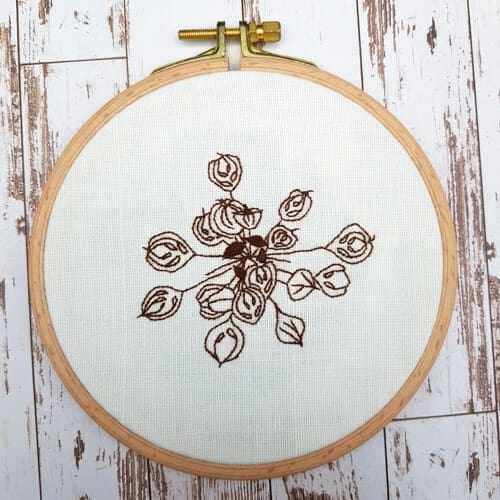
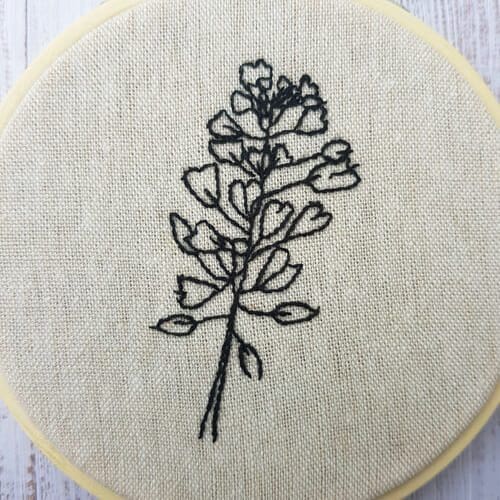
After surprising you all with an actual embroidery project in my last posts, I am continuing with this stitchy theme for now. As far as spare time allows, I am planning a variety of projects so that I can explore different embroidery styles and techniques.
Very pleasingly, there are so many sorts of embroidery to learn about. I have an idea about the first few projects but I don’t know where all these ideas will finally take me. I have a vague notion about trying out a variety of styles and then focusing more on my favourites. That’s the sort of project which will take years and it will be interesting to see what develops as I go along.
I have made some lovely long lists of various embroidery styles and I have some idea of what to explore first. I’m planning to keep things relatively simple for now and move on to more complex techniques and designs over time. As with any art, embroidery designs cover a range of complexity and the simplest designs can be as striking as the most detailed ones.
My first mini project was an exercise in design as well as technique. I enlarged one of my own ginkgo leaf designs and had a bit of a play with colour.

The veins are in stem stitch. You can see that I made a note of the colours I was using by adding a small key at the side. I wanted to mix these colours up to see how they worked together. To save time on making the next colour choice every time I finished a vein, I wrote down a pattern which spread the colours out across the design.

I stitched the central part of the leaf in more natural colours, to get some practise with filling stitches. This is definitely an area I need to concentrate on more at some point. I am always trying to improve how neatly the stitches sit together. As far as colour goes I was just winging it. I tried to add some subtle highlights to the dominant moss green. When I look at needle painting more closely I will have the time to consider how to use embroidery thread for shading and for variety. The technique of shading similar colours together subtly is a delicate skill. The next step seems even more complex – judging how different colours work together to create a more nuanced idea of shading, and how to work in accents of contrasting colours so that they complement the design and don’t clash.
To add a bit of texture and stitch variety, I edged the leaf in whipped backstitch and trailed the stem. I like the smooth raised effect of trailing. Another name for this technique is satin couching, but it has several different names. I still need to work on this stitch to create a consistently smooth result. It is a really effective way to highlight details.

The final task is to wash away the fabric marker and mount the embroidery on card to start the embroidery portfolio that I’m planning. If you’re following me on Instagram no doubt you will see the finished product soon.
In the meantime I am already stitching away into my next project. All being well, I should have another blog post ready soon and you can see what kind of a start I’ve made.
If you want to explore embroidery styles and stitches, the Royal School of Needlework have provided a very pleasing rabbit hole: https://rsnstitchbank.org/technique
The instructions are gorgeously clear, with photos, graphic and videos. I have several of their beautiful books, but I am sure that this page will be a valuable resource as I explore more types of embroidery.