Posted on — Leave a comment

Birthstones in Jewellery

Birthstones in Jewellery

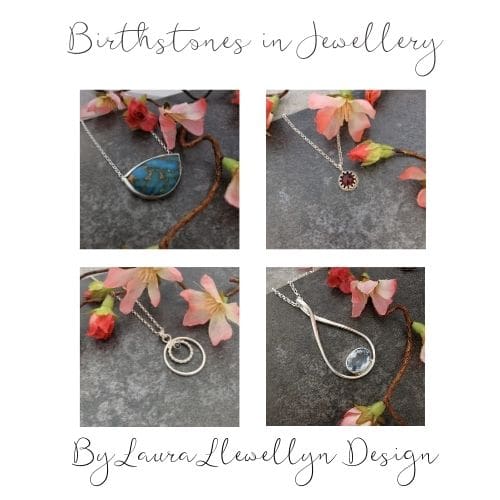
Birthstone history can be traced back through the centuries however it was in 1912 that the American National Association of Jewellers created an official list.  This list is still in use today with a few changes and additions.

Each month has one or 2 (or 3 in the case of June and December!) gemstones assigned as birthstones and these can make a great gift idea for a special birthday, to celebrate a birth or even as a multi gem piece of jewellery to symbolise your family unit.

The birthstones are

January – Garnet
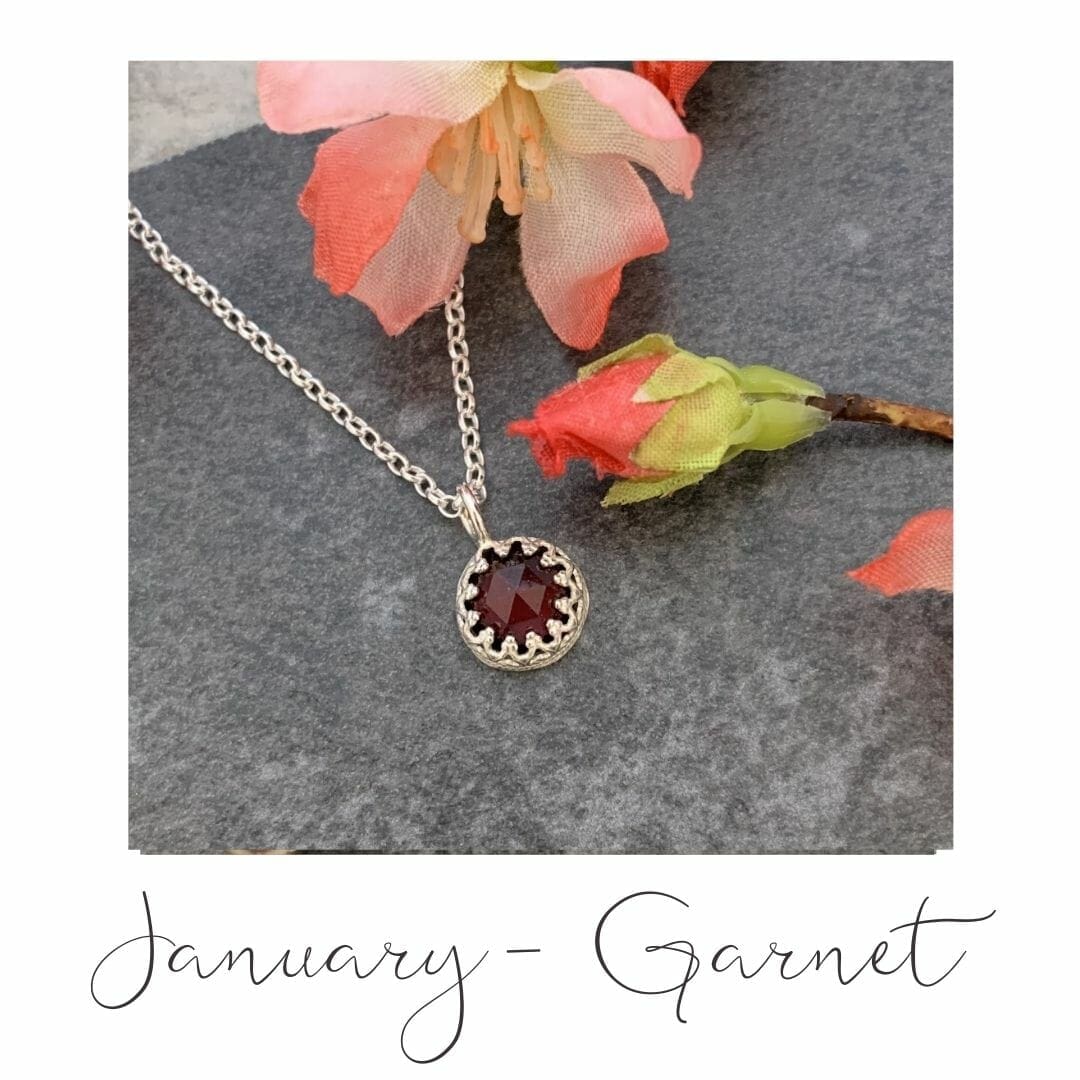
January birthstone Garnet

Garnets are most commonly known to be red but do come in an array of colours including green and purple. 


The name garnet comes from the latin word granatus which means pomegranate; which links to the classic
red colour of this beautiful gemstone.

This gemstone is thought to bring the wearer good health, wealth and happiness.

As well as being the January gemstone garnet is also the
gemstone for a second wedding anniversary.

February – Amethyst
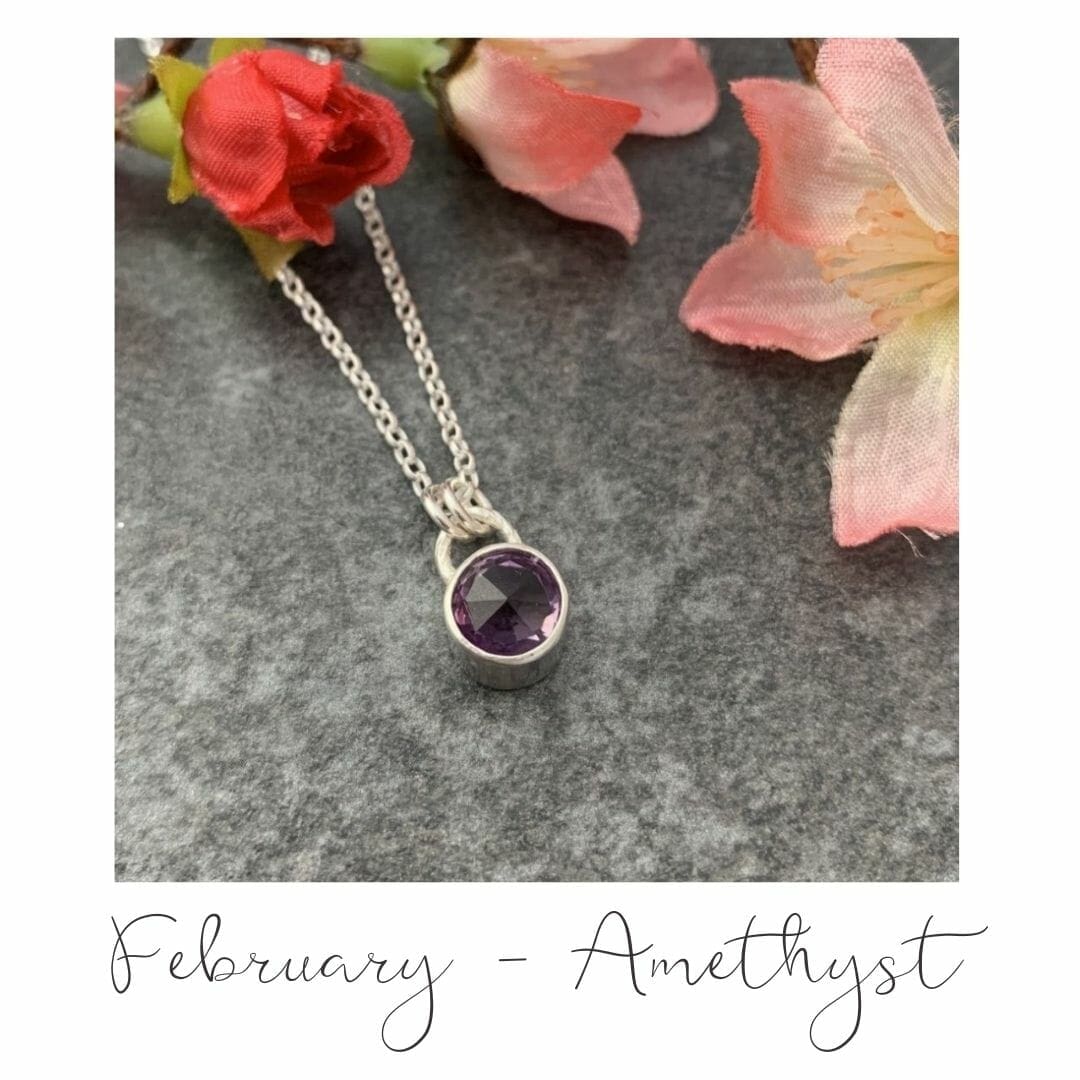
Amethyst Birthstone Blog

Amethysts come in an array of shades from lilacs through to rich dark purples and can be cut in many different ways.

The name amethyst comes from the ancient Greek word ‘amethystos’ which means ‘not drunk’. The gemstone was believed to prevent intoxication!  That is definitely my favourite gemstone fact!

As well as being the birthstone for February amethyst is also the gem for 6th and 17th wedding anniversaries.


March – Aquamarine
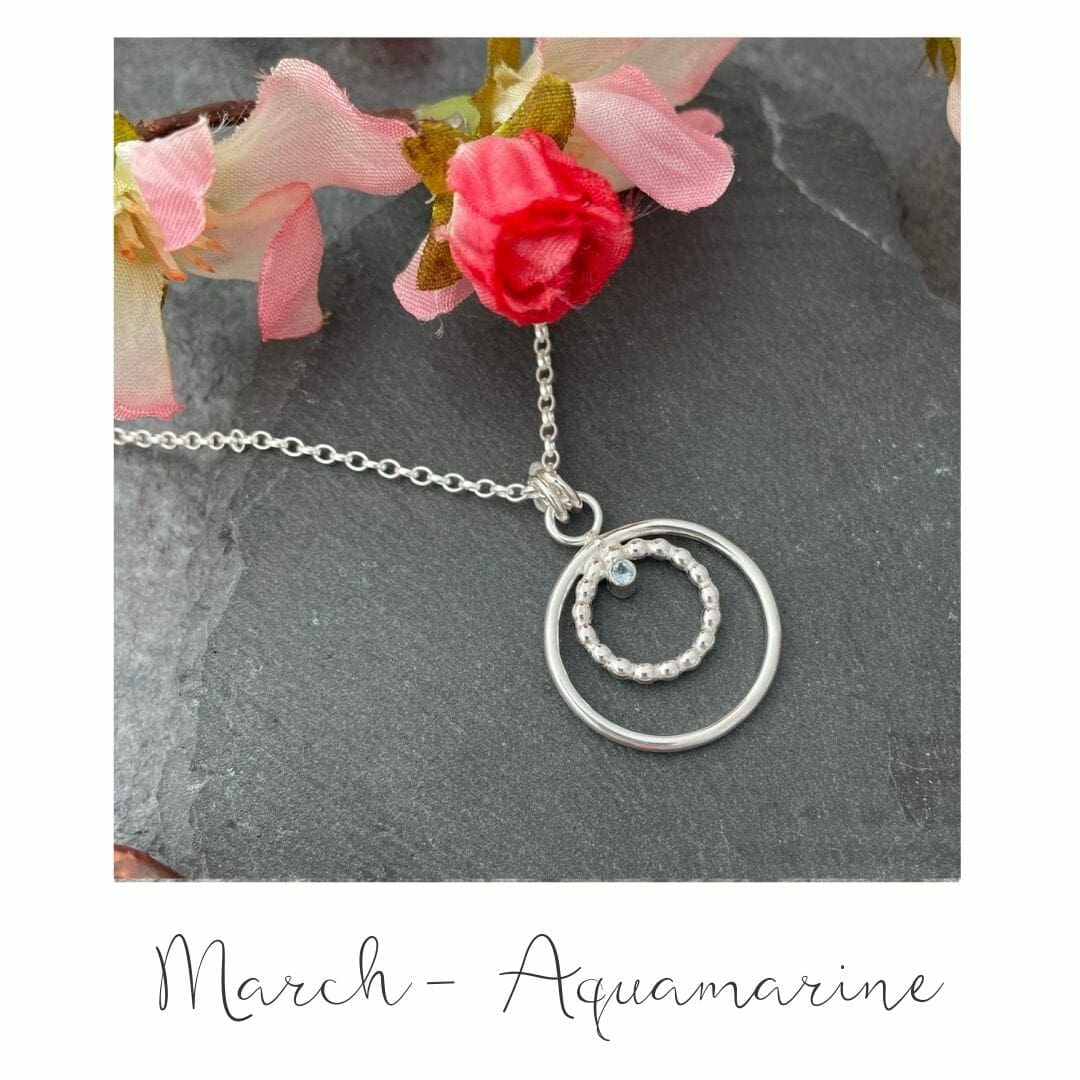
Aquamarine March birthstone pendant

Aquamarine is typically a pretty light blue colour.  This gem is the green/blue variety of the mineral beryl; emerald is the green variety of the same material.

It gets its name from 2 latin words; aqua meaning water and marina meaning ‘of the sea’.

As well as being the March birthstone aquamarine is also the gift of a 19th wedding anniversary.


April – Diamond
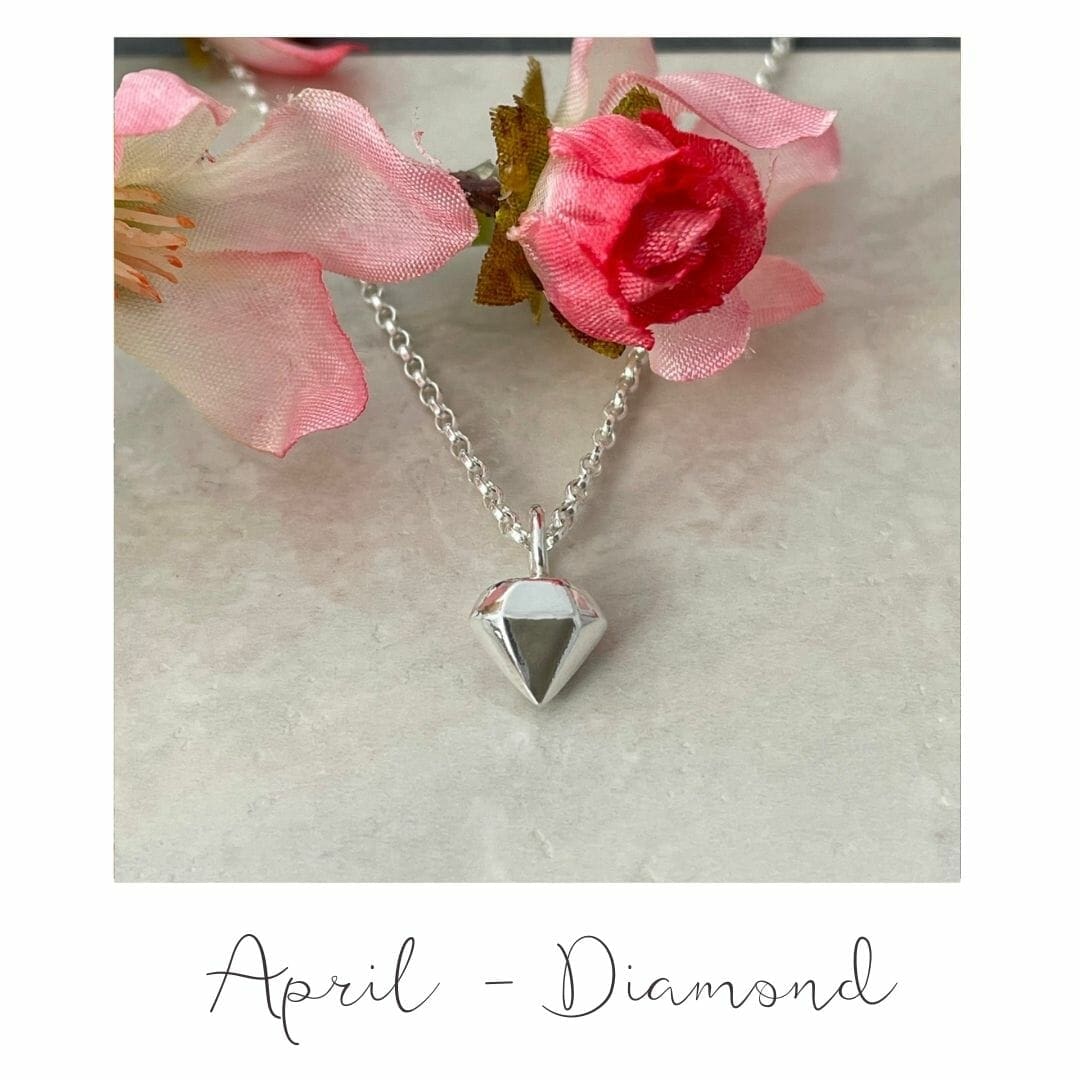
April Birthstone- Diamond

Diamonds are formed under extremely high temperatures and pressures  in conditions that exist approximately 100 miles below the surface of the earth. Diamonds are the hardest material on earth and are made from around 99.95% carbon.

Diamonds have been popular for centuries; in the 1st century AD the Roman naturalist Pliny stated “Diamond is the most valuable, not only of precious stones but of all things in this world.”

Diamonds are graded by categories known as the 4 c’s- cut, colour, clarity and carat.

As well as being the birthstone for April diamond is also the gemstone for 60th and 75th wedding anniversaries.

May- Emerald
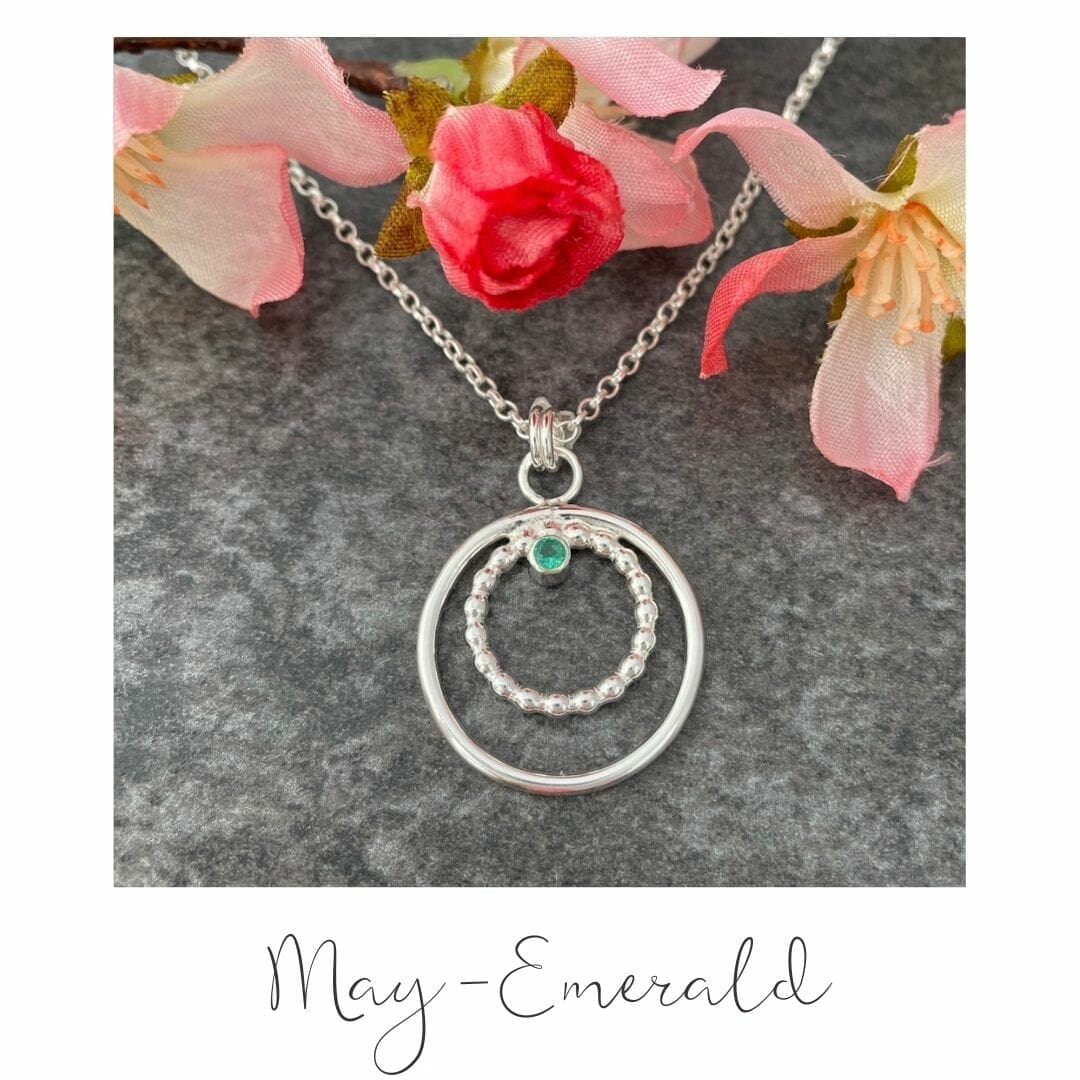
May birthstone - emerald

Emeralds are the green variety of the mineral beryl and have been used in jewellery for thousands of years.

They have been used in jewellery for thousands of years and it was first mined in Egypt in 330BC.  Cleopatra is known to have worn this beautiful gemstone in her jewellery.

The oldest emeralds found (to date) were created 2.97 billion years ago in South Africa!

As well as being Mays birthstone emeralds are also the gems associated with 2oth and 35th wedding anniversaries.


June – Pearl, moonstone and Alexandrite
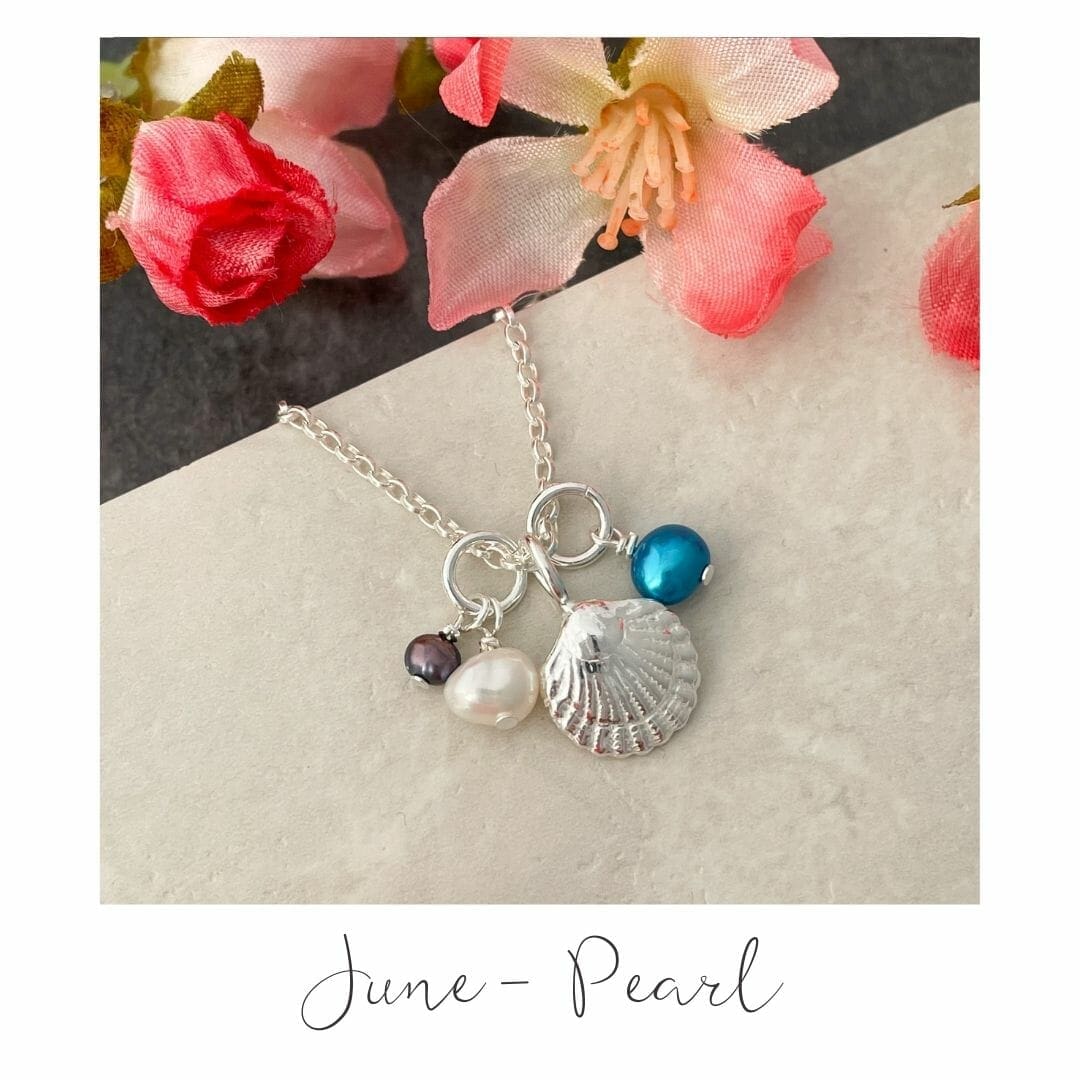
June birthstone - Pearl

The month of June has 3 birthstones associated with it; pearl, moonstone and alexandrite. For this blog I am going to focus on pearls.

Pearls have been used in jewellery for centuries and were first written about  by a Chinese historian in 2206 BC.

Pearls come in a rainbow of colours. White, soft pink, grey and peacock blues can occur naturally but brighter colours can also be created by adding dye to the shell before the pearl begins to grow.

The shine on a pearl is known as lustre and can easily be damaged. It is advised to spray products such as hairspray and perfume (and allow them to dry) before putting on pearl jewellery.  To keep their sheen gently wipe them with a damp cloth after wearing.

Did you know that real pearls feel warm to the touch and have a gritty texture if you lightly rub them on your teeth? You can spot a fake if it feels cold to hold and/or feels smooth on your teeth!

As well as being the birthstone of June pearls are also the gift of a thirtieth wedding anniversary.

July- Ruby
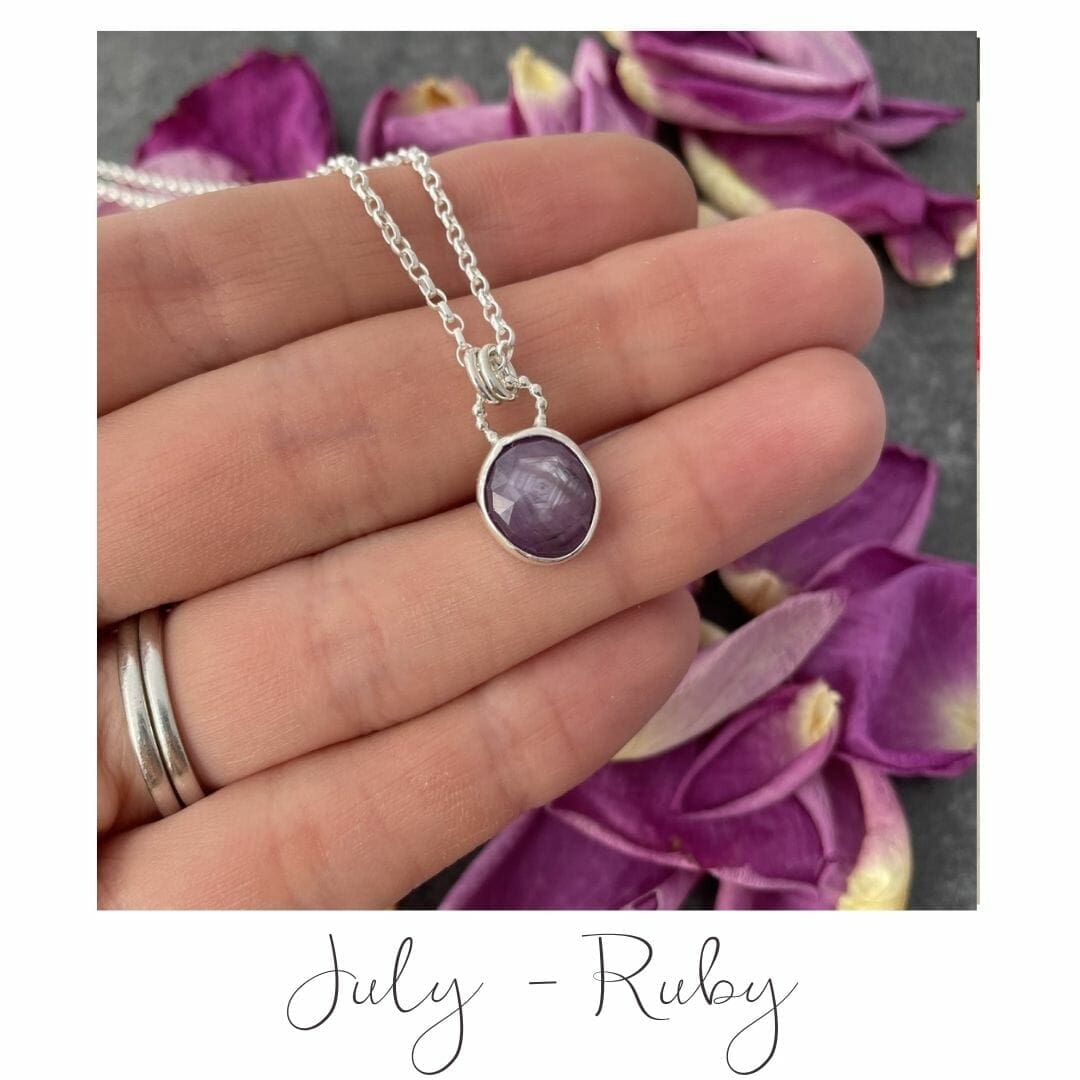
July birthstone ruby

Rubies are in the family of minerals called corundum which also includes sapphire.  In its purest form corundum is colourless; the variations in colour come from the trace elements in the gems.  Chromium is the element which gives ruby its colour.

Rubies have been treasured for years and early civilisation believed the gems held the power to life.  The gem remained popular throughout the middle ages and was sought after by Royalty.

The word ruby comes from the Latin word ‘ruber’ which means red.

As well as being the birthstone for July Rubies are also the gem for a 40th wedding anniversary.

August – Peridot
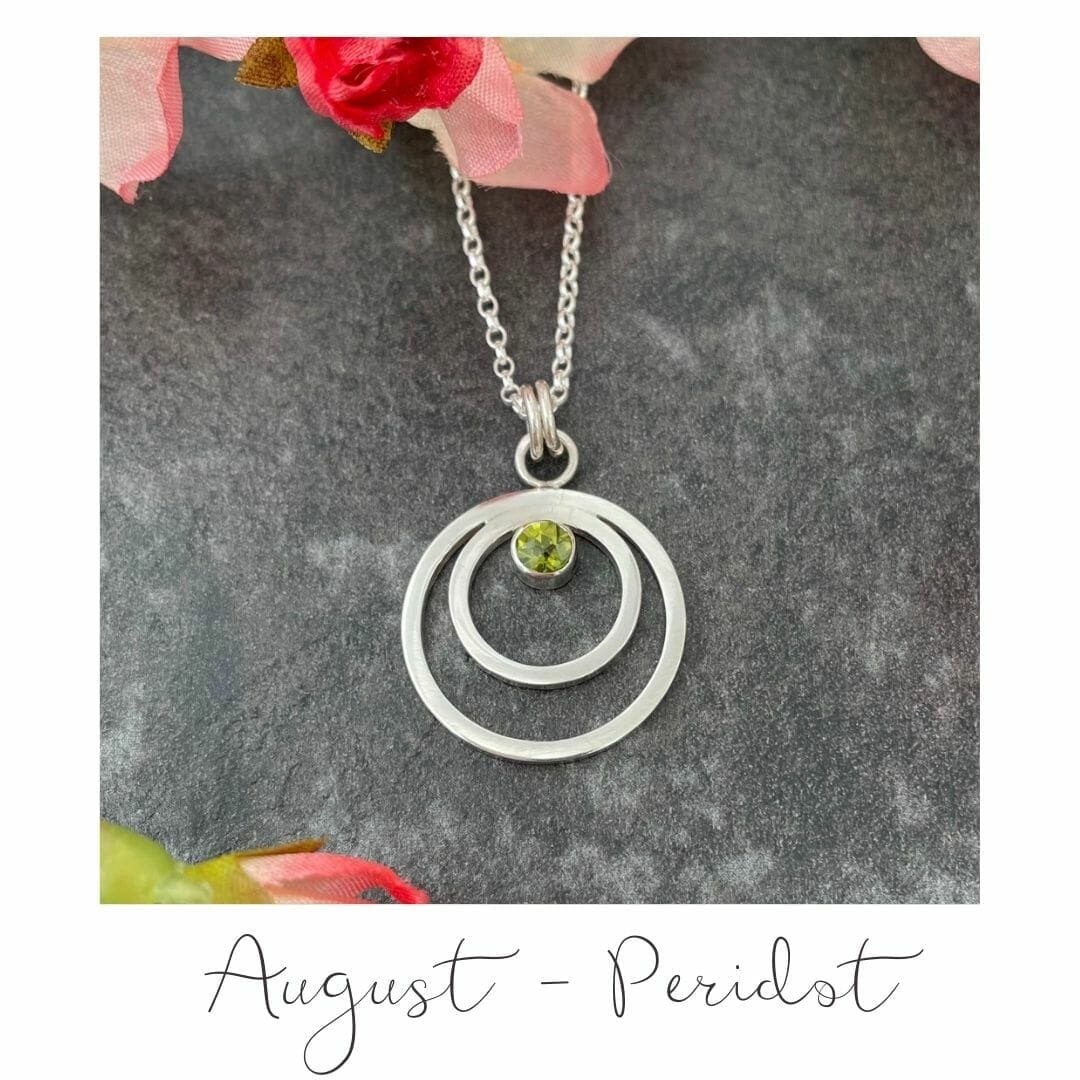
Peridot is the name given to gemstone quality pieces of the mineral olivine.  It gets the vibrant yellow-green colour from the presence of iron within its composition.

Peridot gems are found in solidified lava and some has even been found in meteorites that have fallen to earth.

The Egyptians believed that peridot is the gemstone of the sun.

As well as being the birthstone for August peridot is also the gemstone for a 15th wedding anniversary.


September – Sapphire
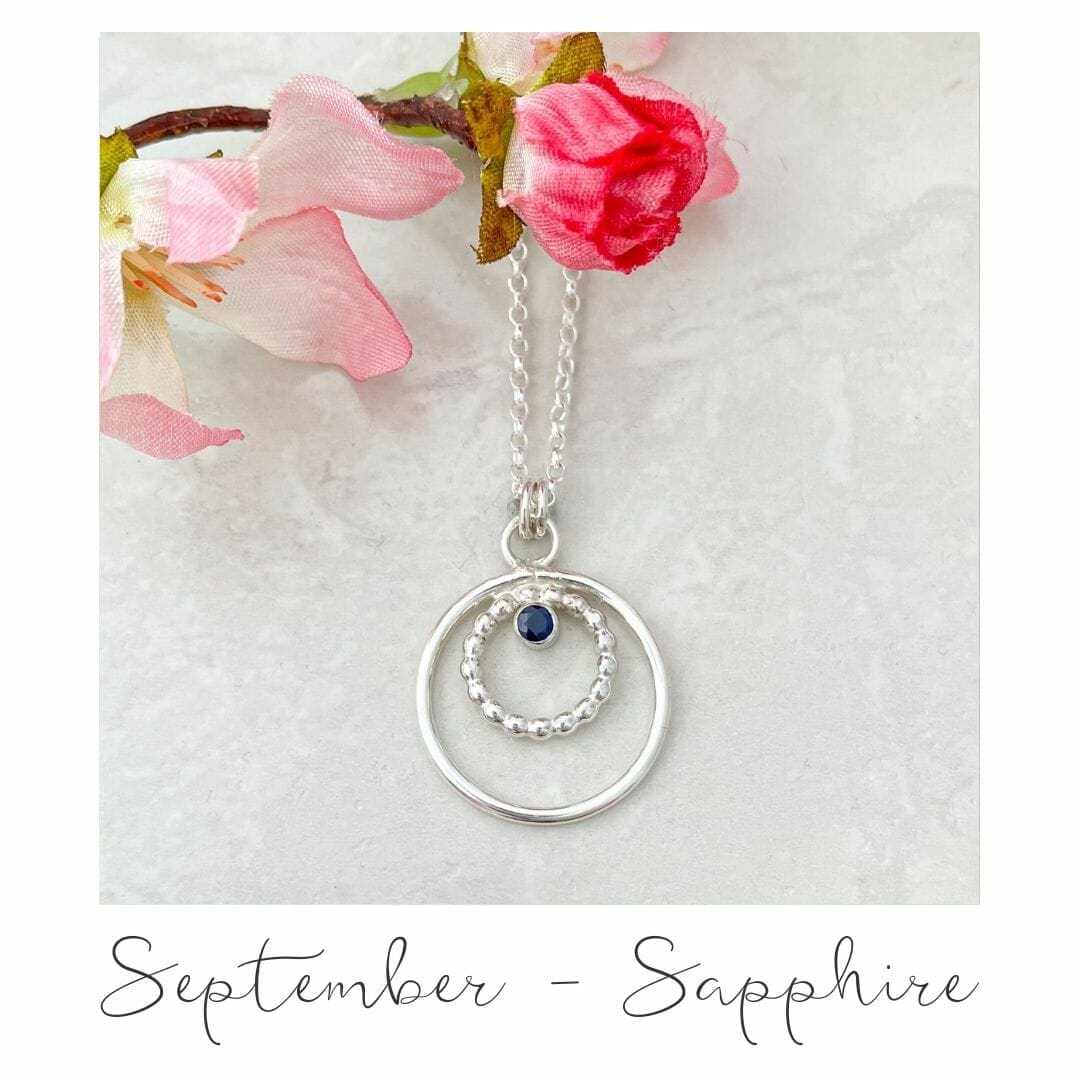
Sapphires are in the same family of gemstones as rubies, known as corundum.  Sapphires get their colour from the trace elements that make up the gem; in the case of blue sapphires this is iron and titanium.

While sapphires tend to be thought of as blue they can be any colour except red including pink, green, purple, yellow or even colourless.  A red corundum would class as a ruby.

Sapphires have been used in adornments for centuries and were worn by kings and queens in ancient Greece and Rome as they were believed to protect their owners from harm and envy.

As well as being the birthstone of September sapphires are also the gemstone for 45th and 65th wedding anniversaries.

October – Tourmaline and Opal
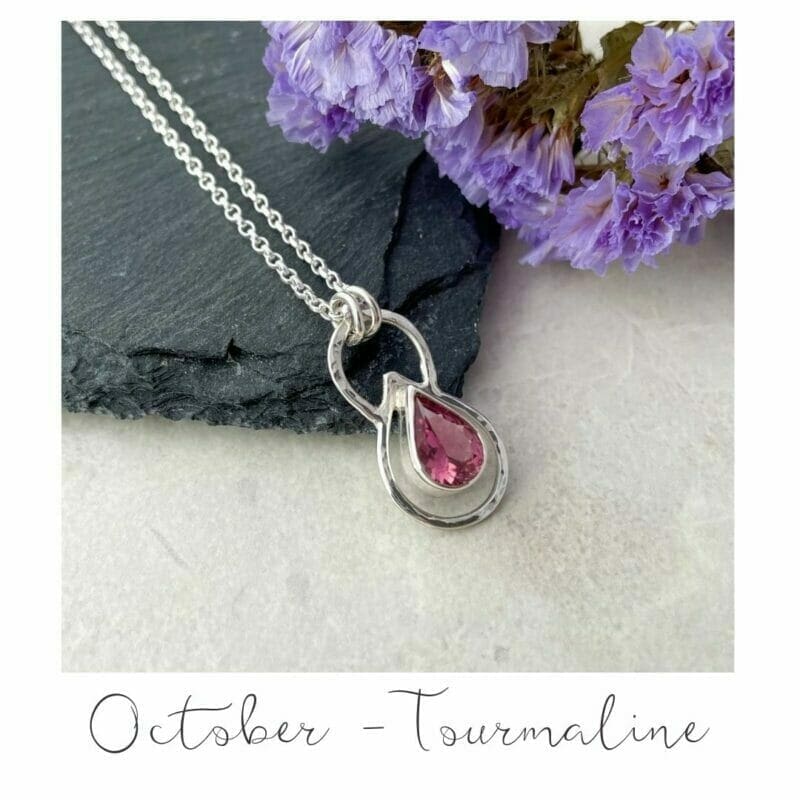
October is another lucky month with 2 birthstones; both tourmaline and opal are associated with this month.  I am going to focus on the beautiful gem tourmaline.

This gemstone can be found in many different colours as wide ranging as pink and green and you can even get a range of colours in one piece! 

Tourmaline has been found in many places around the world including Brazil, America and China.  The different colours of the gem are produced with different elements within the stones. For example copper is found in vivid blues and greens discovered in Brazil and this colour is called paraiba.

Tourmaline is also the gemstone for an 8th wedding anniversary.

November – Topaz and citrine
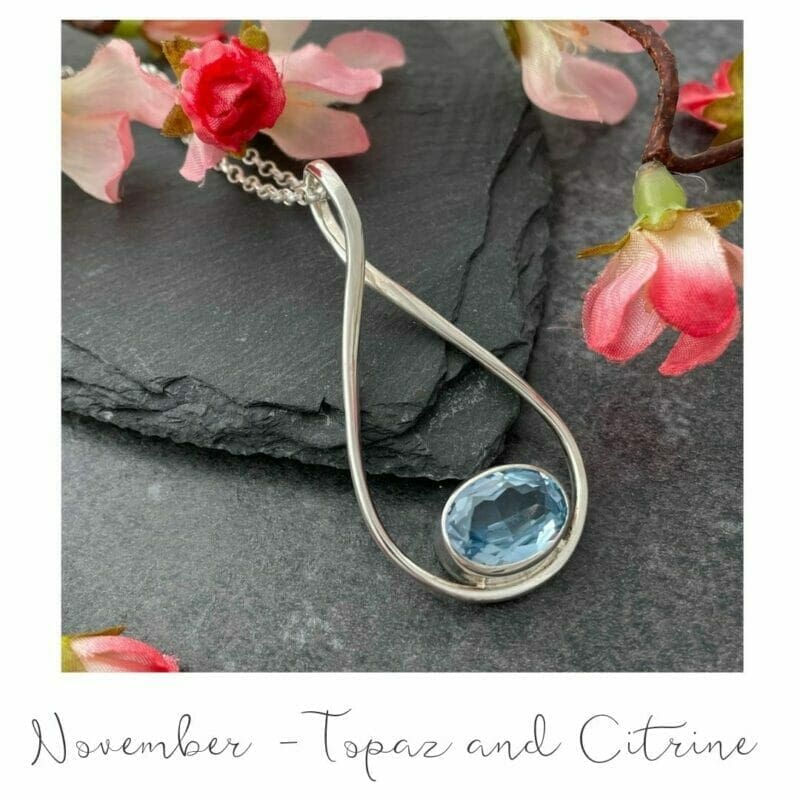
November babies have the choice of 2 gemstones; topaz or citrine.

Topaz gemstones come in  a wide range of colours the most common is brown but it is also found in shades of pink and purple through to blue and green.  Topaz is a pleochroic gemstone which means it can show different colours through the crystal structure as its moved. 

Citrine is a rarer gemstone and in the past it was confused with topaz as it is found in similar brown- yellow shades.  Citrine is often used in fancy gemstone cuts and carvings.  This gemstone is also the gemstone for a thirteenth anniversary.


December – Tanzanite, turquoise and zircon
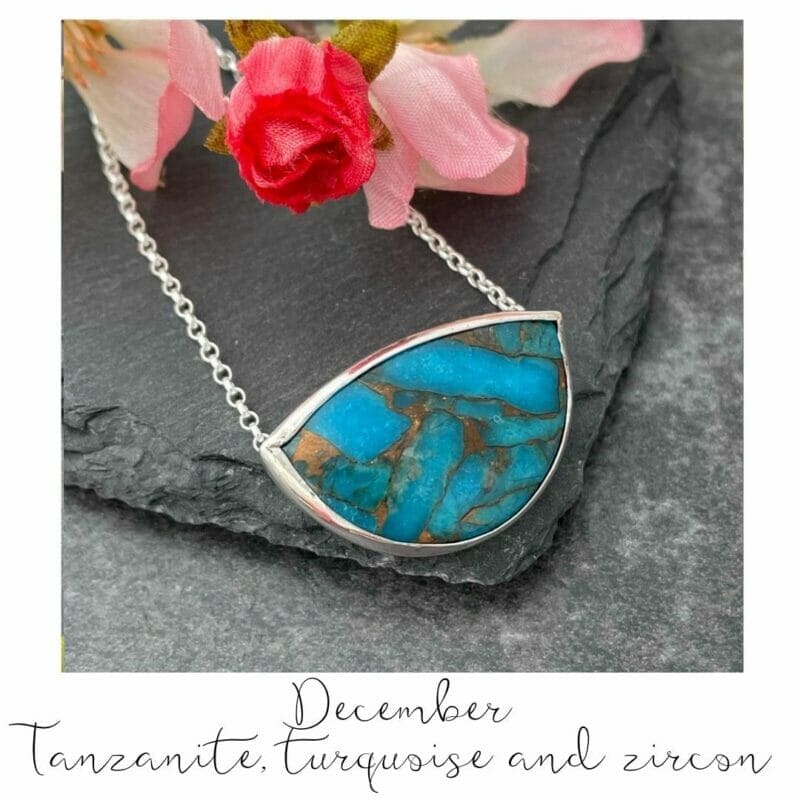
December birthdays have three options for their birthstone and you are spoilt for choice with tanzanite, turquoise and zircon!

Tanzanite is a relatively new gemstone having been found in Tanzania in the late 1960’s. At first the locals believed they had discovered sapphires as the blue- purple colour can be very similar. 

By contrast turquoise has been found and used in jewellery for thousands of years!  It is thought to provide good health, fortune and protect the wearer from evil and was used by the ancient Eypytians.

Zircon comes in a range of colours and is a natural gemstone unlike cubic zirconia which it is often confused with.  Zircon is the oldest mineral on earth; there are deposits in Australis which are over 4 billion years old.  This gem is known for its ‘fire’ as it has beautiful sparkle and flashes of multicolour light.

Birthstone Summary

Having said this I don’t think people should feel tied to a gemstone if they are not keen on theirs’; I have had people message me saying they like a particular gemstone but its not their birthstone so they are not sure they should wear it.  In my opinion you should wear a gemstone if you love it no matter if it is your birthstone or not

Head over to my shop to see my range of gemstone jewellery and do get in touch if you are looking for anything in particular whether it’s a birthstone piece or just something with your favourite gemstone in.

Do you have any jewellery with your birthstone in; do you prefer another gemstone?! I’d love to know.

Laura xx
Posted on — Leave a comment

Hearts aren’t just for Valentines!

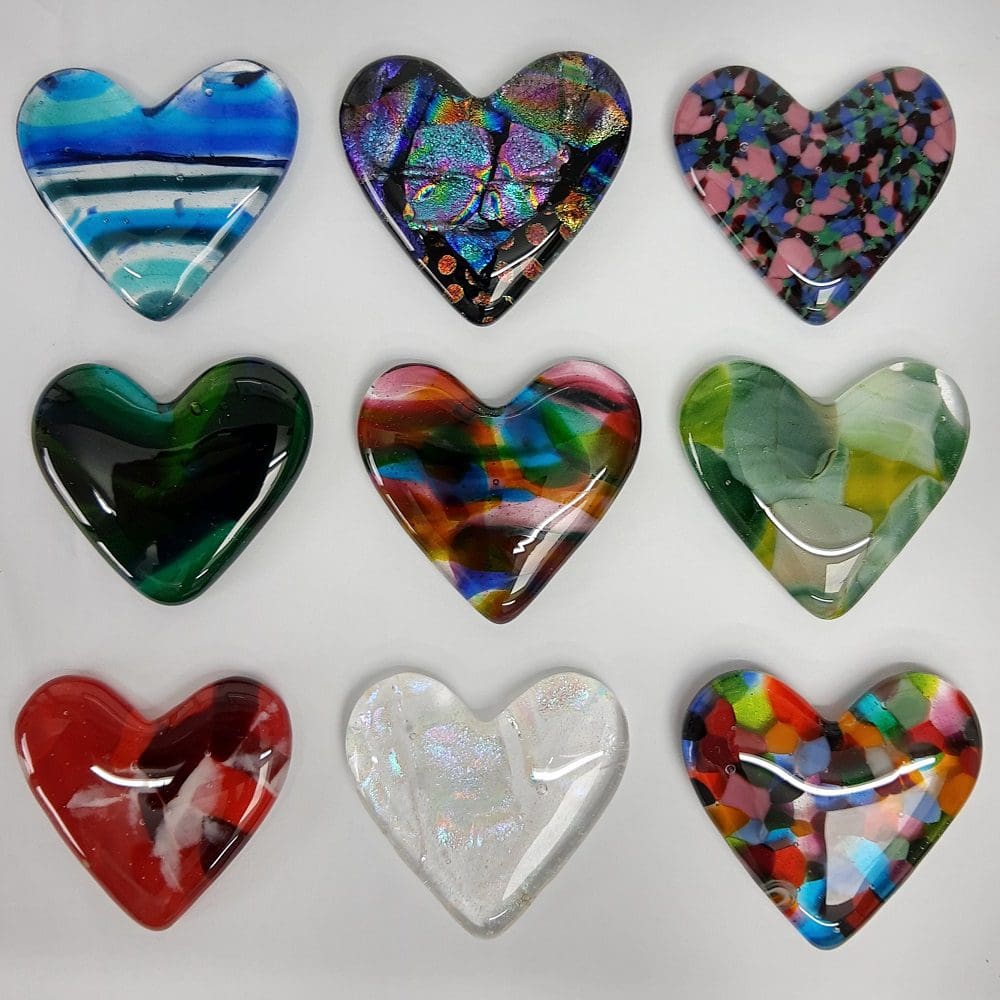
I have had a lovely time over the Christmas lock down period making fused glass hearts in a cast iron pan. Thanks to an excellent tutorial from glasshoppa.com me and my daughter whiled away the time, when we couldn’t see the rest of the family, coming up with various combinations of glass to pile up in the mold ready for a hot fuse.

Once out and cooled down they needed a bit of grinding and cleaning before going back in the kiln for a nice fire polish.

Now I’m waiting for some little box frames to be delivered so I can mount them and then put on sale in my shop. Should make a lovely little letter box gift to send to those we love.

Posted on — Leave a comment

Meet the Maker – Beverley from Bevart designs

Meet the maker blog

Beverley Chapelhow – Bevart designs.

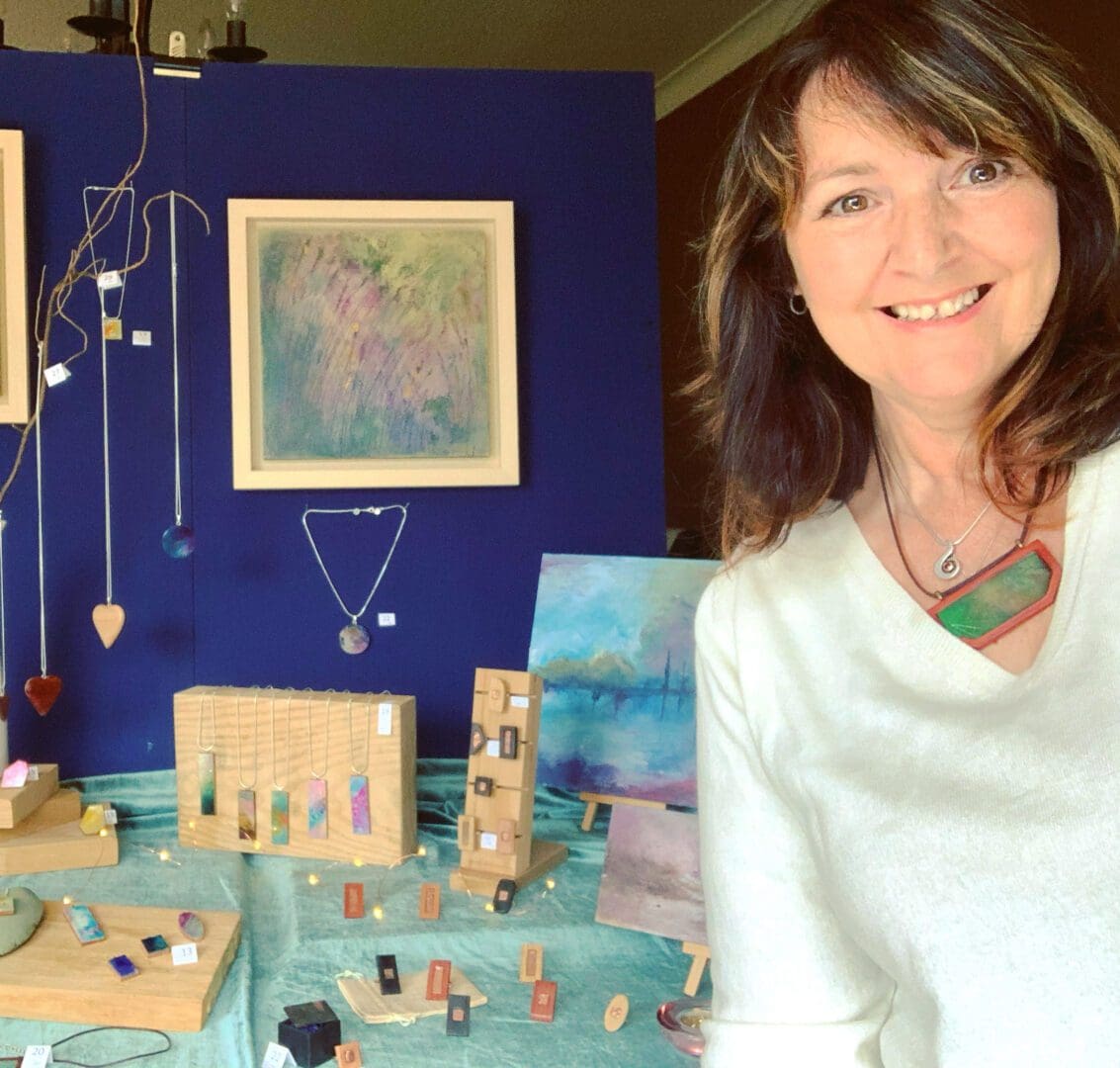
I am Beverley, of ‘Bevart designs’ I live in the beautiful Ribble Valley in Lancashire. I will always be that artist that fell into making jewellery making and designing, many people have said that my artwork would make lovely jewellery pieces, this got me thinking and I started to create and work on this possibility. I made a few pieces and put them on display in my studio… to my delight I sold a few, 12 months on I was accepted for a great art and craft show called ‘Art in the Pen’. I took with me my framed artwork and my jewellery, I made more sales than I thought possible. Being encouraged by this I applied to sell on ‘The British Craft House’ and was thrilled to be accepted.

I have always taught art classes to adults sometimes with a crossover into craft making like flower arranging, printmaking, card making etc.

I am inspired to create any art work including my jewellery by nature, the Japanese way of Wabisabi, travel, and other artists, I love the work of Greyson Perry, Yayoi Kusama, there are lots more!

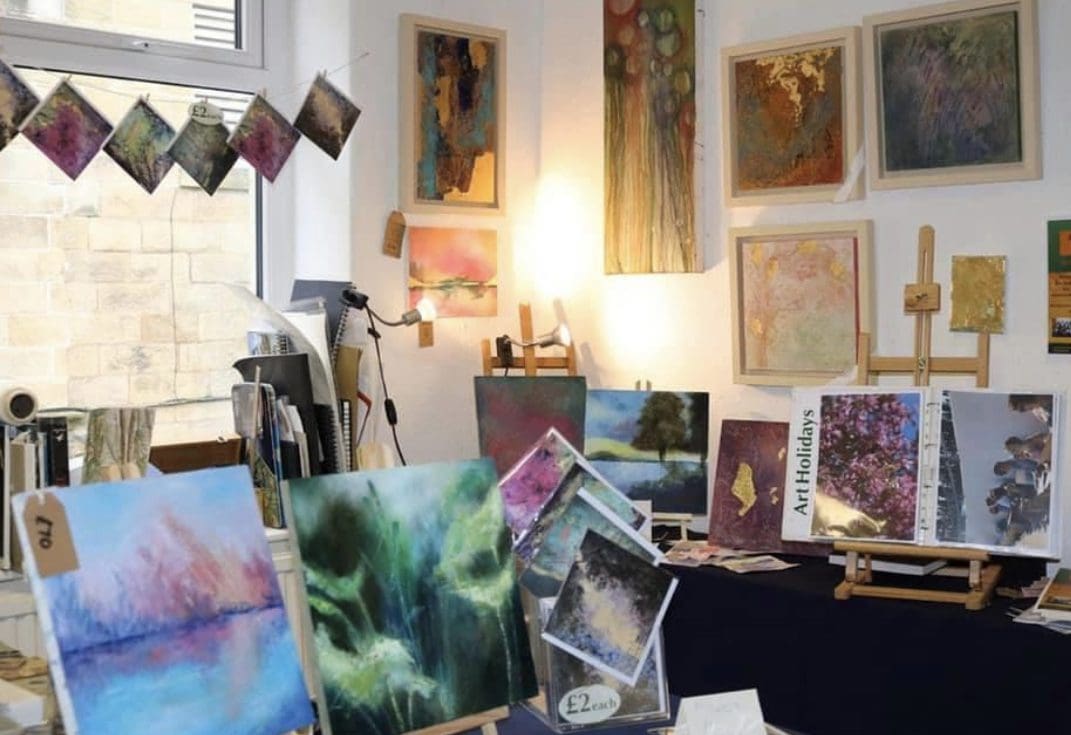
my art studio

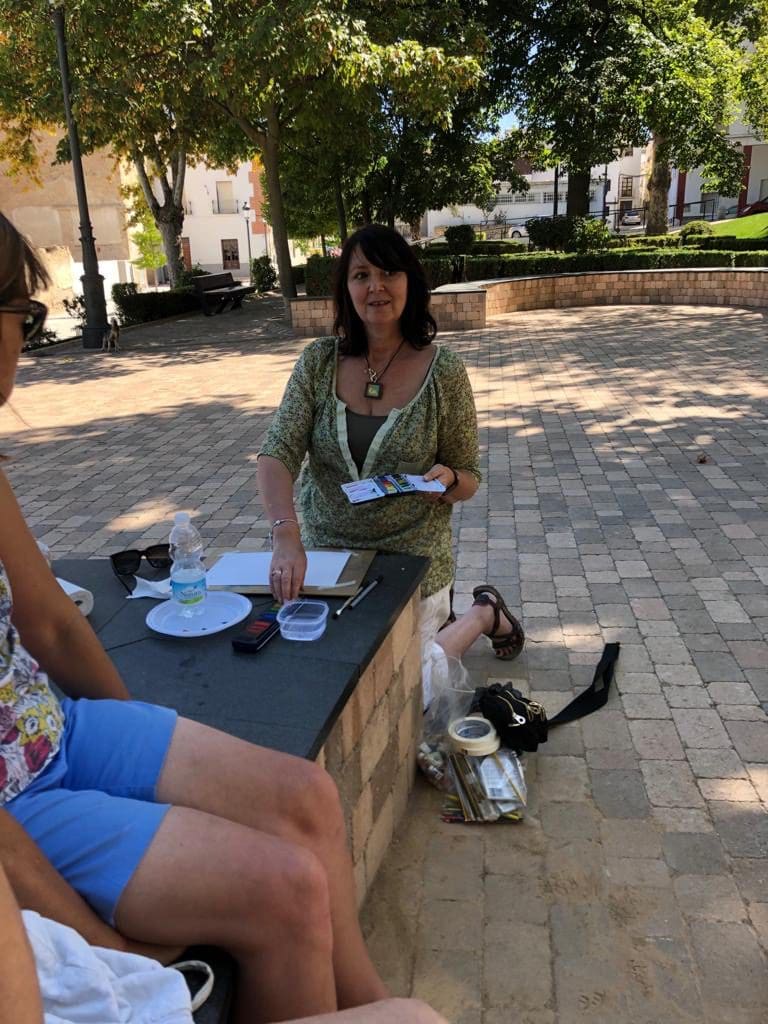
I graduated from university in 2008 with a degree in fine art, with a friend and colleague we wanted to still try and work together in a studio environment, we wanted to find a place where we could provide affordable studio space for other artists. I am currently the proud owner of ‘Atelier Arts’ an art studio collective with gallery and teaching space in Clitheroe from here I sell my paintings, I teach art classes to adults including general art and life drawing , I also teach art in Spain with partners ‘Caves of Dreams’  we provide a full all-inclusive art holiday experience in Baza, the region of Andalucia.  

Teaching in Spain

What is the dream? The dream was always to own an art studio, the other is to be selling my work more regularly, whether that’s jewellery or my paintings to build a following and to become successful.

I am currently working from home and we have a workshop in the garage, so I can keep on creating and making.

My proudest moment business wise is owning my current business and that being a success. Forever proud of our two daughters growing into confident, successful, independent women.

My creative future looks like this, over the past year I have been experimenting with ice dyeing and eco printing on fabric. I love textiles and pattern, this is something I want to add to my shop in the future in the form of scarves as I believe this would enhance my jewellery range. I am also planning some Yoga and Art retreats, I want to provide creative relaxing workshops based around self care, using our mental and physical self in a creative way using clay and paint.

To relax and have fun I love to tap dance, I regularly take part in yoga, pilates and meditation. I also love photography and to travel sketch and paint.

I also enjoy a good night out with friends in the city of Manchester drinking cocktails!

I also adore cake, what is my favourite cake ….any cake!!! But very partial to a lemon drizzle

Posted on — Leave a comment

Squashed Glass?

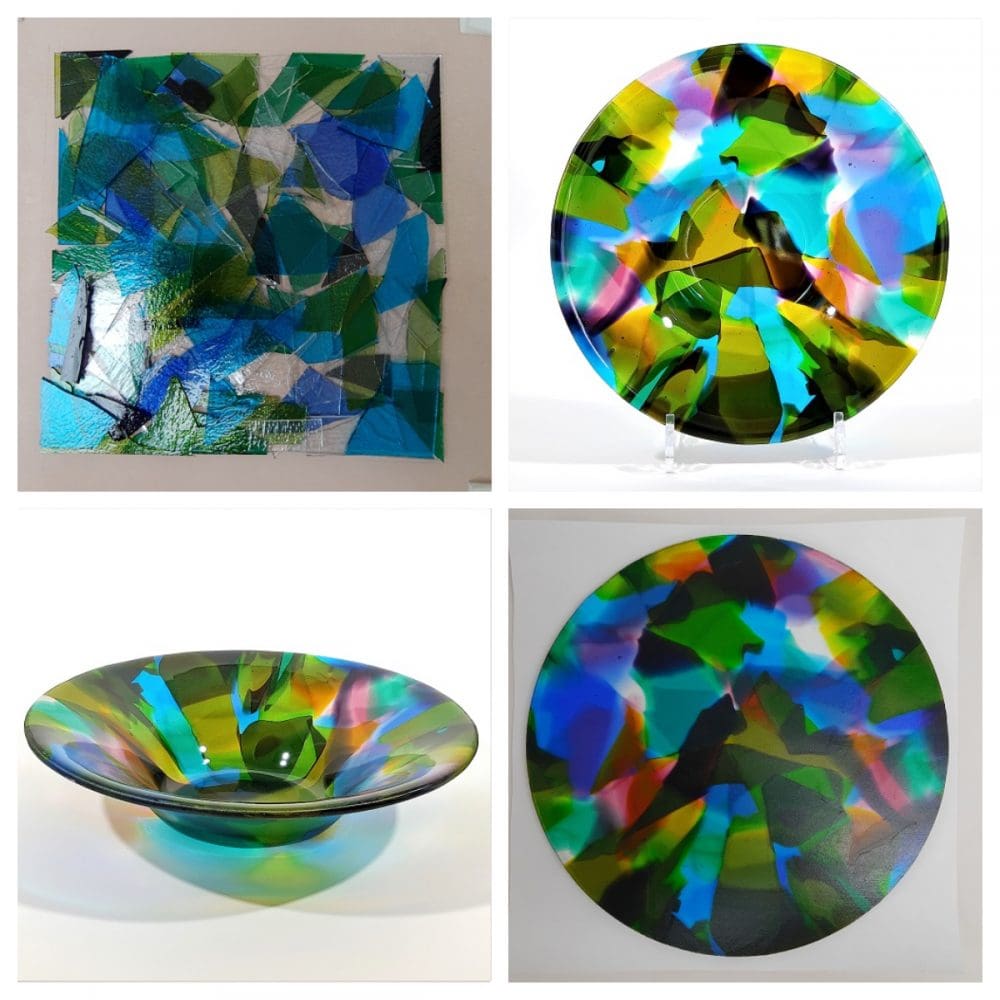
So what is squashed glass? This is a fused glass/kiln forming technique that I’ve been having a go at. As described it is glass put in the kiln to fuse but you have to weigh it down with a second shelf to ‘squash’ it as it fuses.

Glass is viscous at high temperature and up to a certain heat it conforms to the glass fusers mantra “the 6 mm rule”. This basically means that however many layers of glass you put on top of each other the finished fused piece will always end up 6 mm thick, unless you dam it, but that’s another technique! 

Squashed glass is multiple layers of glass weighed down with another kiln shelf on top (and any other bits of kiln furniture you might have to hand) so that the pressure of all that weight will go down on the piece and the glass will flow and merge together. The finished glass piece is nice and level and will have a smooth texture from the kiln shelf.

After that you can cut up your sheet of squashed glass and cold work the edges to smooth them out and slump in a mould to get the shape you want for your finished pieces.

Posted on — Leave a comment

Hallmarking Jewellery in the UK

Hallmarking in the UK.

Did you know in the UK it is a legal requirement to have certain items hallmarked?

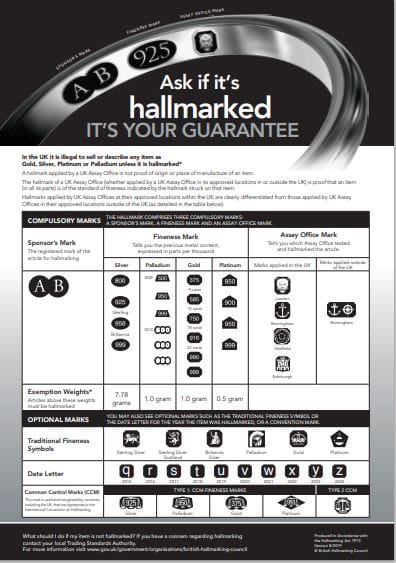
For silver items this legislation applies on any item over 7.78 grams in weight. For gold and palladium the minimum requirement lowers to 1 gram and for platinum its 0.5 grams.

The process of hallmarking involves sending articles to one of 4 assay offices; either London, Sheffield, Birmingham or Edinburgh where the precious metal content is sampled and tested. Assuming the items meet the standard they can then be hallmarked.

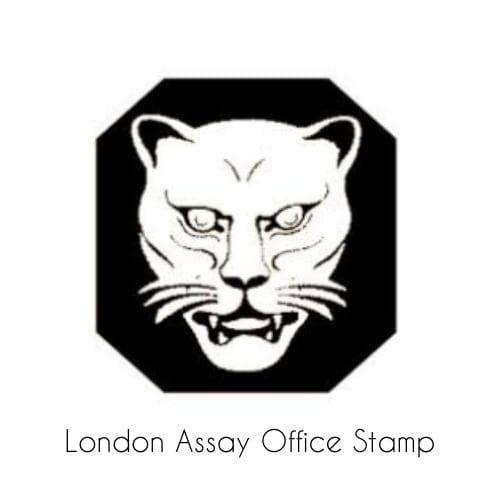
London Assay Office StampIn the UK we have one of the strictest systems in the world for testing and quality marking items.  This makes it a fantastic way of guaranteeing the precious metal item you are purchasing is indeed what you believe it to be.
The process of regulating the purity of metals began in 1238 and was progressed further in 1363 when King Edward III decreed all precious metal items were to be tested and marked for purity and that this also had to include a makers mark. It is amazing to be part of such a long standing tradition.

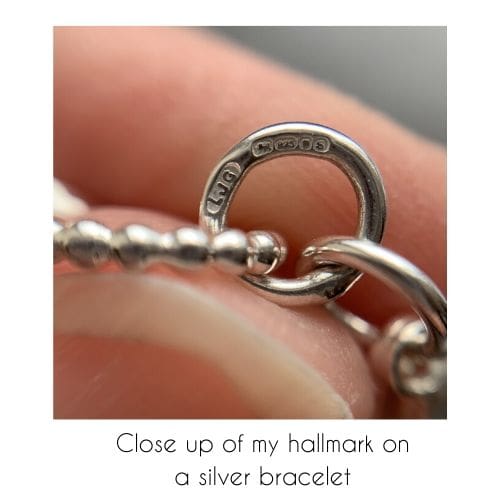
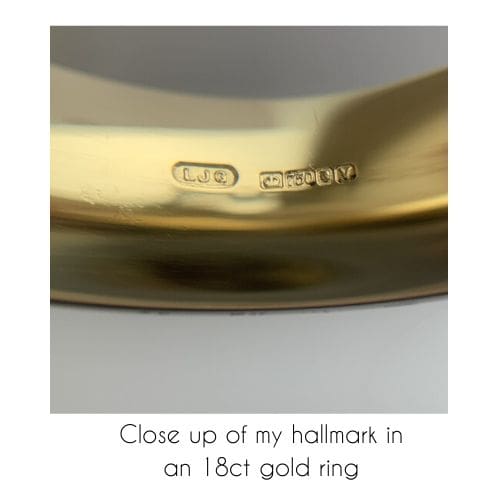
A hallmark consists of various stamps including symbols to indicate where the piece was tested, its purity and the personalised stamp of the maker. Optional stamps include a date stamp to indicate when the piece was made, and fineness stamps to show the metals purity.

Laura Llewellyn Design HallmarkI am proud to have my hallmark registered with the London Assay office and to have my work checked here.  My makers mark is an oval shaped stamp with the initials LJG; the G is from my maiden name. Each person or company’s stamp is unique so the maker of a piece can be identified.
Hallmarking is a costly process. Therefore I don’t tend to have smaller items which are under the threshold hallmarked as the costs would escalate. If however you would like an item to be hallmarked which doesn’t currently display one please get in touch to discuss the options.

I have included the official dealers notice below so you can see the different marks that can be applied and perhaps identify some on a piece of jewellery?!

I hope you have found this article of interest.  Please get in touch with any questions or leave a comment below.

Laura x

Posted on — Leave a comment

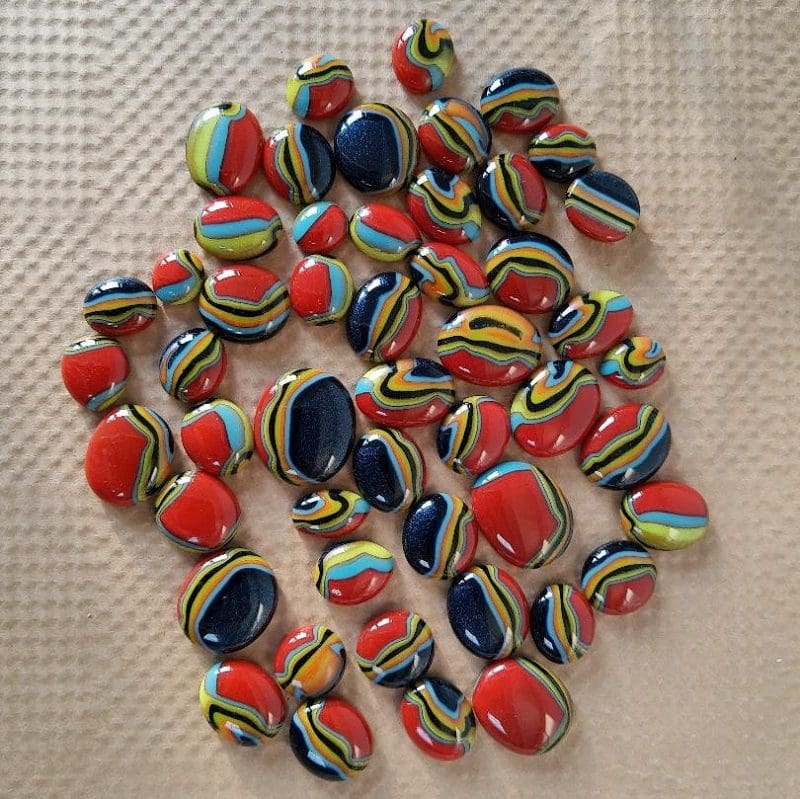
Fused Glass Pebbles of Swirling Colour

I’ve recently been making glass ‘pebbles’ in my studio to try and get my creative juices flowing again. The Covid 19 lock down has left me strangely stumped at times, almost as if having so much unplanned time on my hands has slowed me down. I would wander into my studio and fiddle around tidying my sheets of glass, ordering them by colour and size but couldn’t get stuck in to anything constructive.

So I decided to make some puddles. This is a fun technique where you place a stack of different coloured equally sized glass pieces together and fuse them. The layers fuse together into a solid lump. Then the fun starts! Using a hammer and tile cutters you break the piece into smaller bits, exposing the striped layers of colour. These smaller chunks are then fused again with the layers upright. 

The result is lovely rounded pebbles of swirling colours, I love just running them through my fingers!

I’m now thinking of what to do with them. Some will be pendents and some I will incorporate into other projects.

Thank goodness, I’ve got my mojo back!

Posted on — Leave a comment

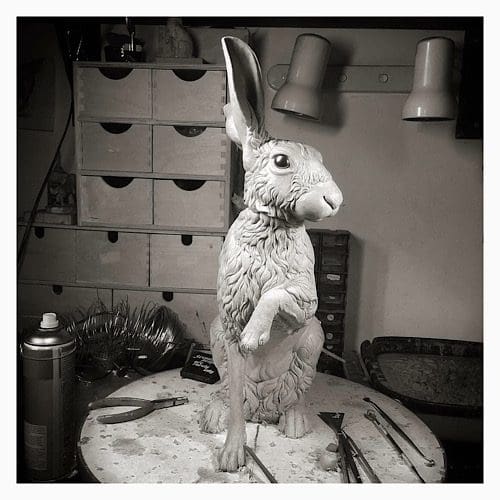
The sculpting & making of Harriet Hare

The little video above shows the various stages which my Harriet Hare Sculpture went through during the year it took to sculpt her. Obviously I was producing other work during that time as well because I needed money coming in before she went into production, but she took around 200 hours to sculpt… 

If Harriet has been a ‘one-off’ then all that sculpting time, backed up by my 30 years sculpting experience, would have had to have been reflected in the price of the ‘one’ Harriet, so instead…a mould was taken from her and I now make her in different metallic finishes. This way all that initial designing and sculpting time, as well as the production costs, are spread over the limited edition number making her more affordable for more people. 

Customers sometimes don’t realise the time, skill and cost which goes into producing handmade pieces like Harriet. I was recently asked if I’d sculpt and then produce in cold-cast iron a gentleman’s two pet dogs… I explained the process of producing these ‘one-offs’ and their likely cost. As is often the case, he unfortunately changed his mind when he realised they couldn’t be made cheaply! 

The purpose of this post then is to show you the many stages of a sculpture’s development from the initial 3D sketch (or maquette) which I make in wax through to the finished original with ALL its detail, and this is before it then goes off into production!  It is also to point out that art doesn’t just materialise. It takes skill, knowledge, practise, expertise, patience, attention to detail and … the love of it. ❤️

Posted on — Leave a comment

Just a Card

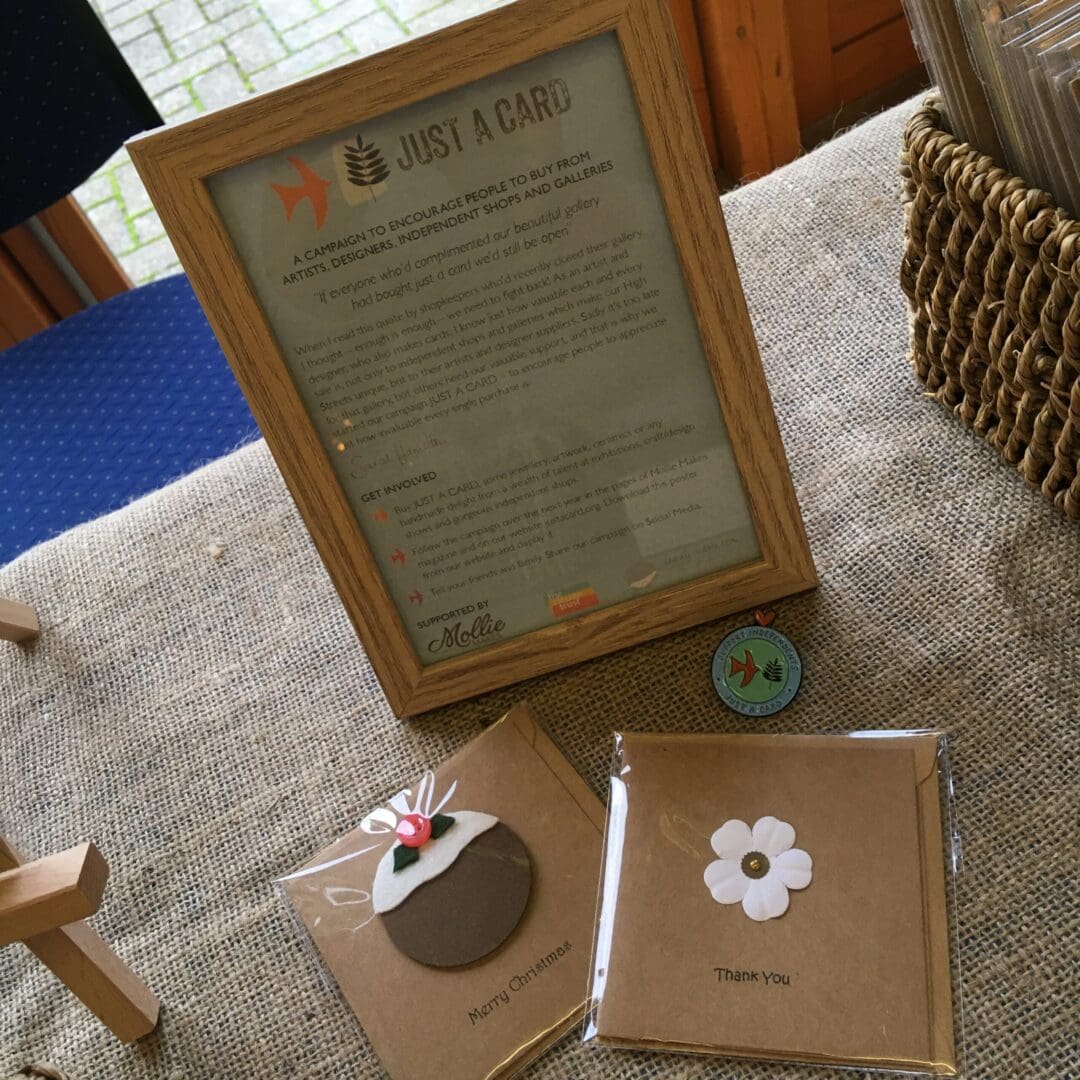
Have you heard about the Just a Card campaign?!  If you are a fellow maker, or a fan of shopping with independents, you may well have done but if not, grab a cuppa, settle down and let me fill you in!

The Just a Card campaign was founded by Sarah Hamilton who was spurred into action when she spotted this quote from a gallery that was having to close its doors “if everyone who’d complimented our beautiful gallery had bought ‘just a card’ we’d still be open”.  Not only is this just super sad to hear, but independent shops, galleries and small businesses are vital to local economies – they make our towns vibrant, Crofts Crafts Just a Card bloginteresting places to visit and are a great way for designers and makers to be able to showcase their work.  Our high streets would be a lot more boring without them!  So the aim of the Just a Card campaign is to encourage people to support and buy from artists, makers, independent shops and small businesses.
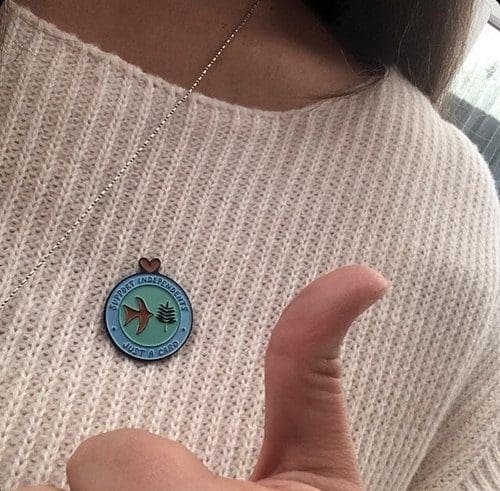
You’ve probably heard the saying “every time you buy something from a small business, an actual person does a happy dance!”?  Well this couldn’t be truer.  Shopping handmade really does mean the world to independent artists and makers – not only are you helping small businesses to stay open, but you are supporting creativity and somebody’s dream.  Crofts Crafts Just a Card blog -pinPlus, have you ever noticed how much people appreciate a handmade gift?!  They show you’ve taken the time to seek out something you know someone will really love, something that might be really personal and unique  – so really, shopping small is a win, win!

The Just a Card campaign really reinforces the message that all purchases, no matter how small, are crucial for independents to survive.  And it doesn’t have to be just a card – it could be just a print, just a book, just a mug, just a pin – but every purchase makes a massive difference to artists and makers, and enables them to continue doing what they love.

The campaign is run by a team of wonderful volunteers, and if you would like to support them you can donate on their web page or buy the Just a Card pin, window sticker or print.  But the fabulous news is there are also loads of ways you can support the campaign even without spending a penny!

How to get involved:

  • there is a bunch of free stuff you can download from their website such as blog buttons and flyers & posters for your events
  • follow the campaign on Twitter and Instagram and like, share and RT their posts
  • add ‘Just a Card supporter’ to your Instagram bio like this
  • take part in Just a Card Indie Week – usually in November
  • and most importantly just help SPREAD THE WORD!  Every like, share, RT and conversation about the campaign helps spread the message far and wide!

So who feels ready to be a Just a Card Warrior?!  Hopefully the above links are useful and from this handmade maker, thank you very much for taking the time to #shopsmall and #supportindependents!

Posted on — Leave a comment

Meet the Sellers x 3!


Team TBCH South East Cornwall Meetup – meet Halyey, Buffy & Chris


Written by Buffy…who is The Twisted Felter

So earlier today I met up for brunch with the lovely Hayley aka The Northern Smuggler and Chris The Chris Artist. Chris paints beautiful artwork from the surrounding areas and Hayley creates fabulous Resin artwork and jewellery inspired by the local Cornish Coast. Luckily Chris had chosen the best café (award winning @olivecocafe thankyou…delish!) and so I turned up to meet 2 complete strangers thinking I should have worn a rose in my lapel?! Sadly I was lapel-less so I took a chance and sidled up to a random man sitting on his own who fortunately turned out to be Chris and Hayley joined us soon after.

My brain is a busy one so I had brought along a list of things I wanted to ask (I feel like a bit of a duffer with the whole online selling and social media stuff as I’m new to the game) and was pleasantly surprised that they too had the same questions and doubts. As Hayley put it ‘Fake it ’til you Make it’. Although Hayley was not giving herself credit as she had lots of  great media tips and advice and has her own professional branding which looks fab. Chris is already self employed so gave me good advice around tax returns, a boring but necessary part of it all. It was sound advice…pay an accountant!!

We chatted about The British Craft House website and how we were finding navigating our way around. We wondered when Dottie (our Illustrious Leader, advice giver, encouragement officer and all round good egg) EVER SLEEPS?!? She seems to be sending encouraging posts in the middle of the night!

We talked about how isolating working alone and from home can be sometimes and how fab it was to meet up with the real people behind our sellers names. We shared contacts for work in the local area, craft initiatives,the best Apps, training days, ideas for display and presentation, photography and we laughed at ourselves a fair bit. We talked about the insecurities of seeing the imperfections in our work and whether they are good enough to sell, the vulnerability of putting your work out there in front of people, the difficulty of feeling comfortable promoting (non-stop!) yourself online. And we arranged to meet again of course.

So this is my first blog. I’ve no idea whether it’s good. Or not. But I’m venturing right out of my comfort zone writing it AND putting a photo of myself online. That’s how rock and roll I am today. I’m a blogger. Boom!